The Brief: Analytical Commentary by Tenggara Strategics
Please Update your browser
Your browser is out of date, and may not be compatible with our website. A list of the most popular web browsers can be found below.
Just click on the icons to get to the download page.


Popular Reads
Top Results
No results found. Please check your search term and try again
Can't find what you're looking for?
View all search results
Popular Reads
Top Results
No results found. Please check your search term and try again
Can't find what you're looking for?
View all search resultsthe-brief

Opinion 07:00 am
PREMIUM
Analysis: We have not seen the full political fallout of the police scandal
The detention of former National Police chief Gen. Listyo Sigit Prabowo on allegations of illegal wiretapping has become one of the most consequential political scandals in recent Indonesian history. Yet the country has probably not seen its full fallout. If anything, the affair is only beginning to reveal how deeply police power penetrated the political system and how weak oversight and accountability have become.
Opinion 2 days ago
PREMIUM
Analysis: Indonesia’s GDP ranking masks deeper economic weaknesses
Indonesia’s economy has faced considerable turbulence during President Prabowo Subianto’s administration, making its latest international economic ranking a welcome headline for the government. According to the International Monetary Fund (IMF), Indonesia remains one of the world’s largest economies when measured by gross domestic product (GDP) at purchasing power parity (PPP). The government has celebrated this position as evidence of the country’s economic strength and wealth, while acknowledging persistent inequality. Yet, while the ranking reflects Indonesia’s economic scale, interpreting it as a sign of broad-based prosperity risks obscuring deeper structural weaknesses.
Opinion 3 days ago
PREMIUM
Analysis: When burning forests become a cost of doing business
Indonesia is facing mounting economic and diplomatic costs from forest and peatland fires this year as a prolonged dry season coincides with a strong El Niño and a positive Indian Ocean Dipole (IOD). The fires have caused widespread damage, placed a substantial burden on public health and economic activity and sent haze across national borders. The combined economic and health costs are estimated to have reached as much as Rp 123.1 trillion (US$6.79 billion), while the resulting pollution has strained relations with neighboring countries.

Opinion 4 days ago
PREMIUM
Analysis: MSCI recurring warning exposes persistent governance failures
Indonesia's capital market is once again under pressure following MSCI's warning of a potential downgrade from emerging market to standalone market status. The warning prompted an immediate regulatory response, including measures to address high shareholding concentration and suspected market manipulation. However, the sudden response raises a broader question: Why have longstanding market governance weaknesses and investor protection concerns only received serious attention after repeated threats of a market downgrade?
Opinion 5 days ago
PREMIUM
Analysis: Censorship by proxy: Who is silencing coverage on fires?
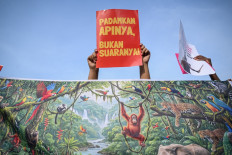
As toxic haze from seasonal forest and peatland fires blanketed swaths of Sumatra, Kalimantan and Papua, a second crisis unfolded online: Content creators, civil society organizations, environmental activists and regional officials reported a sudden wave of digital suppression.

Opinion 6 days ago
PREMIUM
Analysis: Indonesia takes backward step with gas export cuts
The government’s decision to further reduce natural gas exports to Singapore may strengthen domestic energy supplies, but it risks undermining the country's credibility as a reliable trading partner. The move, justified on energy security grounds, could unsettle investors, strain relations with Singapore and weaken ASEAN's efforts to build an integrated regional energy market.
Opinion 1 week ago
PREMIUM
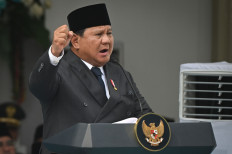
Analysis: The Prabowo-Gibran government is clearly falling short
Two years into their five-year mandate, President Prabowo Subianto and Vice President Gibran Rakabuming Raka face mounting public dissatisfaction. Widespread protests and falling survey indicators point to deepening frustration over the administration’s performance.
Opinion 1 week ago
PREMIUM
Analysis: Two years of Prabowo: The cost of presidential ambition
Two years into his presidency, President Prabowo Subianto is pursuing an ambitious agenda of state-led programs, from the free nutritious meal program to the Red and White Cooperatives. But as billions of dollars flow into these flagship initiatives, pressing needs in education, health care and disaster preparedness remain underfunded. The question is no longer whether Prabowo can fulfill his political ambitions, but whether Indonesians can afford the costs of pursuing them.
Opinion 1 week ago
PREMIUM
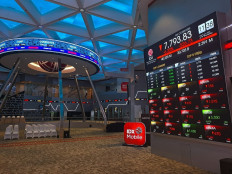
Analysis: Indonesia’s market sell-off punishes poor governance
Last Friday was a Black Friday for Indonesian stocks. A market sell-off wiped out US$65 billion in value and sent the Indonesia Composite Index (IDX) plunging 11.6 percent, its steepest drop since 1998. The market did not crash because corporate fundamentals suddenly weakened, but because investors punished regulators for turning a blind eye to market abuses and acting only after MSCI forced their hand.
Opinion 1 week ago
PREMIUM
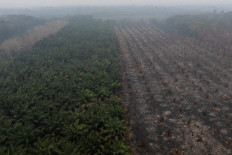
Analysis: Pinpointing corporate culprits behind Indonesia’s wildfires
As Indonesia continues to grapple with spreading wildfires and recurring haze, scrutiny has increasingly shifted toward corporate culpability, driven by investigative reports linking vast networks of foreign investors and multinational firms to the blazes. With Jakarta’s domestic response perceived as largely muted, neighboring ASEAN member states have begun mounting diplomatic pressure and pursuing independent investigations into the entities allegedly responsible for the transboundary haze choking the region.
Editor's Picks
Popular
- Ten years lost in two
- 'Rhizomatic' movements help youth voice political messages
- Three-finger salute raised high, broad and multifaceted in Indonesia
- RI posts strong GDP growth on better trade balance
- Jakarta's flood problem runs deeper than rivers
- Indonesia lands $385m in AI, industrial investment deals in UK
- Indonesia’s export body to only vet paperwork, not handle deals
- The twilight of RSPO: A multistakeholder sustainability forum
- Women take everyday battles to Jakarta streets
- Young Indonesians take fight for justice to Constitutional Court


