The Jakarta Post
Please Update your browser
Your browser is out of date, and may not be compatible with our website. A list of the most popular web browsers can be found below.
Just click on the icons to get to the download page.


Popular Reads
Top Results
No results found. Please check your search term and try again
Can't find what you're looking for?
View all search results
Popular Reads
Top Results
No results found. Please check your search term and try again
Can't find what you're looking for?
View all search resultsthe-brief
Opinion 1 week ago
PREMIUM
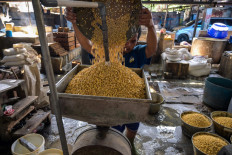
Analysis: Tighter food import controls squeeze producers
The government’s latest changes to the import regime have expanded the range of food and agricultural products subject to tighter import controls, creating bottlenecks that are raising input costs and constraining supply. At the same time, weaker-than-expected demand from the Free Nutritious Meals (MBG) programme has left producers facing pressure from both sides: higher production costs and limited demand for their output.

Opinion 1 week ago
PREMIUM
Analysis: Removing the price floor: Price discovery or speculation?
The Indonesia Stock Exchange’s (IDX) plan to lower the minimum share price from Rp 50 (less than 1 US cent) to Rp 1 could finally allow the market to discover the true value of stocks long trapped at the price floor. But greater price flexibility comes with greater risk. As distressed “zombie companies” are exposed to market forces and stocks worth only a few rupiah become tradable, the reform could improve liquidity and price discovery while also opening the door to greater volatility and speculation.

Opinion 2 weeks ago
PREMIUM
Analysis: Mandiri account freeze puts banking trust to the test
A bank account can be frozen in minutes, but the damage to trust in the financial system can last much longer. The controversial freezing of an account belonging to the coordinator of a planned demonstration in Jakarta raises a question that goes well beyond the Rp 80.9 million (US$4,500) involved: How should banks balance law-enforcement requests against due process and customer protection, particularly when the legal basis for restricting access to a customer’s money is contested?

Opinion 2 weeks ago
PREMIUM
Analysis: NU struggles for independence by changing chairs
The search for independence for Nahdlatul Ulama (NU),Indonesia’s largest Islamic social organization, has always been fought at its congress (Muktamar). The 35th Muktamar at Bahrul Ulum Tambakberas, Jombang, East Java, which closed on Aug. 26, was no exception.

Opinion 2 weeks ago
PREMIUM
Analysis: Destry’s balancing act: Growth, stability, BI independence
Destry Damayanti has officially been appointed as the new Bank Indonesia (BI) governor, taking on the responsibility of navigating not only monetary policy challenges stemming from global instability and domestic economic pressures, but also a growing institutional challenge under President Prabowo Subianto’s administration. The revision of the Financial Sector Development and Strengthening Law (UU P2SK) has expanded BI’s mandate toward supporting economic growth alongside maintaining rupiah stability. This raises questions over the central bank’s autonomy as a monetary authority, as greater state influence and stronger fiscal policy priorities could constrain Destry’s ability to respond effectively to exchange rate and inflation pressures.
Opinion 2 weeks ago
PREMIUM
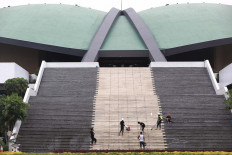
Analysis: The power to seize, the need for safeguards
Street protests have reignited the drive to pass the long-stalled asset forfeiture bill. Under renewed public pressure, the House of Representatives has committed to wrapping up deliberation by year-end, nearly two decades after the reform was first tabled. The real test now is whether this self-imposed deadline will finally overcome years of legislative foot-dragging, and whether lawmakers can be held accountable if it slips again.

Opinion 2 weeks ago
PREMIUM
Analysis: Oil and gas reform accelerates, but will it boost production?
The revision to the Oil and Gas (Migas) Law is now being pushed through the House of Representatives at unusual speed, with lawmakers targeting completion by mid-October 2026 and hoping to conclude deliberations before the current sitting period ends. The pace is notable because the Migas Law revision was not originally included in this year’s national legislation program (Prolegnas), despite years of delays.
Opinion 2 weeks ago
PREMIUM
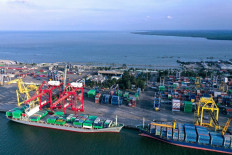
Analysis: External debt rises, current account deficit widens
Several of the country’s external sustainability indicators have weakened, as reflected in a widening current account deficit and rising external debt and external debt-to-gross domestic product ratio. The development is not entirely unexpected, as the government has signaled a greater willingness to rely on debt financing to support its growth agenda.

Opinion 3 weeks ago
PREMIUM
Analysis: Indonesia’s solar energy bet: Cautious optimism
President Prabowo Subianto recently launched the country’s massive solar power program at a ceremony in Bali, marking the construction of 14 solar power plants across the country. The projects form part of Indonesia’s push to develop 100 gigawatt-peak (GWp) of solar power capacity, aimed at providing reliable electricity to isolated villages, accelerating the transition to clean and renewable energy and strengthening energy independence.
Opinion 3 weeks ago
PREMIUM
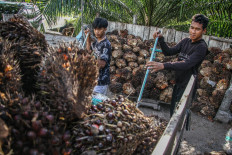
Analysis: Can Icomex make Indonesia a commodity price maker?
The country is seeking to move from being a major commodity producer and global price taker to becoming a price maker through the planned Indonesian Commodity Exchange (Icomex). Yet a similar platform, the Indonesia Commodity & Derivatives Exchange (ICDX), has operated for nearly two decades without gaining significant influence over global markets.
Editor's Picks
Popular
- Recentralization concerns in fiscal, education heighten
- Twenty years on, BRICS faces a defining choice
- Safeguarding Indonesia's AI future
- Crew member from missing Anak Krakatau boat identified
- Court decision tightens House oversight on free meals funding
- Indonesia puts peace, UN reform, Global South at center of UNGA agenda
- Batam residents protest data centers amid water crisis
- Gibran faces fresh challenge over eligibility as VP
- Breaking the vicious cycle of forest fires and haze
- RSPO integrity tested as wildfires hit orangutan habitat


