The Jakarta Post
Please Update your browser
Your browser is out of date, and may not be compatible with our website. A list of the most popular web browsers can be found below.
Just click on the icons to get to the download page.


Popular Reads
Top Results
No results found. Please check your search term and try again
Can't find what you're looking for?
View all search results
Popular Reads
Top Results
No results found. Please check your search term and try again
Can't find what you're looking for?
View all search resultsthe-brief
Opinion 3 weeks ago
PREMIUM
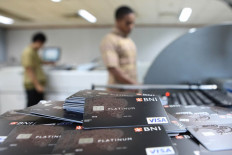
Analysis: KKI expands credit access amid rising household risks
Bank Indonesia (BI) and the Indonesian Payment System Association (ASPI) launched Kartu Kredit Indonesia (KKI) on Aug. 17, enabling deferred QRIS payments to be processed domestically. While easier access to credit could support consumption and strengthen Indonesia’s payment ecosystem, it also carries risks. Without prudent lending standards, greater convenience could lead to higher household debt and deteriorating credit quality.

Opinion 3 weeks ago
PREMIUM
Analysis: Pay it back, walk free Prabowo's corruption dilemma
Imagine a corrupt official who has stolen billions of rupiah from state coffers. Under a proposal floated by President Prabowo Subianto, that official could walk free, no conviction, no prison, simply by handing the money back. It sounds like restitution; critics say it looks a lot like a pardon with a price tag. The proposal, outlined in Prabowo's Aug. 14 State of the Nation Address, would offer amnesty to corruptors who return stolen state funds. It has reignited a debate that cuts to the heart of his presidency: Is Indonesia's war on corruption for real, or is it starting to look negotiable?
Opinion 3 weeks ago
PREMIUM
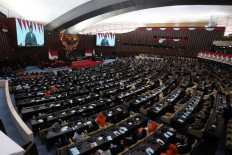
Analysis: PPHN Prabowo's green light for Soeharto's ghost
It is almost a done deal. After a decade of false starts under President Joko "Jokowi" Widodo, the push to revive a binding state roadmap, the Pokok-Pokok Haluan Negara (Principles of State Policy, or PPHN), finally has what it lacked: political consensus and a president willing to back it.
Opinion 3 weeks ago
PREMIUM
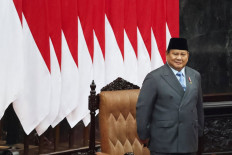
Analysis: 2027 budget sticks to growth agenda despite headwinds
President Prabowo Subianto has unveiled the government’s proposed state budget for the 2027 fiscal year, outlining another substantial expansion in government spending ahead of Indonesia’s 81st Independence Day. Government expenditure is set to rise to Rp 4,097.2 trillion (US$230.4 billion), from Rp 3,842.7 trillion in this year’s state budget, while state revenue is targeted at Rp 3,426 trillion, compared with Rp 3,153.6 trillion this year. The government is also targeting 6 percent economic growth in 2027, reinforcing Prabowo’s longstanding commitment to using government-led initiatives to accelerate growth.

Opinion 4 weeks ago
PREMIUM
Analysis: When Independence Day meets a nation’s discontent
Indonesia’s 81st Independence Day arrived with all the familiar trappings of patriotism, from polished state ceremonies to spirited neighborhood fun games. Yet beneath the celebratory veneer lay an uneasy reality. Punctuated by sharp political satire, street protests, a devastating earthquake in Flores, and ongoing violence in Papua, the occasion prompted a nagging question: Who is actually experiencing the promise of independence?
Opinion 4 weeks ago
PREMIUM
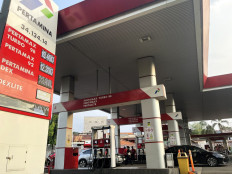
Analysis: Pursuing energy security with self-sufficiency, demand controls
The government is pursuing a two-pronged strategy to strengthen energy security: reducing dependence on fuel imports through the mandatory B50 biodiesel policy while reforming fuel subsidies to make them more targeted toward lower-income households. Both policies, however, come with challenges. The B50 program, which combines 50 percent palm oil-based biofuel with 50 percent fossil-fuel diesel, could increase domestic demand for crude palm oil (CPO), potentially affecting exports and cooking oil prices. Meanwhile, the government’s planned restrictions on subsidized fuel purchases have raised questions about the accuracy of household welfare assessments used to determine eligibility.

Opinion 4 weeks ago
PREMIUM
Analysis: Rosy labor figures conceal deeper cracks
Indonesia’s labor market resembles a polished façade concealing deeper cracks. Official figures show headline unemployment falling, yet the recovery has not created enough quality jobs for the country’s growing educated workforce. Education has long been seen as the first step up the social ladder, opening the way to secure employment and a better life. Today, however, more than 1 million university graduates are unemployed, exposing a troubling reality: A degree no longer reliably opens the doors it once promised.
Opinion 1 month ago
PREMIUM
Analysis: Odd price movements and Haji Isam’s rumored Bayan acquisition
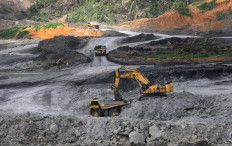
On Aug. 15 three prominent businessmen toured a site in Kutai Kartanegara, East Kalimantan, reportedly to scout potential mining sites. They were tycoon Haji Isam, PT Bayan Resources owner Dato’ Low Tuck Kwong and defense entrepreneur Norman Joesoef. The meeting quickly sparked speculation that Haji Isam was interested in acquiring a 62 percent majority stake in Bayan Resources.
Opinion 1 month ago
PREMIUM
Analysis: Drought, rising prices expose vulnerabilities in rice supply
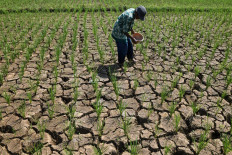
Rice prices have trended upward for the past seven months despite the Prabowo Subianto administration’s claim that Indonesia has achieved rice self-sufficiency. The price increase has occurred even as rice stocks held by the State Logistics Agency (Bulog) remain high. The trend could intensify as an El Niño-induced dry season brings worsening drought conditions, potentially disrupting harvests and putting further upward pressure on rice prices.
Opinion 1 month ago
PREMIUM
Analysis: Purbaya’s liquidity push: Lending catalyst or the wrong cure?
Finance Minister Purbaya Yudhi Sadewa has once again injected liquidity into Indonesia’s banking system, placing an additional Rp 70 trillion (US$4.3 billion) in state budget surplus funds with state-owned banks. The measure is intended to spur lending to the real sector and, ultimately, accelerate economic growth. Yet its effectiveness remains uncertain, raising a fundamental question: Can another liquidity injection genuinely revive credit growth, or is Purbaya mistaking the symptom for the cause in a classic chicken-and-egg problem?
Editor's Picks
Popular
- Recentralization concerns in fiscal, education heighten
- Safeguarding Indonesia's AI future
- Twenty years on, BRICS faces a defining choice
- Indonesia calls for more representative UN amid changing world order
- Court decision tightens House oversight on free meals funding
- Indian arrested for smuggling gold bars to Thailand via N. Sumatra airport
- Agrarian reform bill gets mixed reaction
- Singapore’s BDx launches 640MW data center project in West Java
- Crew member from missing Anak Krakatau boat identified
- ASEAN warms to BRICS without sacrificing centrality


