The Jakarta Post
Please Update your browser
Your browser is out of date, and may not be compatible with our website. A list of the most popular web browsers can be found below.
Just click on the icons to get to the download page.


Popular Reads
Top Results
No results found. Please check your search term and try again
Can't find what you're looking for?
View all search results
Popular Reads
Top Results
No results found. Please check your search term and try again
Can't find what you're looking for?
View all search resultsthe-brief
Opinion 19 hours ago
PREMIUM
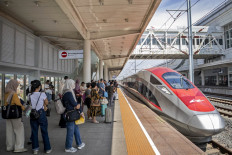
Analysis: Whoosh or noose: Uncertain future of high-speed rail project
Indonesia’s long-standing ambition to build a high-speed rail network has evolved from a national prestige project into a potential fiscal burden. Whoosh’s continuing losses and mounting debt have already drawn the Finance Ministry closer to backstopping the project. Given its history of delays, cost overruns and overly optimistic projections, the question is whether Whoosh can deliver sufficient economic benefits or become a noose around Indonesia’s already stretched fiscal capacity.
Opinion 1 day ago
PREMIUM
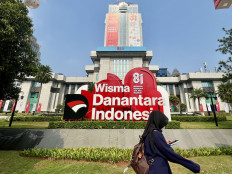
Analysis: Danantara, Finance Ministry clash over SOE dividends
The Finance Ministry and state asset fund Danantara are at odds over who controls dividends from state-owned enterprises (SOEs), exposing an unresolved question at the heart of Indonesia's new state-asset architecture. Before Danantara was created, SOE dividends were paid to the state and recorded as non-tax revenue. Under the new framework, Danantara manages the shares and assets transferred to it and can use returns from those assets for investment and capital injections. Part of its eventual profits is to be transferred to the state after provisions for investment risks and capital accumulation. The dispute therefore is not simply about whether the government can receive SOE dividends, but about when and through what mechanism those funds should reach the state budget.
Opinion 2 days ago
PREMIUM
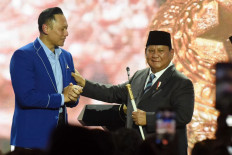
Analysis: Agus’ balancing act: Criticizing power without leaving it
Agus Harimurti Yudhoyono's recent political messaging can be interpreted as an attempt to achieve a delicate balancing act: positioning himself and the Democratic Party as a critical voice within government without crossing the line into outright opposition. It is a strategy born from both opportunity and necessity. For Agus, the political challenge is obvious. While he remains one of Indonesia's most recognizable younger politicians, he has not consistently appeared among the top-tier contenders in most discussions about the 2029 presidential election.
Opinion 3 days ago
PREMIUM
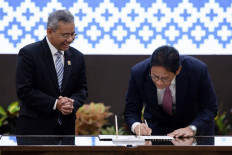
Analysis: Purbaya’s contentious tenure ends in internal clash
Purbaya Yudhi Sadewa was removed as finance minister after just over a year in office, marking the second time President Prabowo Subianto has replaced the country’s finance minister in less than two years. Prabowo appointed former deputy finance minister Suahasil Nazara to replace him, making Suahasil the third person to hold the position since Prabowo took office. The abrupt change followed months of contentious reforms, fiscal policies and plans that increasingly brought Purbaya into conflict with officials within the Finance Ministry and with other institutions.
Opinion 5 days ago
PREMIUM
Analysis: Indonesia’s disaster budget faces a cost-benefit test
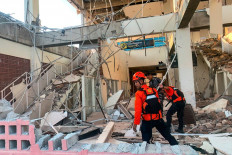
Indonesia faces an unfortunate fiscal paradox: Just as the government has cut disaster-mitigation funding to the bone, disasters have struck with unforgiving regularity. President Prabowo Subianto himself has acknowledged that disasters are part and parcel of life in the archipelago. Yet his administration has slashed the National Disaster Mitigation Agency’s (BNPB) budget to just Rp 491 billion (US$28 million) this year, raising a fundamental question: How much can Indonesia afford to save on preparing for disasters?
Opinion 6 days ago
PREMIUM
Analysis: Indonesia-Russia ties deepen: Might this time be different?
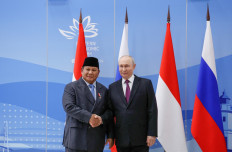
At the 11th Eastern Economic Forum in Vladivostok, Russia, President Prabowo Subianto announced plans by Russian aluminum producer Rusal to invest in an Indonesian processing plant, part of broader efforts to deepen bilateral economic ties. Yet the planned investment comes amid intensifying geoeconomic rivalry among major powers, raising questions over whether Indonesia can deepen ties with Russia without compromising its strategic flexibility. The test is whether Indonesia can remain both bebas (free) and aktif (active).
Opinion 1 week ago
PREMIUM
Analysis: When wildfires become a diplomatic problem
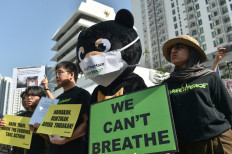
Indonesia’s recurring wildfires have once again spiraled into a crisis that reaches far beyond its forests and peatlands. As dense haze shuts down schools, endangers public health, and chokes local economies at home, smoke from fires across Sumatra and Kalimantan has drifted across national borders, blanketing parts of Singapore, Malaysia, Brunei, and the Philippines. What has long been treated as an unfortunate, seasonal environmental headache is morphing into a thorny test of governance, and an escalating diplomatic liability for Jakarta.

Opinion 1 week ago
PREMIUM
Analysis: Adaro witness summons revives questions over tycoon rivalry
The corruption investigation into the Banjarmasin Medium Tax Office (KPP Madya) has taken an unexpected turn, with the Corruption Eradication Commission (KPK) examining senior tax officials linked to Adaro, one of Indonesia’s largest business groups. The development has brought renewed attention to Adaro’s long and complicated ownership history, including a past dispute involving businessman Hashim Djojohadikusumo, the younger brother of President Prabowo Subianto.

Opinion 1 week ago
PREMIUM
Analysis: Death of mirror seller: Investigation puts state on trial
The death of Bambang Setiawan, a 60-year-old mirror seller from Pejompongan in Central Jakarta, should have been a straightforward homicide case. He left his house at 10 p.m. to switch off the lights in his shop 500 meters away, during unrest following the Aug. 27 demonstrations near the Senayan Legislative Complex in Central Jakarta. He was found unconscious, removed by police and pronounced dead at Mintohardjo Hospital. Ten days later, the case has become a mirror for everything wrong with how Indonesia polices protest.
Opinion 1 week ago
PREMIUM
Analysis: Tighter food import controls squeeze producers
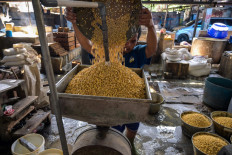
The government’s latest changes to the import regime have expanded the range of food and agricultural products subject to tighter import controls, creating bottlenecks that are raising input costs and constraining supply. At the same time, weaker-than-expected demand from the Free Nutritious Meals (MBG) programme has left producers facing pressure from both sides: higher production costs and limited demand for their output.
Editor's Picks
Popular
- Recentralization concerns in fiscal, education heighten
- Safeguarding Indonesia's AI future
- Twenty years on, BRICS faces a defining choice
- Indonesia calls for more representative UN amid changing world order
- Court decision tightens House oversight on free meals funding
- Indian arrested for smuggling gold bars to Thailand via N. Sumatra airport
- Agrarian reform bill gets mixed reaction
- Singapore’s BDx launches 640MW data center project in West Java
- Crew member from missing Anak Krakatau boat identified
- ASEAN warms to BRICS without sacrificing centrality


