The Jakarta Post
Please Update your browser
Your browser is out of date, and may not be compatible with our website. A list of the most popular web browsers can be found below.
Just click on the icons to get to the download page.


Popular Reads
Top Results
No results found. Please check your search term and try again
Can't find what you're looking for?
View all search results
Popular Reads
Top Results
No results found. Please check your search term and try again
Can't find what you're looking for?
View all search resultspapua
Academia 5 months ago
PREMIUM
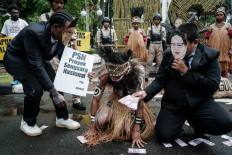
What’s next after ‘Pesta Babi’ breaks the silence
By holding up an uncomfortable mirror to state-led exploitation and violence in Papua, Pesta Babi has shattered decades of enforced silence, forcing Jakarta to choose between repressive censorship and genuine, rights-respecting reform.


Archipelago 5 months ago
PREMIUM
Five dead, three missing in Papua after WWII bomb explodes
The island, located just off the northwest coast of mainland Papua, was a key WWII battleground between United States and Japanese forces, though police have yet to uncover how the bomb ended up in the coastal fisheries settlement in Yanures village, Kota Biak district.

Archipelago 5 months ago
PREMIUM
Education ministry to renovate more schools in Papua
The Elementary and Secondary Education Ministry kicked off a school renovation program on Tuesday across 39 schools in two regions of Southwest Papua, in a move to strengthen equal access to education in the easternmost part of the country.
Academia 5 months ago
PREMIUM
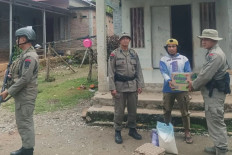
Security operations: A willful repeat of gross crimes against civilians
Driven by land and resource grabs masked as counterterrorism operations, the escalation of military operations in Poso and Papua are willfully exposing Indonesian citizens to a brutal campaign of violence and forced displacement.


Archipelago 6 months ago
PREMIUM
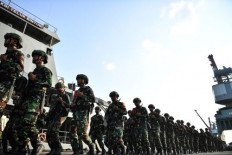
Tribal clashes in Papua Highlands leave 13 dead, hundreds displaced
Police said the clashes also caused extensive property damage, with 177 houses, 63 traditional honai homes, eight shophouses, a school building and a village office set on fire. The conflicting groups also torched 48 cars and 43 motorcycles.

Politics 6 months ago
PREMIUM
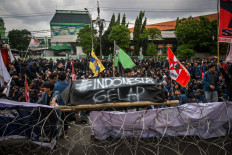
Govt denies ordering shutdowns of Papua documentary screenings
Senior minister Yusril Ihza Mahendra insisted that the government had never ordered a ban on screenings of the Papua documentary Pesta Babi (Pig Feast), maintaining its commitment to freedom of expression while rejecting the film’s allegations of state-driven “modern colonialism”.
Editor's Picks
Popular
- RI apologizes to ASEAN for haze
- Never tax essentials
- Analysis: Gibran’s exit and the unraveling of the Jokowi legacy
- Analysis: Indonesia’s digital tax: Welcome, but not enough
- Govt can only foot 8 percent of RI’s massive development bill
- Anthropic clinches biggest IPO ever with $81b offering
- Outlook of the national palm oil sector in 2027
- Prabowo sits beside Putin at Xi-hosted APEC dinner
- Govt demands Google explanation over removal of pro-government YouTube channels
- BREAKING: House passes long-awaited asset forfeiture law amid transparency concerns


