(Shutterstock)
Jakarta has a new afterwork ritual. The padel and pickleball courts are booked out weeks in advance. Race registrations sell out faster than concert tickets. Hyrox competitions are drawing thousands. Somewhere in your contact list, someone is probably training for something.
What gets lost in all of this is what most recreational athletes didn’t expect to be part of the lifestyle.
Desy Yuliastuti, 37, started running in 2022 to get fitter. Within a few years, she was training for longer distances, feeling stronger and feeling good. Then, in February, she felt an unfamiliar twinge in her left knee during a training run.
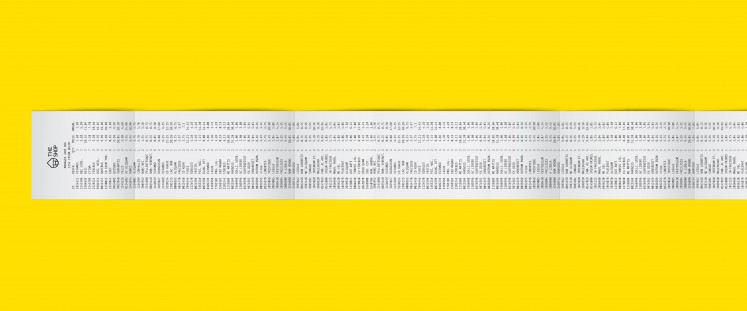
What followed was four tendon ruptures in two months. At the first hospital, eight physiotherapy sessions cost around Rp 450,000 (US$24.88) each without insurance, plus a dry needling session at Rp 350,000. At the second hospital, each visit including the doctor's consultation came to nearly Rp 2 million. The total: Rp 11.95 million.
But, she says, "it was worth every penny" just to get back to the starting line.
Desy's story is increasingly common. As millions of Indonesians embrace a more active lifestyle, an industry has grown up alongside the fitness boom to treat what it produces: sports injuries, overuse syndromes and the accumulated physical cost of asking your body to do things it wasn't prepared for.

Thank you!
For signing up to our newsletter.
Please check your email for your newsletter subscription.
The sports medicine and physiotherapy market is growing fast, driven not by professional athletes, but people like you and me who have decided to become recreational athletes in their spare time.
Recreational growth
For decades, the standard response to a sports injury was simple: rest, ice, compress, elevate. Get off the field, stay off it and wait for the pain to subside. But as sports medicine has evolved, rehabilitation has come to mean something more active.
"After COVID, it seems that there was a boom in the awareness of sports and living well," says Michelle Bhojwani, the managing director of PhysioActive. "And that's when there was the sudden surge of patients coming in for their physiotherapy."
The numbers bear this out. PhysioActive, which now operates four branches in Jakarta, saw its cumulative appointment numbers grow 235 percent from 2021 to 2025. Online bookings have grown from 10 percent of total appointments in 2023 to 25 percent in 2026.
The patients driving this growth aren't coming from professional training rooms - they're coming from padel courts, road races, cycling routes and Hyrox competition floors.
Akeso, which has operated in Jakarta for 20 years, is seeing the same pattern. The clinic recorded revenue growth of 30 percent year-on-year and appointment growth of 15 percent.
"The most common profile we see is someone in their 40s, a professional from a wealthier subset of Jakarta, but someone who is generally quite active - not necessarily a professional athlete," says Susan Weiss, head of commercial at Akeso Physio Clinics.
Royal Sports Performance Centre, founded by Derice Sumantri, president director of Progress Healthcare, has grown by 25 to 28 percent annually and now serves over 32,000 patients a year. Built around the premise that recreational athletes deserve the same integrated care as professionals, it counts the Indonesian Badminton Association, the Indonesian Football Association and the Indonesia Basketball League among its institutional partners.
 (Courtesy of Akeso)
From physio to full team
As demand has grown, so has the sophistication of what's on offer.
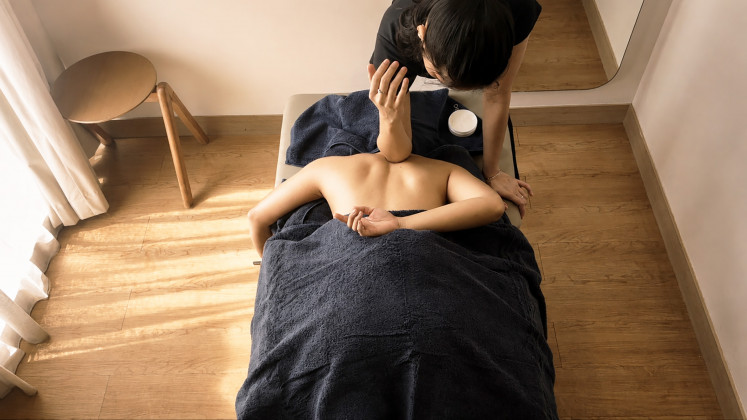
Akeso's approach is rooted in Australian physiotherapy methods, which place heavy emphasis on manual therapy. "What they are trained in is understanding the anatomical structure of the body, so they're able to pinpoint the exact spots that need to be released," Susan says. “It's really about navigating people's bodies and finding the exact muscles, tissues, joint structures, and being able to do that very, very precisely."
While manual therapy remains the foundation, the menu of services in other clinics is growing. Ultrasound therapy, one of the most widely used treatments, uses high-frequency sound waves to improve tissue relaxation and blood flow. Dry needling, which has seen demand triple at PhysioActive, targets chronically sore muscles and stubborn knots. Electrotherapy blocks pain signals to reduce discomfort. Cryotherapy and thermotherapy round out what has become, for many Jakarta clinics, a full rehabilitation and recovery ecosystem.
The expertise on offer has also widened, with all three clinics saying having a doctor on the team is essential.
"If you go to a physiotherapist only, they will look at your injury and solve your muscle issues. But if I give you the accessibility to see a sports orthopedic surgeon, a sports medicine specialist and a physiotherapist, and these three review your case, our promise is to get you better than before," Derice says.
Alongside orthopedic surgeons and physiotherapists, Royal Sports employs nutritionists, sports psychologists and sports acupuncturists, and offers treatments including stem cell therapy, IV bars and cryotherapy, each prescribed by a specialist.
"I needed a team of specialists who truly understand that the way you use your body as a healthy human being who might be injured is very different from when your grandmother needs a hip replacement because of bone deterioration,” Derice says.
The demand, the center says, has shifted from reactive injury treatment toward a more integrated sports medicine journey: assessment, orthopedic care, physiotherapy, rehabilitation and a structured return to sport.
 (Courtesy of PhysioActive)
From treatment to prevention
For many recreational athletes, the first visit to a sports clinic is reactive - the result of an injury that wouldn't heal on its own. But it's rarely the last. Having experienced firsthand what happens when the body breaks down under training stress, many return not to treat a new injury but to make sure the next one never happens.
"Physiotherapy is about longevity, sustainability and prevention,” Michelle says. “In sports or in rehabilitation, we say movement is medicine."
In other words, physiotherapy isn’t just something you do after you get hurt. For a growing number of recreational athletes, it’s become part of the training itself.
This raises an obvious question: how much of this does an athlete actually need?
"If we look at professional athletes, their recovery needs are highly dependent on the quality of their consistent training," says Dr. Nani C. Sudarsono, Sp.KO, a lecturer at Universitas Indonesia. For professionals, every session feeds into the next, and peak performance depends on arriving at each one adequately recovered.
"The question is, do amateur or recreational athletes really need all of this? Sometimes they do,” she adds. While recreational athletes may not be competing or training on a continuous cycle, they do return to desks, meetings and family obligations immediately after a workout. The physical performance stakes may be lower, but the need for recovery is still real.
Recovery as part of the lifestyle
Mirna Idris, 39, navigated this question the practical way. After sustaining an iliotibial band injury during a 120-kilometer ultra marathon in Tangerang in 2024 — an injury that forced her to withdraw from the race — she racked up three doctor visits and five physiotherapy sessions at a total cost of Rp 4.25 million.
The injury served as an alarm for her to listen to her body and prioritize proper recovery. Now, she spends around Rp 1 million a month on preventive sports massage and physiotherapy.
She found that going directly to an orthopedic clinic like Bebas Cedera, which translates as "injury-free”, is faster and more practical than navigating the sports medicine wing of a hospital. "First, it's costly. Secondly, I have to go to the doctor for the diagnosis. But when I go to Bebas Cedera, I just say that I feel discomfort in my hamstring or my calf or my knee," she says. "Sometimes we feel impatient, so let's just go to the physiotherapy."
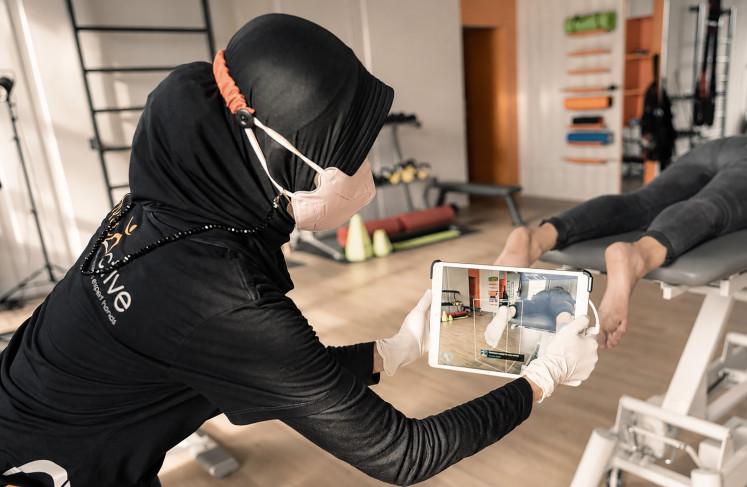
What experts want recreational athletes to understand is that recovery doesn't only happen inside clinics. It requires consistent commitment between sessions, after workouts and at home - and that's often where the mindset gap shows up. PhysioActive launched an app to help patients maintain their rehabilitation between visits, complete with exercise videos, reminders and a feedback feature. It came after a revealing patient complaint.
"One of our patients said, 'I expected to come here to get a quick fix, instead I am paying to get homework at home,'" Michelle says. "We didn't provide enough knowledge for that patient to understand her rehabilitation journey. Maybe the mindset is not there, because they come in with the expectation of a quick fix or a miracle solution."
The fitness boom has created a generation of recreational athletes who want to perform like professionals. What the sports medicine industry is learning is that recovery is not an afterthought to training. For the millions of Indonesians now showing up to courts, tracks and competition floors, neither should it be.
Sheena Suparman is a writer for The Jakarta Post's Creative Desk. She is based in Jakarta but wishes she could be anywhere else. She’s usually powered by coffee, chips and cheeseburgers.