(Shutterstock)
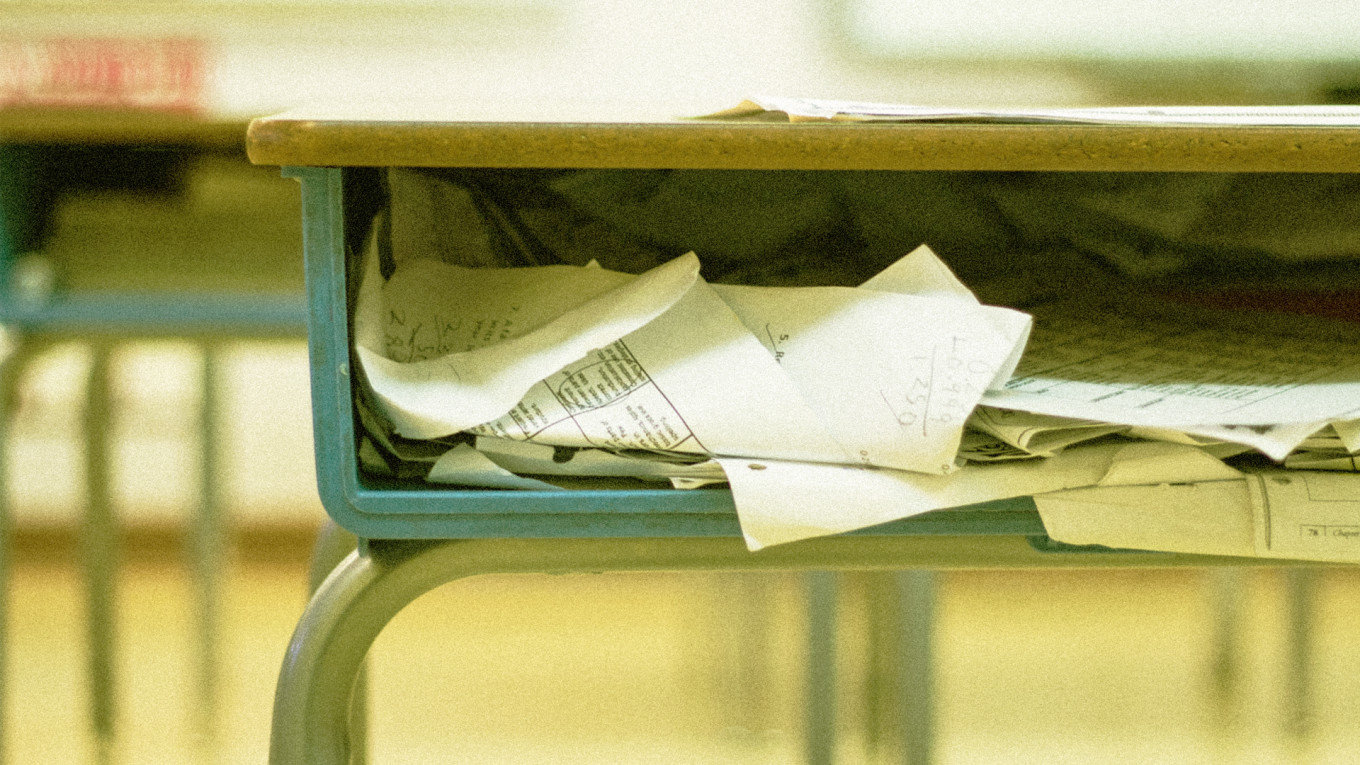
This year, exam season was a study in contrast. In India, a leaked medical entrance paper voided the results of 2.27 million students and forced a re-sit. In the 46 days between cancellation and reexamination, at least 13 aspirants took their own lives. What followed was a youth-led movement that occupied the streets of cities across the country and has dented Prime Minister Narendra Modi’s hitherto invincible image.
I was watching from a few thousand kilometers north, in Beijing, where China was in the middle of its own exam season — the gaokao taken by aspiring university students is held every June and is the largest standardized test on earth. This year 13.35 million students took it.
The exam is designed centrally by the Ministry of Education and administered by the provinces. Every year the entire country briefly reorganizes itself around one task: making sure millions of school leavers answer the same questions under the same conditions, at the same moment.
Exam papers travel and are stored like state secrets: GPS-tracked vehicles, police escort. Teachers who develop the exam questions are reportedly confined for about a month in secure facilities. The papers are often printed by high-security units where waste disposal and drainage systems are closely monitored to prevent leaks.
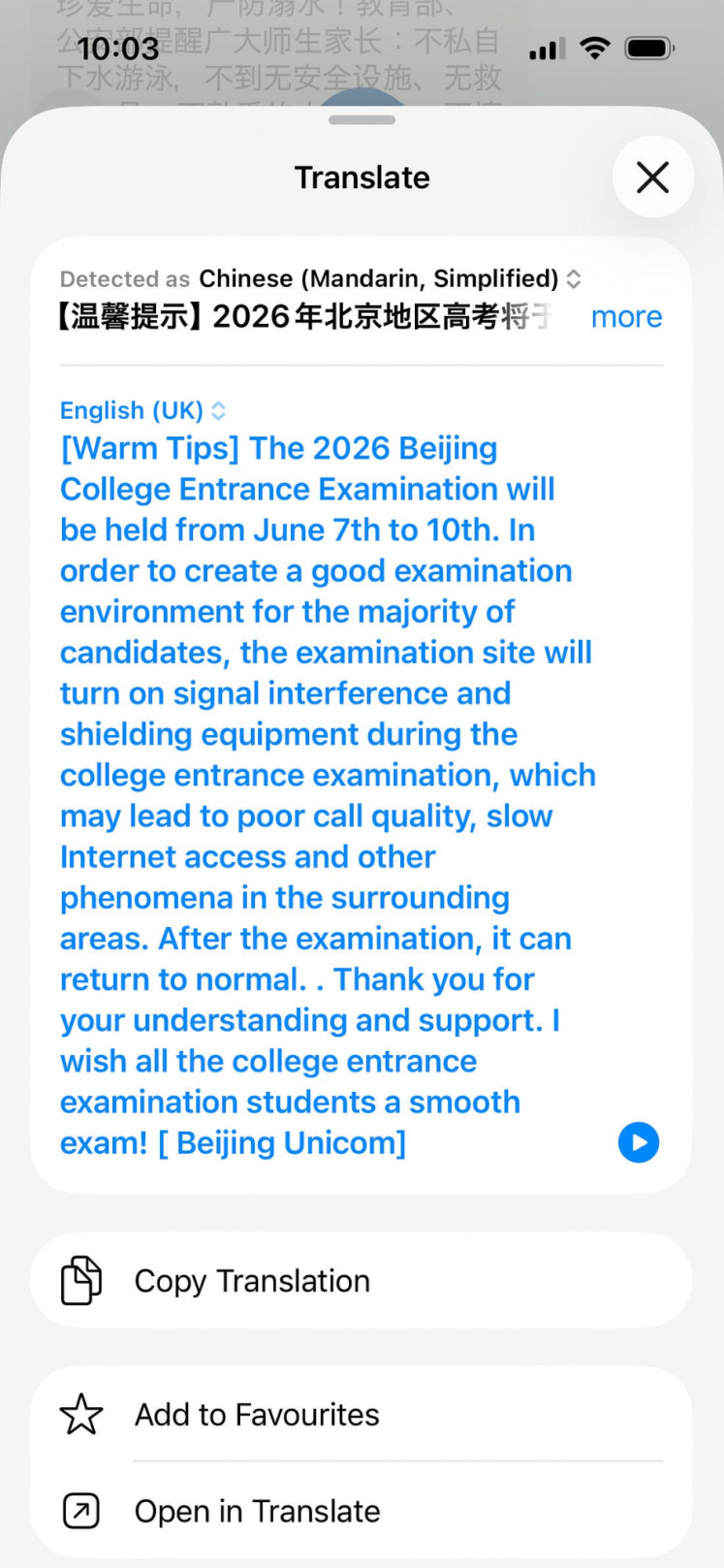
Exam halls run facial recognition, signal jammers and blanket bans on phones and smartwatches. Since last year, China’s major artificial intelligence firms have voluntarily throttled their own products during the exam window, disabling image recognition and real-time question-answering. Regulators, meanwhile, trawl social media for rumors of leaks and ads for cheating services.
My own, usually bustling, neighborhood in central Beijing was hushed for the week of the gaokao. Construction paused. Car horns were discouraged. Traffic was rerouted to help exam takers arrive on time. Police ran shuttle services for stragglers; volunteers lined the roads with free rides, water, snacks.

Thank you!
For signing up to our newsletter.
Please check your email for your newsletter subscription.
This was the text message my telecom provider sent me in the run-up to the exam:
 (Courtesy of Pallavi Aiyar )
The machinery can seem almost absurdly elaborate until one understands what is actually being protected. The gaokao is more than an examination. It is the Chinese state’s most visible demonstration that career advancement is governed by meritocratic rules rather than by family background or political connections. In a country where inequality is immense, the examination is one of the few institutions that must be seen to be fair.
This is why the party devotes such extraordinary attention to getting it right. Unlike in India, the Chinese Communist Party cannot renew its mandate through elections; instead, it renews it through demonstrations of competence. An orderly gaokao is one such demonstration. Every candidate who believes the rules are fairly enforced is, in a small way, a citizen who is persuaded that the state is delivering its side of China’s grand political bargain: we will govern effectively, you need not concern yourself with politics.
Few things threaten this bargain more than the suspicion that the country’s principal engine of social mobility has been rigged. The party has never forgotten that China’s last great political crisis began with students. The protests of 1989 were not about the gaokao, but they remain a haunting reminder that when young people lose faith in a system, their grievances can quickly snowball, with dangerous consequences for those in power.
In India, the public examination system is in some ways even more fundamental than in China. The Chinese Communist Party inherited, and then transformed, a society riven with hierarchies, but the revolution provided a powerful levelling ideology: at least in principle, citizens entered the new state as equals. India inherited democracy without a comparable social revolution. Caste, religion, region and community remained load-bearing structures of social life. As a result, public examinations carry an even greater equalizing burden than in China.
India’s is a democracy of process more than delivery: elections are held on schedule, results are respected and governments change hands peacefully. The machinery works. But process is not the same as accountability. For much of the country’s history, politics has been conducted less through demands for universal public goods than through claims made on behalf of sectarian communities — caste calculations, religious appeals and regional bargains. Citizens usually approach the state as members of a specific group, rather than simply as citizens entitled to equal treatment.
That is what makes this summer’s student protests so striking. Theirs have not been demands for a larger share of state resources, greater representation for a particular group, or a new entitlement. They’ve been demands that one institution, the examination system, function according to a universal rule: that every candidate, regardless of background, face the same test under the same conditions. It is a seemingly straightforward ask, but in India it carries unusual political weight. The demand for a fair exam is about much more than an exam. It is an insistence that the state treats citizens equally — and, in India, that is radical politics.
Pallavi Aiyar is a territorially polygamous correspondent, columnist, and author. She has reported from — and raised a family in — China, Belgium, Japan, Indonesia and Spain. She writes about the world with indiscriminate delight and a weakness for the surprising connections between people and places.