The Jakarta Post
Please Update your browser
Your browser is out of date, and may not be compatible with our website. A list of the most popular web browsers can be found below.
Just click on the icons to get to the download page.


Popular Reads
Top Results
No results found. Please check your search term and try again
Can't find what you're looking for?
View all search results
Popular Reads
Top Results
No results found. Please check your search term and try again
Can't find what you're looking for?
View all search resultsGlobal temperature rises to exceed 1.5 Celsius 'within a few years', UN says
The United Nations Environment Programme said bringing temperature rises back to below 1.5C was "possible but highly uncertain," and would require rapid emission cuts as well as interventions to remove carbon dioxide already in the atmosphere.
Change text size
Gift Premium Articles
to Anyone
Share the best of The Jakarta Post with friends, family, or colleagues. As a subscriber, you can gift 3 to 5 articles each month that anyone can read—no subscription needed!
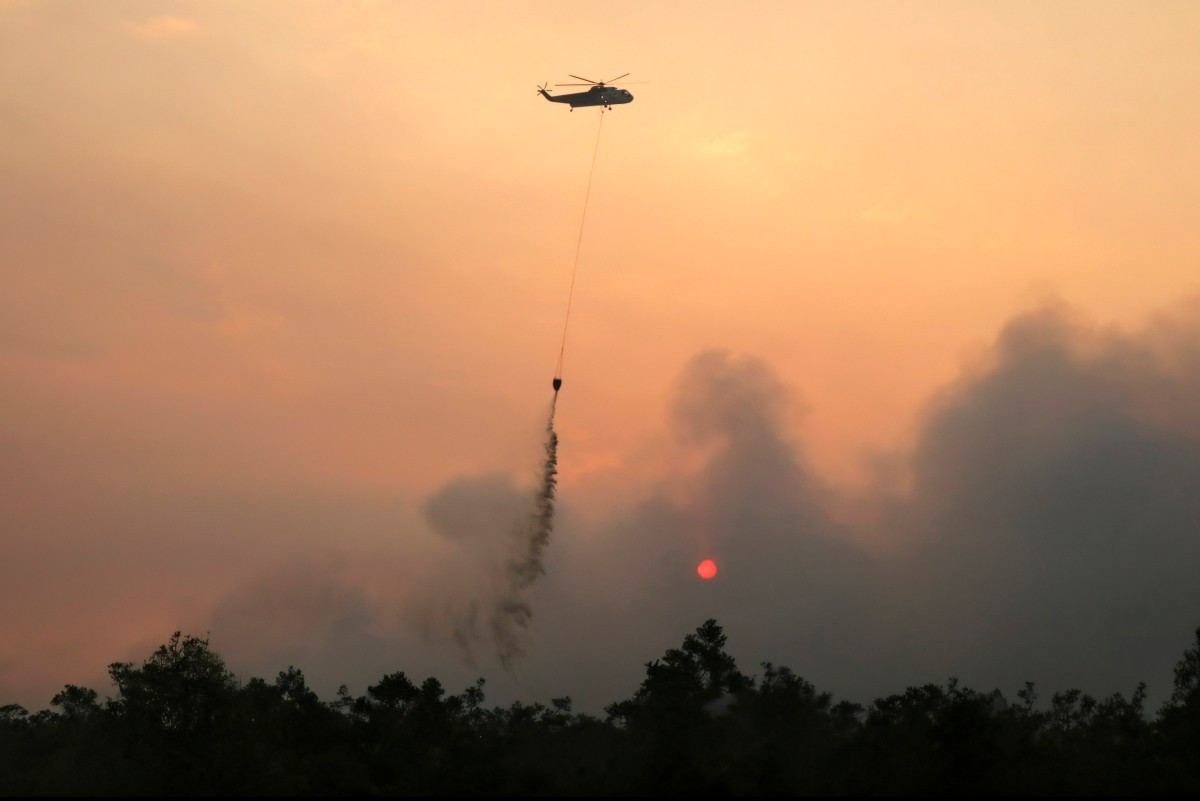 A helicopter drops water on burning forests and land in the Petuk Katimpun area, Palangka Raya, in Central Kalimantan, on August 13, 2026. (AFP/Reina)
G
lobal temperature rises are set to exceed the key threshold of 1.5 degrees Celsius (2.7 degrees Fahrenheit) "within a few years", the UN's environmental body said on Wednesday, creating more extreme weather and intensifying pressure on ecosystems, glaciers and low-lying coastal cities.
The United Nations Environment Programme said bringing temperature rises back to below 1.5C was "possible but highly uncertain," and would require rapid emission cuts as well as interventions to remove carbon dioxide already in the atmosphere.
Under the 2015 Paris Agreement governments committed to keeping temperature rises within 1.5C to limit the impacts of extreme weather.
With "overshoot" now extremely likely, countries now need to focus on limiting how long temperatures remain above 1.5C, UNEP said in a report.
"Every year of delay and every fraction of a degree above 1.5C increases risks and makes recovery harder, with irreversible losses possible even if temperatures later decline," it said.
The most optimistic scenario will see temperature rises peak at 1.8C above pre-industrial levels if all existing national pledges are implemented, but it is likely to be much higher, the report added.
"Under current policies, median projected global warming reaches around 2.6C by 2100," it said.
It said carbon dioxide removal (CDR) measures - including planting new forests - would be "critical" to control rising temperatures, but they would be no replacement for deep cuts in current emission levels.
UN Secretary General Antonio Guterres last year acknowledged the inevitability of overshooting 1.5C but this is the first time a UN agency has addressed this head-on in a dedicated report.
The report's stark language alarmed climate campaigners who have rallied around 1.5C since it was affirmed as the more ambitious goal of the Paris Agreement a decade ago.
"This is a heartbreaking moment, but overshoot is not the reason to give up and surrender 1.5C", said Jasper Inventor, Deputy Programme Director at Greenpeace International.
Bill Hare, a climate scientist and CEO of policy institute Climate Analytics, slammed the report and said it risked becoming "a call to apathy rather than a call to arms".
Small island nations threatened by rising seas have been particularly vocal defenders of the 1.5C target and have urged wealthier countries not to abandon the milestone even as it slips out of reach.
The world has already warmed roughly 1.4C since 1850-1900 mostly from the burning of fossil fuels and the last three years have been the hottest on record.