The Jakarta Post
Please Update your browser
Your browser is out of date, and may not be compatible with our website. A list of the most popular web browsers can be found below.
Just click on the icons to get to the download page.


Popular Reads
Top Results
No results found. Please check your search term and try again
Can't find what you're looking for?
View all search results
Popular Reads
Top Results
No results found. Please check your search term and try again
Can't find what you're looking for?
View all search resultsUN, Red Cross call for urgent rules on autonomous weapons
Change text size
Gift Premium Articles
to Anyone
Share the best of The Jakarta Post with friends, family, or colleagues. As a subscriber, you can gift 3 to 5 articles each month that anyone can read—no subscription needed!
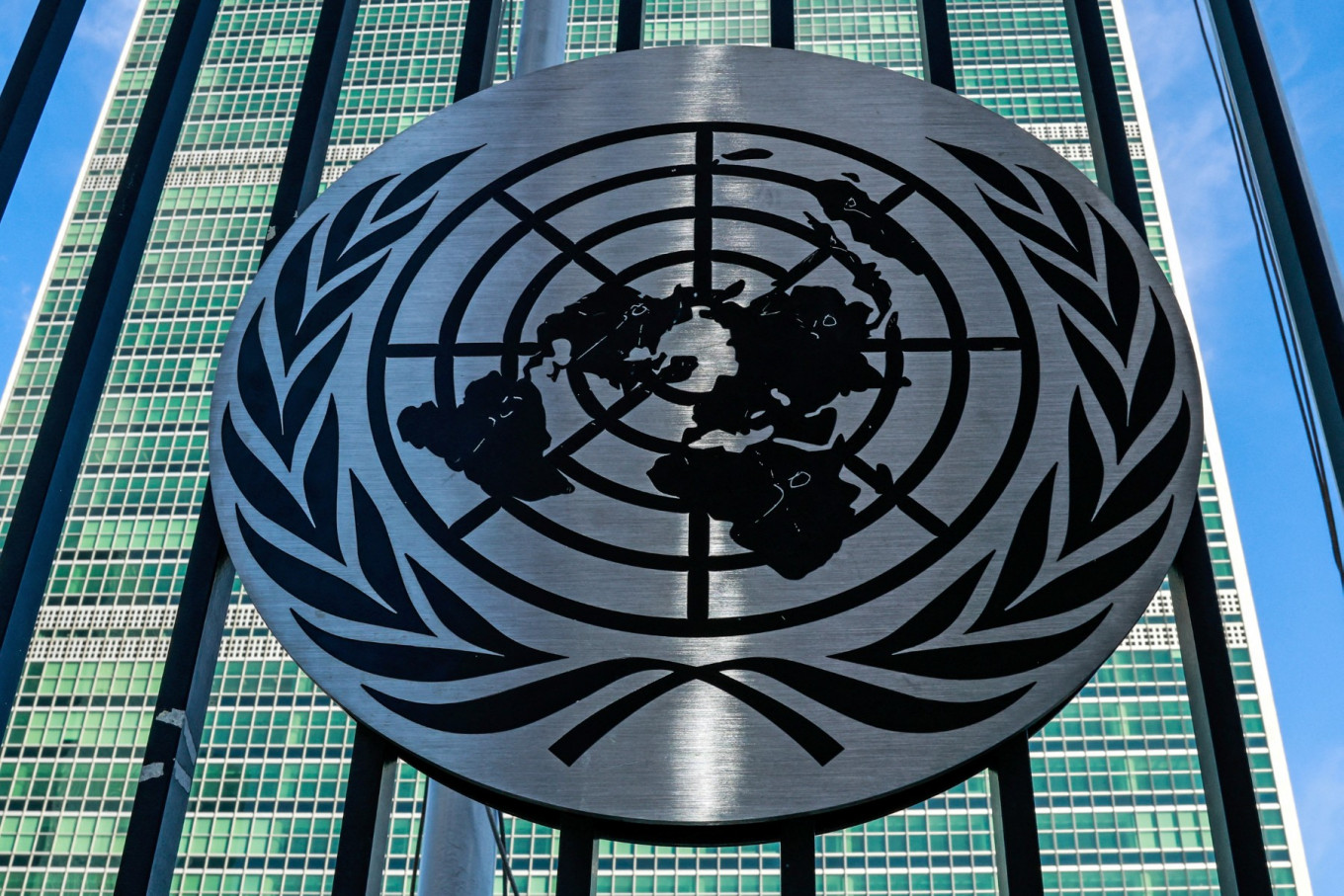 The United Nations (UN) logo is seen on a gate outside the UN headquarters ahead of the United Nations General Assembly (UNGA) in New York on September 21, 2025. (AFP/Kena Betancur)
T
he head of the Red Cross and the United Nations on Tuesday warned that autonomous weapons that can kill people without human involvement could soon be used in conflicts and called for urgent negotiations to restrict their use.
"We are now dangerously close to crossing a moral red line: the autonomous targeting of humans by machines," said United Nations Secretary-General Antonio Guterres and President of the International Committee of the Red Cross Mirjana Spoljaric in a joint statement.
"Negotiations must begin now to urgently adopt a legally binding instrument to regulate autonomous weapon systems with clear prohibitions and restrictions," they said.
States are meeting in Geneva on potential new rules next week amid mounting concerns over the role of AI-assisted semi-autonomous weapons that have been used in conflicts in Ukraine, Sudan, Gaza, and in Iran and the Gulf.
These discussions, ongoing since 2014, have made some progress but technology has also advanced.
Fully autonomous weapons are already in use by some armies, such as anti-missile systems on warships, but for now they are not known to be used against human targets.
Human rights groups also worry that AI-driven systems cannot be adequately predicted or controlled, raising the risk of fatal errors such as a failure to recognize an injured or surrendering soldier. And once such errors occur, it is harder to hold perpetrators to account in any future war crimes cases, they say.
"States must show political courage and move beyond incremental discussions towards decisive action", the joint statement said, calling for those talks to begin in November when a major conference is planned in Geneva.