The Jakarta Post
Please Update your browser
Your browser is out of date, and may not be compatible with our website. A list of the most popular web browsers can be found below.
Just click on the icons to get to the download page.


Popular Reads
Top Results
No results found. Please check your search term and try again
Can't find what you're looking for?
View all search results
Popular Reads
Top Results
No results found. Please check your search term and try again
Can't find what you're looking for?
View all search resultsLong-awaited Asset Forfeiture Law falls far short of reform hopes
The legislature has finally enacted Indonesia's landmark Asset Forfeiture Law, yet critical omissions regarding unexplained wealth, retroactivity and environmental crimes threaten to shield the very elites it is meant to hold accountable.
Change text size
Gift Premium Articles
to Anyone
Share the best of The Jakarta Post with friends, family, or colleagues. As a subscriber, you can gift 3 to 5 articles each month that anyone can read—no subscription needed!
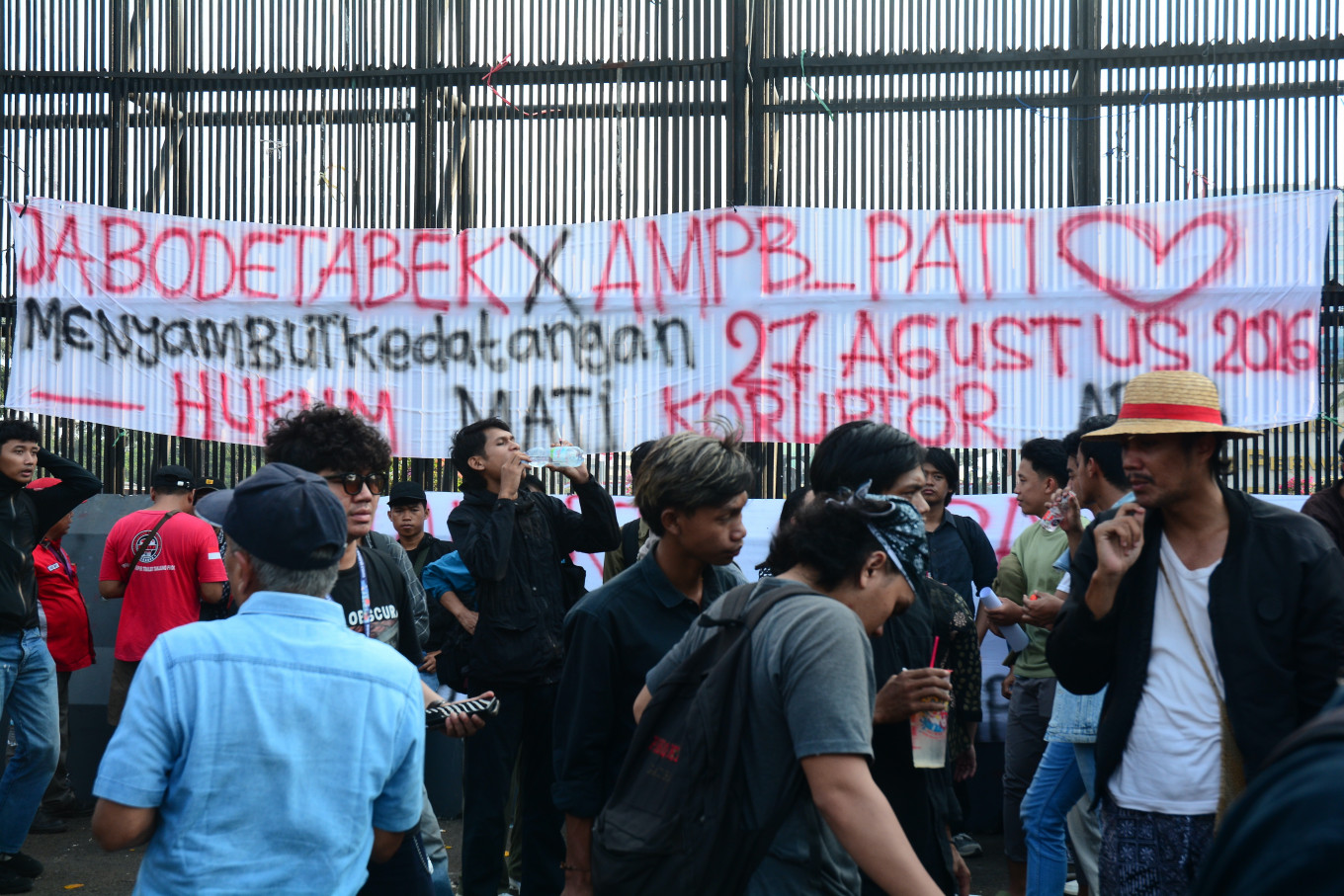 People gather at the Senayan Legislative Complex in Central Jakarta on Aug. 26, 2026, to join a peaceful protest organized by the United Pati Community Alliance (AMPB) on eradicating corruption and passing the asset forfeiture bill. (JP/Iqro Rinaldi)
A
fter 18 years of sustained advocacy, legislative uncertainty and public demands for institutional reform, the House of Representatives unanimously passed the asset forfeiture bill into law on Nov. 19. Lawmakers claim the new law marks a pivotal development for the future of Indonesia’s criminal justice system.
Credit for reaching this juncture belongs to the broad coalition of civil society organizations, academics, legal practitioners, investigative journalists, policymakers, reform-minded officials and engaged citizens who persistently kept asset recovery firmly on the national agenda. Regrettably, however, the substantive provisions of the new legislation fall considerably short of the expectations and aspirations of its long-standing proponents.
Indonesia’s anticorruption strategy has historically prioritized the punitive imprisonment of offenders. Recovering the illicit proceeds of crime, by contrast, has proven far more elusive. Under the conventional criminal justice paradigm, a convicted offender may serve a custodial sentence while substantial illicit wealth remains hidden, concealed, transferred or converted into complex assets placed beyond the effective reach of law enforcement authorities.
This systemic failure to confiscate criminal proceeds severely undermines the deterrent effect of criminal sanctions. Moreover, it permits illicit capital to finance ongoing criminal enterprises, distort legitimate economic markets, deprive victims of rightful restitution and deny the state vital resources required for public recovery and national development.
House Commission III chairman Habiburokhman called the measure a paradigm shift in criminal justice and state recovery centered on non-conviction-based forfeiture. Under strict conditions, courts can confiscate assets linked to corruption and other predicate offenses without a prior criminal conviction.
The House committee report outlines an end-to-end procedural framework spanning asset tracing, account blocking, seizure, judicial examination and enforcement alongside vital safeguards, such as bona fide third-party protections, professional asset management, independent oversight and digital transparency. These guarantees are essential to prevent expansive forfeiture powers from abusing constitutional due process.

However, the law's major flaw is omitting core tools found in comparable regimes, notably provisions on illicit enrichment and unexplained wealth. Lawmakers and the executive excluded mechanisms targeting wealth grossly disproportionate to lawful income, citing human rights and procedural constraints.