The Jakarta Post
Please Update your browser
Your browser is out of date, and may not be compatible with our website. A list of the most popular web browsers can be found below.
Just click on the icons to get to the download page.


Popular Reads
Top Results
No results found. Please check your search term and try again
Can't find what you're looking for?
View all search results
Popular Reads
Top Results
No results found. Please check your search term and try again
Can't find what you're looking for?
View all search resultsChip diplomacy
Washington's increasingly restrictive approach amid technology rivalry with China risks turning Indonesia, which has little control in the global semiconductor race, into collateral damage.
Change text size
Gift Premium Articles
to Anyone
Share the best of The Jakarta Post with friends, family, or colleagues. As a subscriber, you can gift 3 to 5 articles each month that anyone can read—no subscription needed!
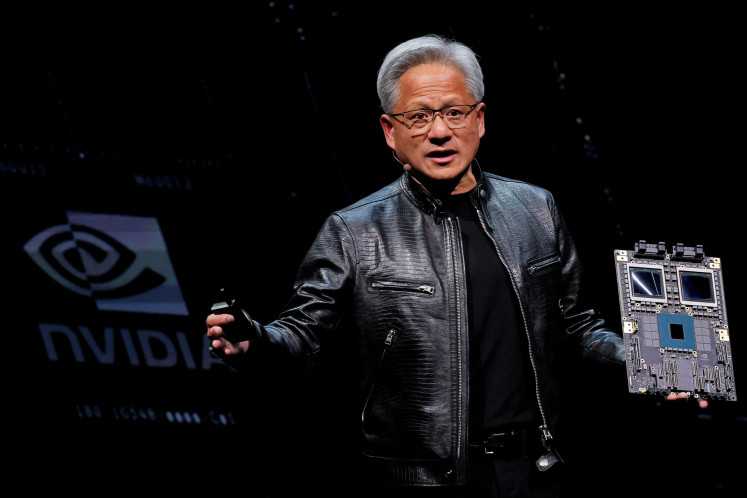
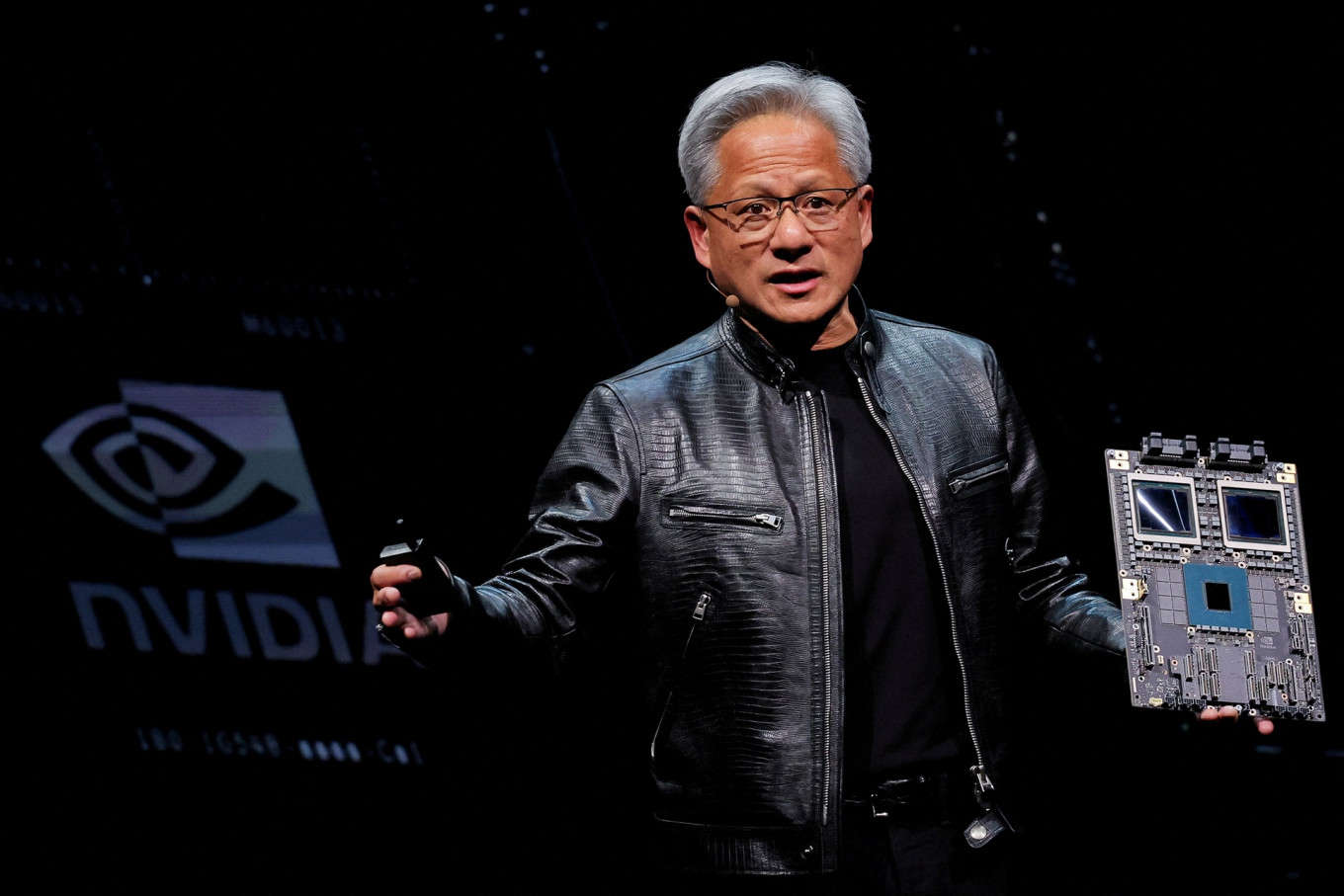 Nvidia chief executive officer Jensen Huang present NVIDIA Blackwell platform at an event ahead of the COMPUTEX forum in Taipei, Taiwan, on June 2, 2024. (Reuters/Ann Wang)
Like a butterfly effect, an event thousands of kilometers away can eventually trigger a storm much closer to home.
Reports of an affair between former Nvidia chief executive Jensen Huang and Alice Huang, an alleged Chinese spy, have heightened Washington's anxiety over where American computing power ultimately ends up.
On Nov. 16, the United States Department of Commerce introduced new requirements for semiconductor exports to four Southeast Asian countries, including Indonesia, to “prevent certain foreign actors from leveraging advanced computing power based on US technology”.

The curbs entail heavier scrutiny of exports, reexports and transfers of advanced AI chips above certain thresholds to overseas data centers that “remotely supply significant volumes of compute to companies headquartered” in countries Washington considers adversaries, including China, Russia, Iran and North Korea.
On Friday, US President Donald Trump went even further, threatening to impose a "tremendous tax" on American companies that build data centers overseas in an effort to bring more computing infrastructure back home.
Washington's increasingly restrictive approach amid technology rivalry with China risks turning Indonesia, which has little control in the global semiconductor race, into collateral damage.

The restrictions could weigh on Indonesia's nascent data center industry, which has only recently begun attracting substantial investment. The government reported that the "Other services" category, which largely comprises data center investments, attracted Rp 195.7 trillion (US$10.7 billion) between January and September this year, accounting for 12.7 percent of total investment coming to the country.