The Jakarta Post
Please Update your browser
Your browser is out of date, and may not be compatible with our website. A list of the most popular web browsers can be found below.
Just click on the icons to get to the download page.


Popular Reads
Top Results
No results found. Please check your search term and try again
Can't find what you're looking for?
View all search results
Popular Reads
Top Results
No results found. Please check your search term and try again
Can't find what you're looking for?
View all search resultsBeyond 2030: Why the world needs stronger multilateralism
Drawing lessons from decades of tackling transboundary haze, Indonesia makes the case that rescuing the Sustainable Development Goals—and building a credible post-2030 agenda—requires moving beyond fragmented pledges to stronger, fairer multilateralism that turns global promises into tangible results.
Change text size
Gift Premium Articles
to Anyone
Share the best of The Jakarta Post with friends, family, or colleagues. As a subscriber, you can gift 3 to 5 articles each month that anyone can read—no subscription needed!
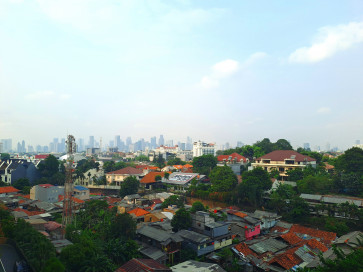
 A resident walks on Feb. 14 through Kampung Apung, also known as Kampung Pojok, a densely populated coastal settlement affected by extreme poverty in the Muara Baru area of Jakarta. (JP/Iqro Rinaldi)
I
ndonesia has contended with transboundary haze for decades. Forest and peatland fires have periodically affected neighboring countries, creating public health hazards, disrupting economic activity and straining bilateral relations. Addressing these fires has never been simple, as they stem from complex intersections of land management, law enforcement, business practices and competing economic interests.
A similar dynamic defines many of the development challenges we confront today. Climate change threatens food production and water supplies; armed conflicts disrupt trade and energy markets; and economic instability in one nation rapidly spills across borders. Although these challenges are familiar, the international environment in which we must resolve them has grown markedly more fractured.
When the Sustainable Development Goals (SDGs) were adopted in 2015, there was broad optimism that nations could rally behind a shared development agenda. That commitment remains essential. However, heightened geopolitical tensions, protracted conflicts and deepening economic uncertainty have severely strained international cooperation. It is within this sobering context that we must begin shaping the sustainable development framework beyond 2030.
The SDGs established a shared global understanding of progress, recognizing that poverty eradication, inequality, environmental degradation and peace are fundamentally interconnected. Yet implementation remains far off track. According to the United Nations Economic and Social Commission for Asia and the Pacific (ESCAP), the region is currently on course to miss 88 percent of measurable SDG targets by 2030. The lesson is not that the world agreed on the wrong goals, but rather that the systems, resources and incentives required to achieve them have failed to keep pace with our ambitions.
Reopening negotiations over the 17 goals in today's polarized geopolitical climate would risk unraveling one of the few remaining frameworks of shared global commitment. The far greater imperative is to make existing commitments deliver.
Development cannot flourish where peace is fragile, and peace is difficult to sustain where people see no prospect of a dignified life. Wars disrupt food and energy supplies, debt distress constrains essential public services and climate shocks threaten livelihoods across borders. Despite the interconnected nature of these crises, international responses remain fragmented across institutions, mandates and financing mechanisms.

The answer to a divided world cannot be weaker multilateralism. We need a stronger UN capable of integrating peace, sustainable development, human rights and humanitarian action. Its universal membership matters most precisely when major powers disagree. For developing nations, the UN remains indispensable to upholding shared rules and ensuring their voices carry weight.