The Jakarta Post
Please Update your browser
Your browser is out of date, and may not be compatible with our website. A list of the most popular web browsers can be found below.
Just click on the icons to get to the download page.


Popular Reads
Top Results
No results found. Please check your search term and try again
Can't find what you're looking for?
View all search results
Popular Reads
Top Results
No results found. Please check your search term and try again
Can't find what you're looking for?
View all search resultsFrom farm innovation to food security for all
The main challenge to food security for all is not innovation but adoption, which involves localizing proven solutions and ensuring that they are affordable to use, maintain and grow.
Change text size
Gift Premium Articles
to Anyone
Share the best of The Jakarta Post with friends, family, or colleagues. As a subscriber, you can gift 3 to 5 articles each month that anyone can read—no subscription needed!
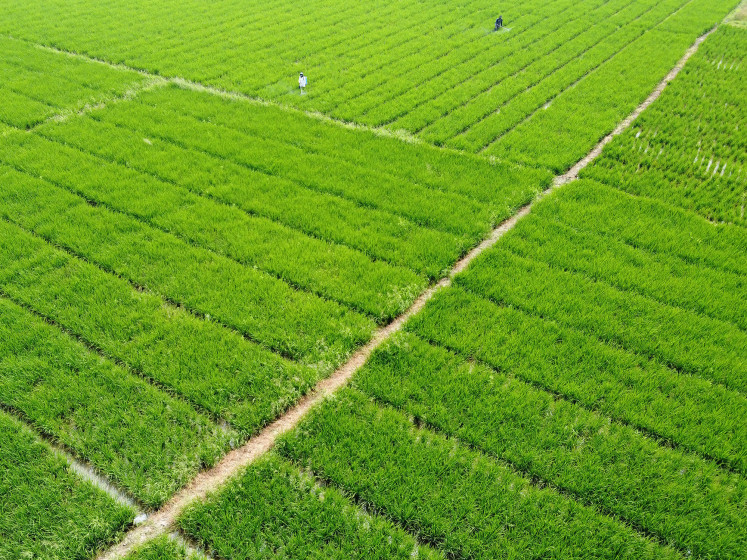
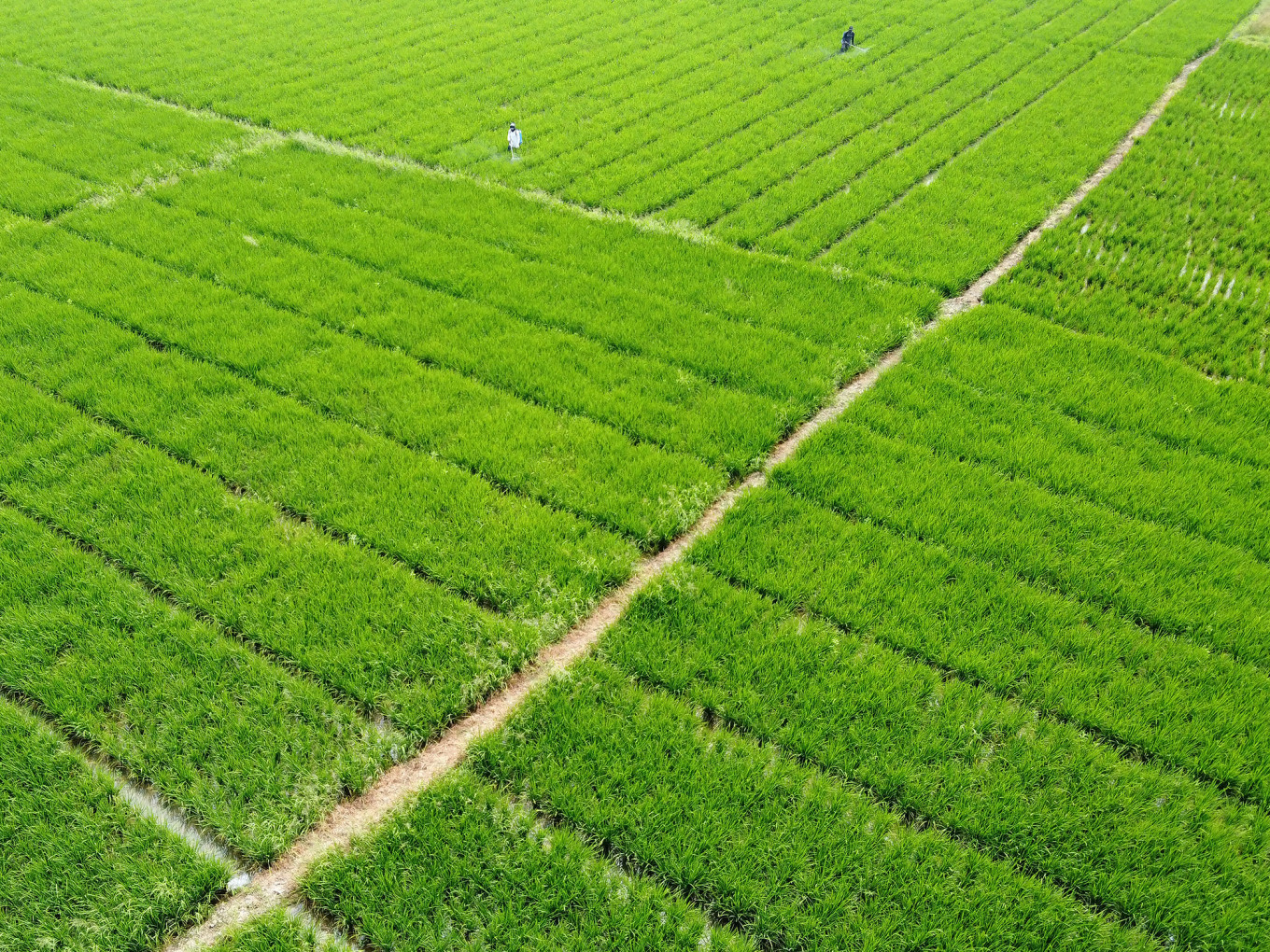 Farm workers spray green paddy on Oct. 2, 2026, at a rice field in Sukakarya district, Bekasi, West Java. (JP/Iqro Rinaldi)
H
unger is not inevitable. The world already possesses many of the capacity, tools, technologies and knowledge needed to ensure food security for all. Yet in 2025, 645 million people still faced hunger while around one in three people worldwide could not afford a healthy diet.
At a time when scientific advances and new technologies are reshaping entire economies and societies, innovations that can help people around the world better produce and access nutritious foods, improve livelihoods and build resilience remain out of reach.
The challenge is not a shortage of innovation but a shortage of adoption at scale: turning proven solutions into locally adapted, affordable and investable options that farmers and agri-food enterprises can use, sustain and scale.
This idea is at the heart of this year's World Food Day theme: "Innovate today. Nourish tomorrow." The transformation of agri-food systems is a comprehensive approach under the overall guidance of the Four Betters: better production, better nutrition, a better environment and a better life, leaving no one behind.
Digital advisory services can give farmers access to weather forecasts, market prices and tailored guidance, helping them make better decisions on planting, farm management and marketing. Animal disease surveillance and early warning systems can detect emerging threats earlier, giving veterinary services and livestock keepers more time to act before outbreaks spread. Soil moisture and nutrient sensors and precision irrigation can help farmers use resources and inputs more efficiently.
Satellite and geospatial tools are enabling countries to monitor forests and changes in land use. Better market data and early warning systems can also help governments anticipate pressures on food prices, supplies and trade and respond sooner.

For generations, farmers, indigenous peoples and local communities have conserved and developed crop varieties, harvested and managed scarce water, cared for soils and managed landscapes and biodiversity. Agricultural systems built around such knowledge and practices are now recognized and supported through FAO’s Globally Important Agricultural Heritage Systems (GIAHS) program. Such knowledge remains an important source of innovation today, including when combined with modern science and technology to help producers adapt to changing climatic and environmental challenges.