The Jakarta Post
Please Update your browser
Your browser is out of date, and may not be compatible with our website. A list of the most popular web browsers can be found below.
Just click on the icons to get to the download page.


Popular Reads
Top Results
No results found. Please check your search term and try again
Can't find what you're looking for?
View all search results
Popular Reads
Top Results
No results found. Please check your search term and try again
Can't find what you're looking for?
View all search resultsBending, not breaking? Indonesia’s resilience paradox
Indonesia’s increasingly centralized economic model promises greater protection against external shocks. Yet concentrating both authority and financial risk in the state may be eroding the many shock absorbers on which the country’s resilience has long depended.
Change text size
Gift Premium Articles
to Anyone
Share the best of The Jakarta Post with friends, family, or colleagues. As a subscriber, you can gift 3 to 5 articles each month that anyone can read—no subscription needed!
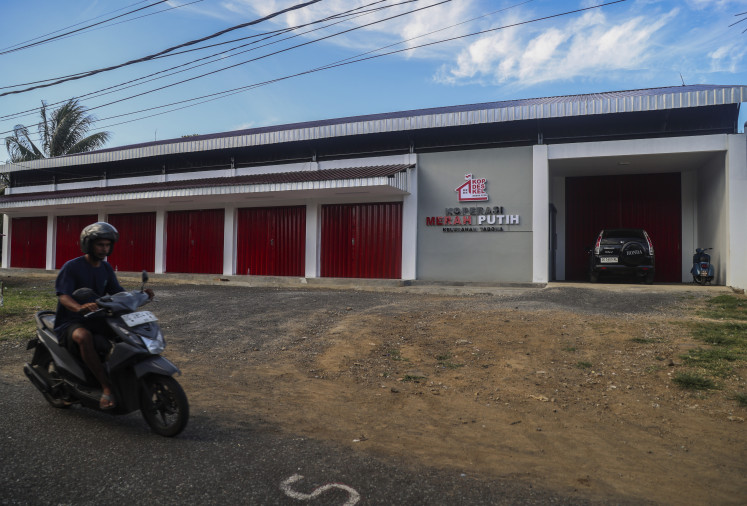
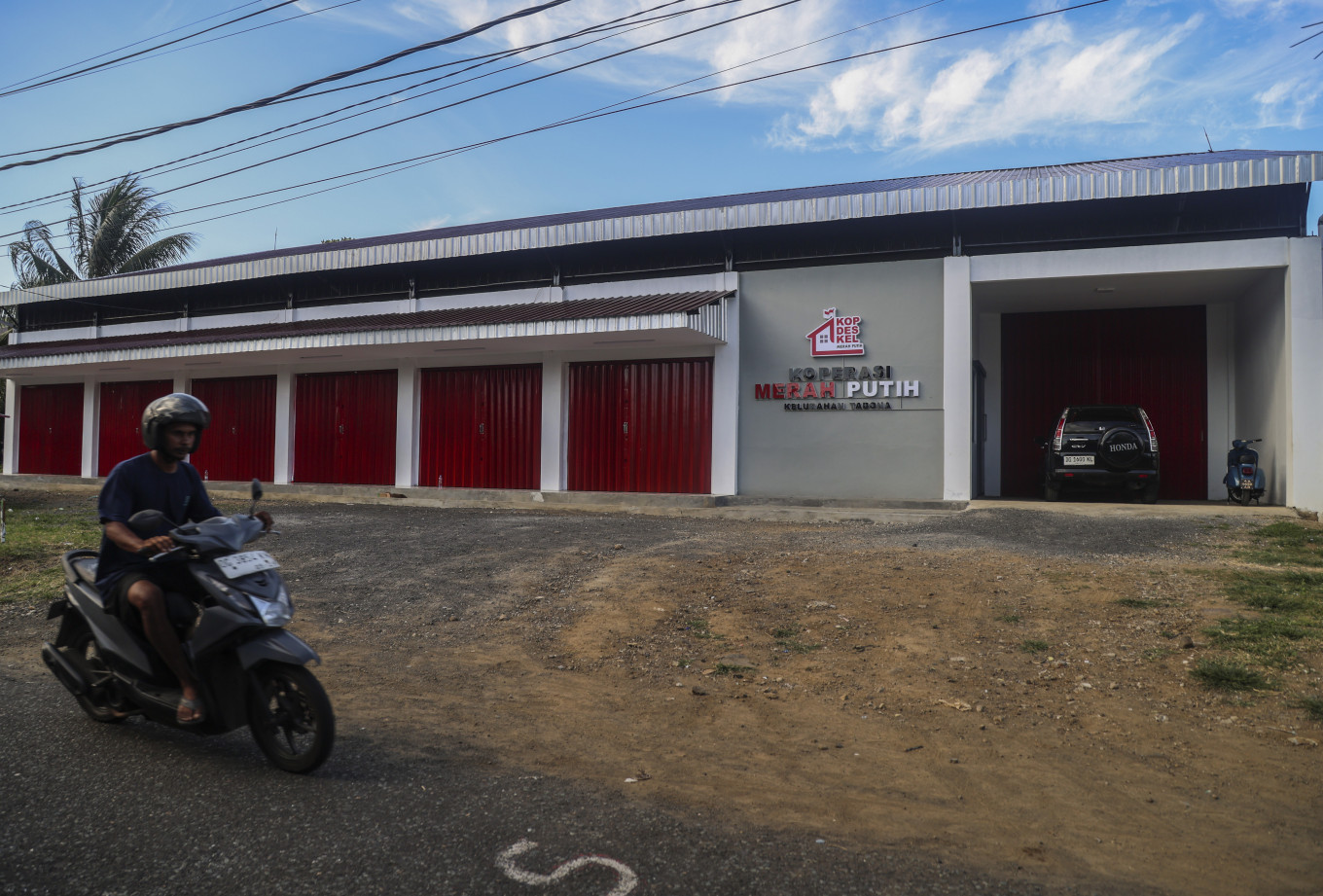 A motorcyclist rides past a Red and White Cooperative outlet that had yet to begin operations on July 11 in Ternate, North Maluku. The government aims to have 40,000 Red and White Cooperative operating by the end of 2026 as part of efforts to strengthen rural economies, complete cooperative facilities and prepare professional staff to manage the program. (Antara/Andri Saputra)
I
ndonesia has earned a reputation for resilience. Pandemic aside, economic growth has barely budged from 5 percent in a decade. Stronger institutions and a vast domestic market have contributed, as has flexibility in absorbing shocks. Steady growth, though, shows only that shocks were absorbed, not who absorbed them or at what cost.
But the institutions underpinning this resilience are changing. Under President Prabowo Subianto, economic resources and decision-making are increasingly concentrated within the state. Yet, paradoxically, in shielding the economy from external shocks, the government may be weakening its capacity to absorb them.
At the 2026 Indonesia Economic Update at the Australian National University, economists Jenny Gordon and Firman Witoelar traced a sobering trajectory. Recentralization, an expanding state role in markets and weakening fiscal, monetary and accountability guardrails, they argued, are more likely to increase than decrease Indonesia’s vulnerability to external shocks.
That exposure is already being tested. The United States-Iran war has driven up fuel and fertilizer prices for a country that spent Rp 520 trillion (US$29 billion) on fuel imports last year. In May, Indonesia recorded its first trade deficit since 2020, and Bank Indonesia (BI) has raised rates by 100 basis points this year to defend the rupiah.
Indonesia starts from a position of strength. The Lowy Institute’s Asia Power Index 2025 ranks it fifth of 27 countries for future resources, though only tenth for current economic capability. Compared to most neighbors, those deep pockets afford Indonesia more buffers to draw on when shocks strike.
During the Update, I argued that resilience is not a fixed stock, but something spent and rebuilt with each shock. What matters is less how many buffers an economy has than where the pressure lands, who ultimately absorbs it, and what capacity remains for the next shock.

Today’s buffer can become tomorrow’s constraint. That depends on how much of the adjustment runs through the state, and whether the state has the capacity to bear it.