The Jakarta Post
Please Update your browser
Your browser is out of date, and may not be compatible with our website. A list of the most popular web browsers can be found below.
Just click on the icons to get to the download page.


Popular Reads
Top Results
No results found. Please check your search term and try again
Can't find what you're looking for?
View all search results
Popular Reads
Top Results
No results found. Please check your search term and try again
Can't find what you're looking for?
View all search resultsMyanmar is a litmus test of what ‘ASEAN way’ amounts to
As ASEAN races to normalize ties with Myanmar's brutal military junta for geopolitical gain, its quiet betrayal of human rights and its own charter lays bare the hollow core of the "ASEAN way."
Change text size
Gift Premium Articles
to Anyone
Share the best of The Jakarta Post with friends, family, or colleagues. As a subscriber, you can gift 3 to 5 articles each month that anyone can read—no subscription needed!
 Set as preferred source
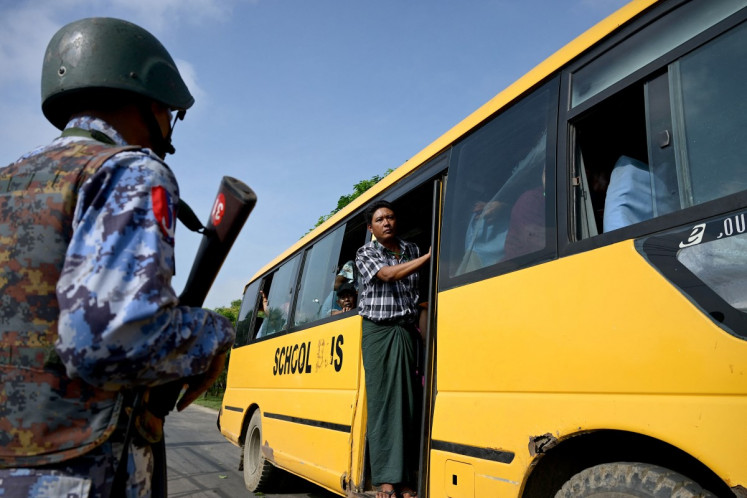
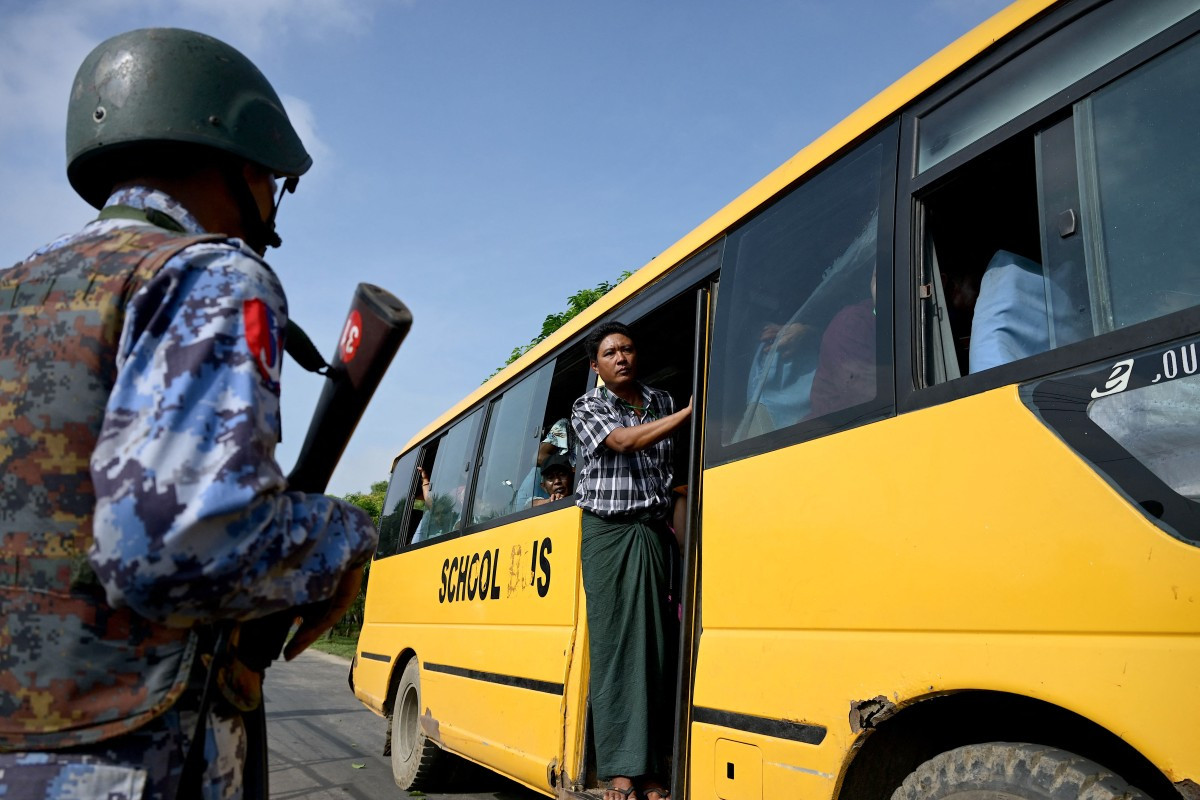 Migrants returning from Malaysia look out from a bus upon their arrival at the Myanmar Navy base in Thanlyin on Oct. 4, 2026. Nearly 1,500 Myanmar migrants from Malaysia arrived in their war-torn home country on Oct. 4, a Myanmar official said, returned under an opaque repatriation scheme that rights monitors say cannot assure their safety. (AFP/Sai Aung Main)
T
wo events on Sept. 29, 2026, were emblematic of the conflicting realities confronting ASEAN. The first was Malaysia’s deportation of 1,476 Myanmar refugees aboard Myanmar Navy vessels. This initial phase of a bilateral agreement covering 5,000 returnees in total, among them Rohingya, arguably violated the customary international law principle of non-refoulement, given the perilous conditions awaiting them upon arrival.
That Myanmar authorities supplied the list of approved returnees heightened concerns that it included political dissidents facing severe persecution, as well as young people targeted for forced conscription. Moreover, because these refugees were transferred directly from immigration detention centers, their consent was entirely nominal.
The plan’s architect, Prime Minister Anwar Ibrahim, once a staunch defender of the Rohingya, a vocal critic of the junta and a firm opponent of readmitting then-junta chief Min Aung Hlaing to the ASEAN fold, has executed an unapologetic reversal. He readily engaged the general, now a self-styled president following a discredited election, to facilitate the deportations in what many view as a nationalist ploy to bolster domestic support ahead of Malaysia’s next general election.
His invitation to Min Aung Hlaing for an official visit later this month reciprocates the arrangement, conferring much-craved legitimacy upon a disputed leader subject to an International Criminal Court (ICC) arrest warrant request for crimes against humanity perpetrated against the Rohingya.
On the very same day, the Myanmar military bombed a crowded market and the adjacent Kissapanadi Bridge in Kyauktaw Township, Rakhine State, killing 50 civilians, predominantly women and children, and critically wounding 60 more. This occurred in the exact state to which the deported Rohingya are expected to return.
Now largely under the control of the insurgent Arakan Army, Rakhine State has been subjected to an intensifying regime air campaign targeting civilians since April, flying directly in the face of Naypyidaw's professed transition to civilian rule.

This rush to engage a regime-ravaged country lays bare ASEAN's core duplicity. On one side, member states, driven by commercial and geopolitical calculus, are eager to consign the conflict to the past. On the other, it is impossible to overlook Myanmar’s outright refusal to honor even the baseline terms of the Five-Point Consensus.