The Jakarta Post
Please Update your browser
Your browser is out of date, and may not be compatible with our website. A list of the most popular web browsers can be found below.
Just click on the icons to get to the download page.


Popular Reads
Top Results
No results found. Please check your search term and try again
Can't find what you're looking for?
View all search results
Popular Reads
Top Results
No results found. Please check your search term and try again
Can't find what you're looking for?
View all search resultsAnalysis: Indonesia’s solar energy bet: Cautious optimism
Change text size
Gift Premium Articles
to Anyone
Share the best of The Jakarta Post with friends, family, or colleagues. As a subscriber, you can gift 3 to 5 articles each month that anyone can read—no subscription needed!
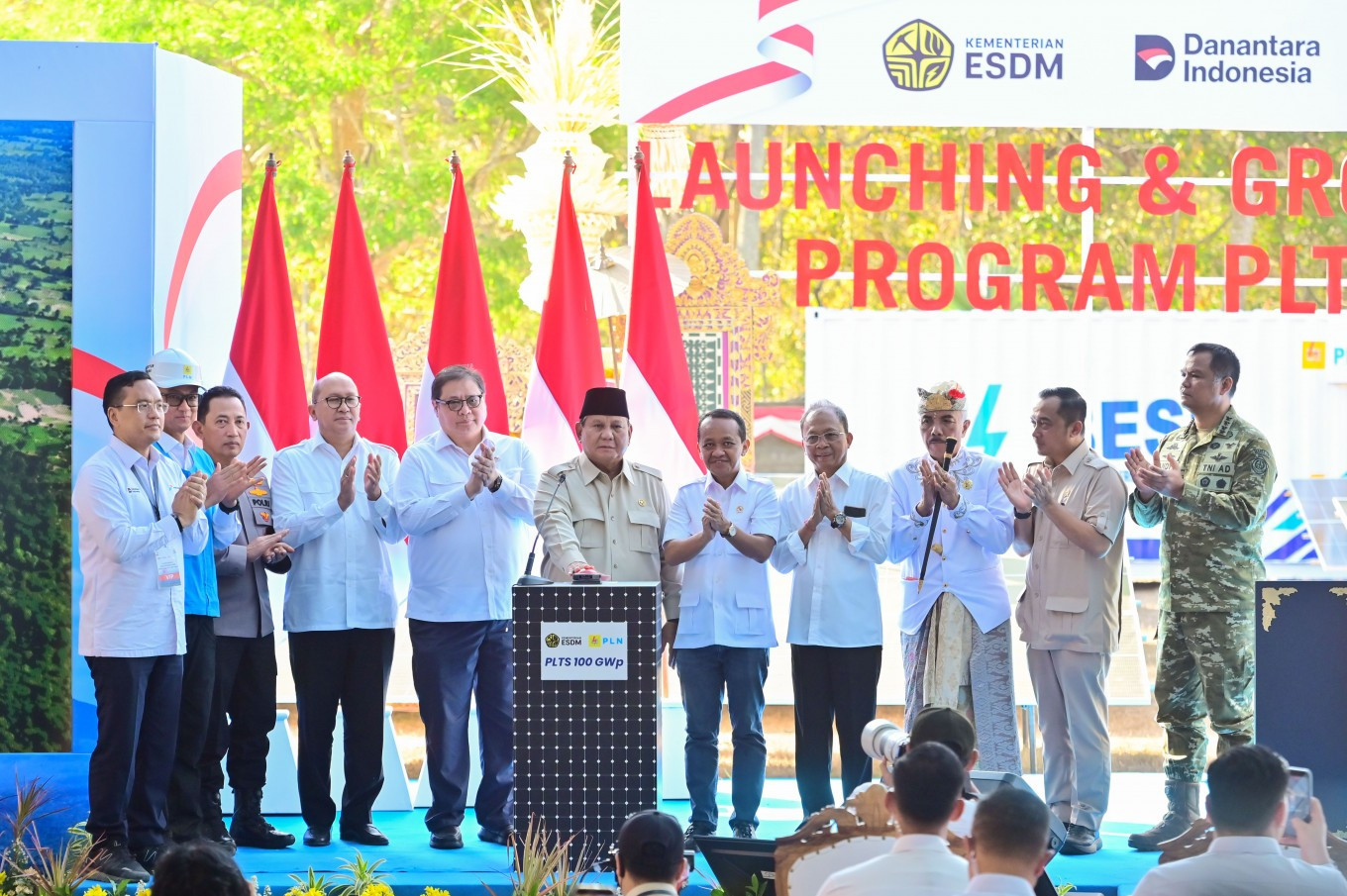 President Prabowo Subianto (center) presses a button during the launch and groundbreaking ceremony for the solar power plant programs in Gilimanuk, Jembrana, Bali, on Aug. 25, 2026. (Antara/Fikri Yusuf)
P
resident Prabowo Subianto recently launched the country’s massive solar power program at a ceremony in Bali, marking the construction of 14 solar power plants across the country. The projects form part of Indonesia’s push to develop 100 gigawatt-peak (GWp) of solar power capacity, aimed at providing reliable electricity to isolated villages, accelerating the transition to clean and renewable energy and strengthening energy independence.
Solar power presents a huge opportunity for Indonesia. The country has so far utilized only 1.5 GW of its estimated 3,294 GWp solar power potential. At 8 to 20 US cents per kilowatt-hour (kWh), a combined solar-BESS system is also significantly cheaper than the diesel power plants currently operating in many parts of the country, which generate electricity at 55 to 65 cents per kWh. In his speech before the House of Representatives on Aug. 14, Prabowo outlined a plan to replace 13 GW of diesel power plants spread across the country with solar energy, potentially saving Indonesia Rp 73.9 trillion (US$4.2 billion) annually.
Solar power generation is expected to expand further under Indonesia’s Electricity Supply Business Plan (RUPTL), which allocates 17.1 GW of solar power capacity through 2034, equivalent to around 100 GWp of installed solar panels, with phased development of 1.5 GW per year from 2025 to 2029 before accelerating from 2030 onward.
One challenge facing the 100 GWp solar program, however, is its ambitious timeline. Prabowo wants the project completed within three years, but implementation will have to contend with land availability. A recent survey found that many proposed sites were unsuitable, including swamplands prone to flooding of up to four meters. The program could also face institutional capacity constraints, as much of the planned solar capacity is to be distributed across 80,000 villages and managed at the individual Red and White Cooperative level, even though most of these cooperatives were only established in mid-2025.
More crucially, there is the question of how this additional capacity would fit into state-owned electricity company PLN’s existing power system. PLN is currently locked into long-term power purchase agreements with existing coal-fired power plants, contributing to an oversupply of coal-fired electricity and leaving limited room for renewables. Furthermore, there is little financial incentive for PLN’s existing grid to adopt solar power in its current form, given that coal-fired power can generate electricity at around 5.7 cents per kWh.
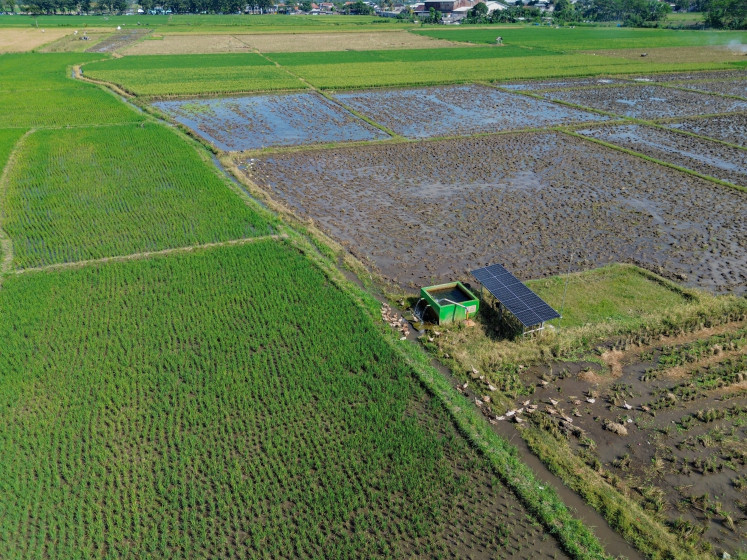
The program’s distributed model may therefore find its strongest rationale in serving villages currently underserved by PLN’s grid. This is reflected in Prabowo’s de-dieselization plan, which aims to replace diesel power plants in some of the country’s most isolated areas with solar power. Such needs can reasonably be met through modular solar plants combined with battery storage. Depending on a village’s electricity demand and economic activity, a solar-BESS combination could potentially meet most or even all of its power needs.

Unfortunately, this model may be difficult to scale nationally, particularly in villages already connected to PLN’s grid, which remains predominantly powered by coal. Complicating matters further, Indonesia’s 2025-2034 RUPTL still envisages a 40 percent increase in fossil-fuel power generation. Distributed solar projects are also considerably more difficult to finance than utility-scale plants unless individual projects can be bundled into larger investment portfolios.