The Jakarta Post
Please Update your browser
Your browser is out of date, and may not be compatible with our website. A list of the most popular web browsers can be found below.
Just click on the icons to get to the download page.


Popular Reads
Top Results
No results found. Please check your search term and try again
Can't find what you're looking for?
View all search results
Popular Reads
Top Results
No results found. Please check your search term and try again
Can't find what you're looking for?
View all search resultsAnalysis: RI’s 5.29 percent growth tests sustainability of fiscal expansion
Change text size
Gift Premium Articles
to Anyone
Share the best of The Jakarta Post with friends, family, or colleagues. As a subscriber, you can gift 3 to 5 articles each month that anyone can read—no subscription needed!
 Set as preferred source
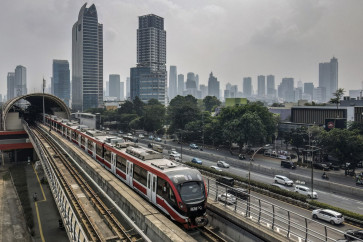
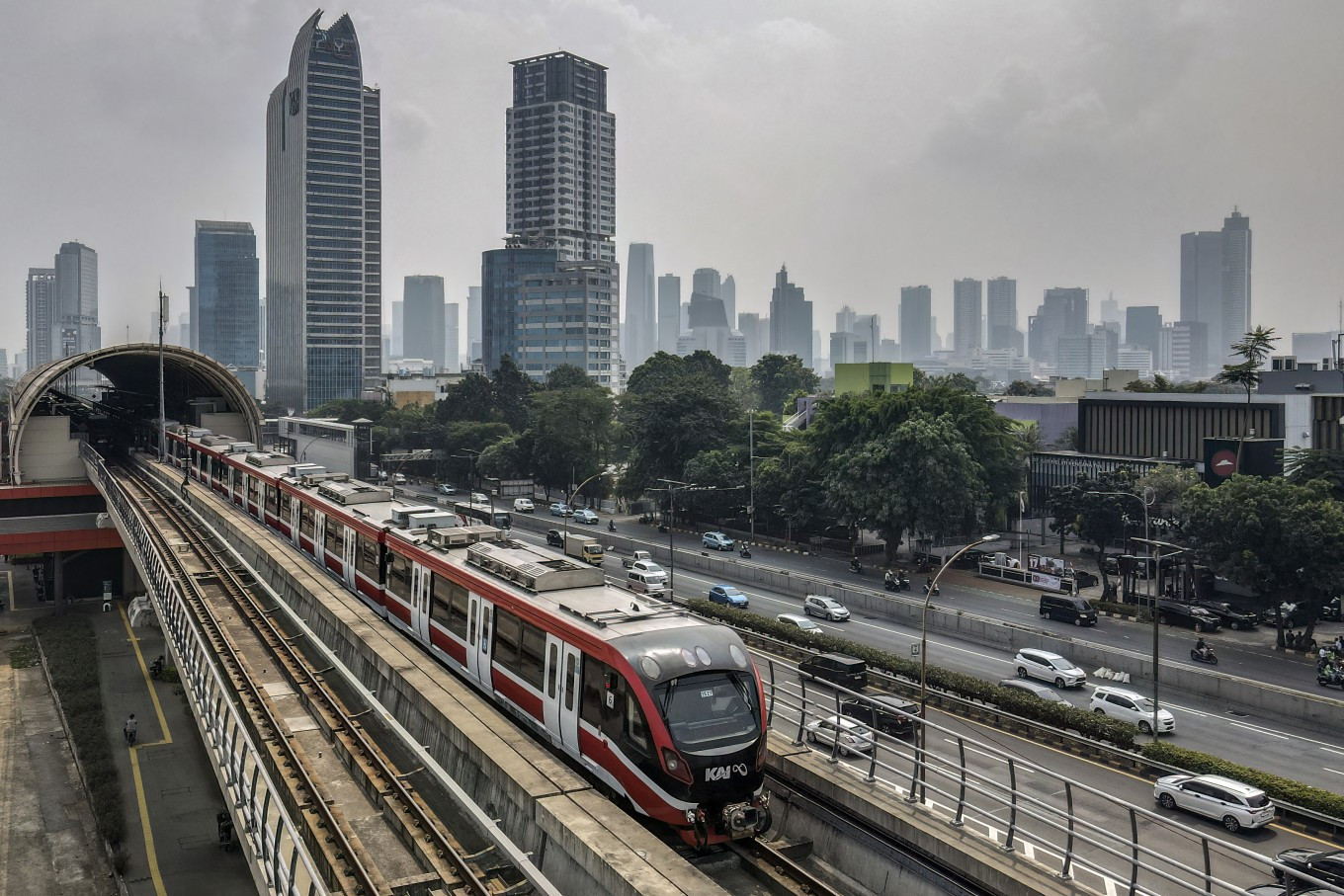 A passenger train runs on an elevated track in Jakarta's central business district on Aug. 5, 2025. (AFP/Bay Ismoyo)
S
tatistics Indonesia (BPS) announced that Indonesia’s economy expanded 5.29 percent year-on-year (yoy) in the second quarter of 2026, marking notable growth above the 5 percent threshold amid continued global uncertainty and geopolitical tensions. The figure also improved from 5.12 percent in the same quarter last year, suggesting that President Prabowo Subianto’s increasingly expansionary fiscal policies have helped sustain domestic economic activity even as global trade growth weakens. However, the stronger growth also comes as the government ramps up spending on its flagship programs, raising questions about the fiscal cost of sustaining this momentum.
Coordinating Economy Minister Airlangga Hartarto pointed to the latest figures as evidence of Indonesia’s resilience, noting that the economy managed to grow 5.29 percent even as various institutions projected global economic growth at only around 3 percent this year. He said the performance demonstrated the strength of Indonesia’s domestic economic foundations and the effectiveness of government policies, with the country maintaining growth above 5 percent for seven consecutive years.
Manufacturing remained the largest contributor to growth on the production side, expanding 4.52 percent yoy and contributing 0.90 percentage points to overall growth. The sector accounted for 18.5 percent of GDP in the second quarter, underscoring its continued importance to Indonesia’s economic structure. According to BPS, food and beverage manufacturing grew 6.51 percent, supported by processed fish, chicken meat, milk and milk products. Metal, computer, electronics, optical and electrical equipment manufacturing grew 8.04 percent, driven by production of electrical components, batteries and electrical equipment. Meanwhile, chemical, pharmaceutical and traditional medicine manufacturing expanded 4.99 percent, supported by chemical and chemical goods production.
Electricity and gas procurement recorded the fastest growth among major sectors, expanding 10.81 percent yoy, driven by electricity services. This was followed by accommodation and food service activities, which grew 10.6 percent, supported by higher hotel occupancy and, according to BPS, increased catering and food service activity as the government’s flagship free nutritious meal program expands its reach.
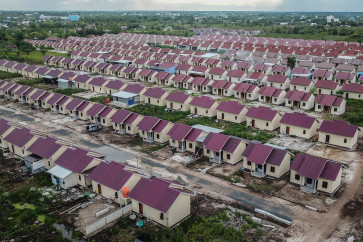
The government’s contribution to economic growth can also be seen in construction, which expanded 6.68 percent yoy in the second quarter. Among the major drivers, according to BPS, was the development of facilities associated with the Red and White Cooperatives program. In the short term, the mechanism is straightforward: government-funded construction creates demand for contractors, materials and labor, circulating public funds through the wider economy and generating additional economic activity. The longer-term economic value of this spending, however, depends on whether the Red and White Cooperatives can eventually become self-sufficient and generate sustainable economic activity of their own.
The expenditure-side breakdown provides an even clearer indication of the government’s role in sustaining growth, particularly through continued expansion in government consumption. Government consumption expenditure grew 15.97 percent yoy in the second quarter, remaining exceptionally high despite the government’s budget-efficiency measures introduced at the beginning of the year. In addition to the payment of the 13th-month salary for civil servants, the Indonesian Military (TNI) and National Police, the government has pointed to its flagship initiatives as another factor behind the strong performance, particularly spending on goods and services related to the free meals program.

While the immediate economic stimulus from higher government spending is evident, its ability to sustain growth over the longer term will depend on whether programs such as the free meals program and Red and White Cooperatives can generate economic activity that becomes less reliant on continued fiscal support. Their sustainability ultimately depends on whether they can create demand beyond the initial injection of government spending. So far, however, household consumption, the largest component of Indonesia’s economy, grew by 5.06 percent yoy in the second quarter, below overall economic growth and down from 5.52 percent in the first quarter.