The Jakarta Post
Please Update your browser
Your browser is out of date, and may not be compatible with our website. A list of the most popular web browsers can be found below.
Just click on the icons to get to the download page.


Popular Reads
Top Results
No results found. Please check your search term and try again
Can't find what you're looking for?
View all search results
Popular Reads
Top Results
No results found. Please check your search term and try again
Can't find what you're looking for?
View all search resultsWhat does it really cost to educate an Indonesian child?
In the absence of data on the true cost of providing quality education, the country's education spending will remain driven by fiscal convenience and political compromise rather than pedagogical necessity.
Change text size
Gift Premium Articles
to Anyone
Share the best of The Jakarta Post with friends, family, or colleagues. As a subscriber, you can gift 3 to 5 articles each month that anyone can read—no subscription needed!
 Set as preferred source
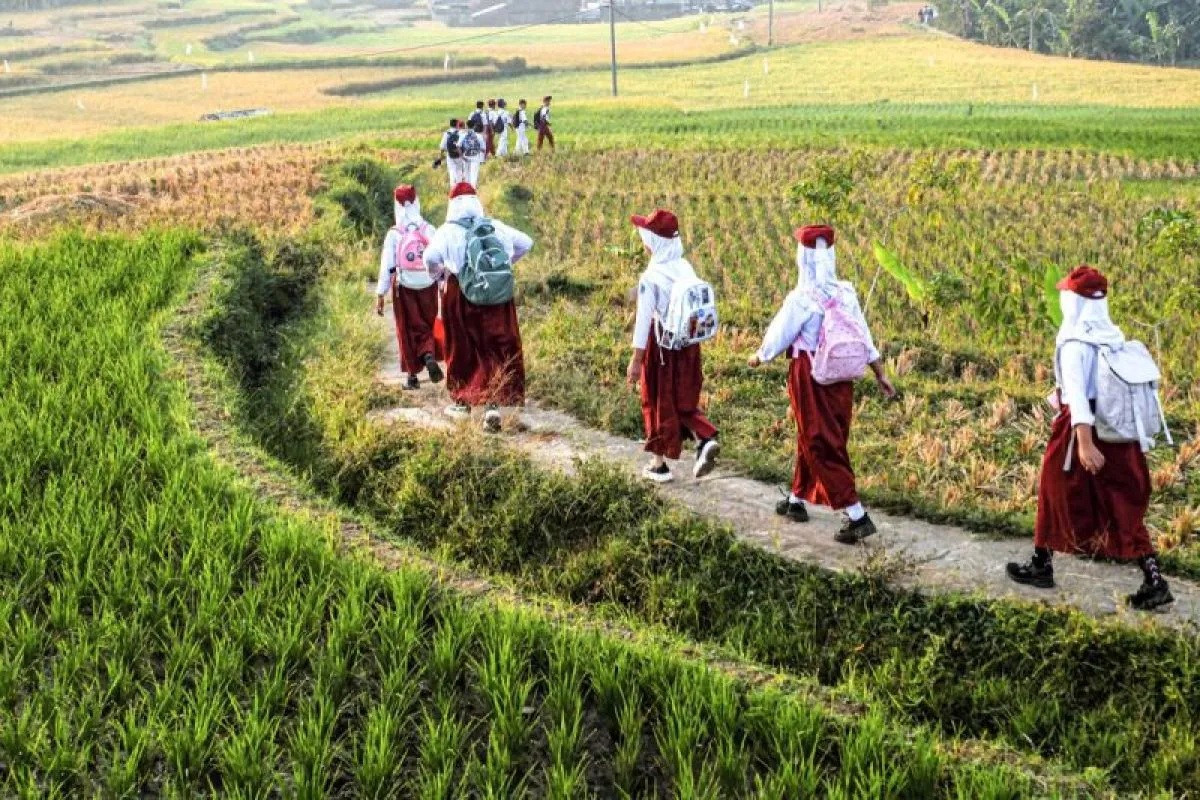 Education pathway: Uniformed students walk past rice fields on July 13, 2026, the first day of the new school year, as they make their way to an elementary school in Bayongbong village, Garut regency, West Java. (Antara/Xinhua/Algi Febri Sugita)
E
ach year, Indonesia reengages in a familiar budget debate. Political leaders tout percentages, ministries negotiate line items and schools wait anxiously to see what operational funds will trickle down. Yet amid these annual fiscal negotiations, a foundational question remains largely unasked: How much does it actually cost to educate an Indonesian child?
This oversight exposes a critical flaw in the country's approach to human capital. Despite constitutionally mandating that 20 percent of the state budget be allocated to education—making Indonesia’s total expenditure among the highest globally—the financing model is fundamentally inverted.
Public finance typically dictates that goals are set first, with budgets structured to meet them. In Indonesia, however, the government sets the total funding figure first and expects schools to adjust their programs, staffing, and facilities to fit an arbitrary envelope. A growing consensus among lawmakers, researchers and civil society advocates points toward a necessary pivot: Before altering education spending targets, Indonesia must first establish a baseline for the true cost of delivering a quality education.
Empirical evidence highlights a sharp disconnect between current subsidies and operational realities. According to research by the Center for Standards and Education Policy (PSKP), the standard School Operational Assistance (BOS) grants consistently fall short of baseline needs across every tier.
Early childhood education receives roughly Rp 600,000 (US$33.38) per child against an estimated operational need exceeding Rp 2 million. Primary education is allocated approximately Rp 900,000 per student, compared to actual cost requirements of Rp 1.25 million, while secondary education faces similar percentage shortfalls at both the junior and senior levels.
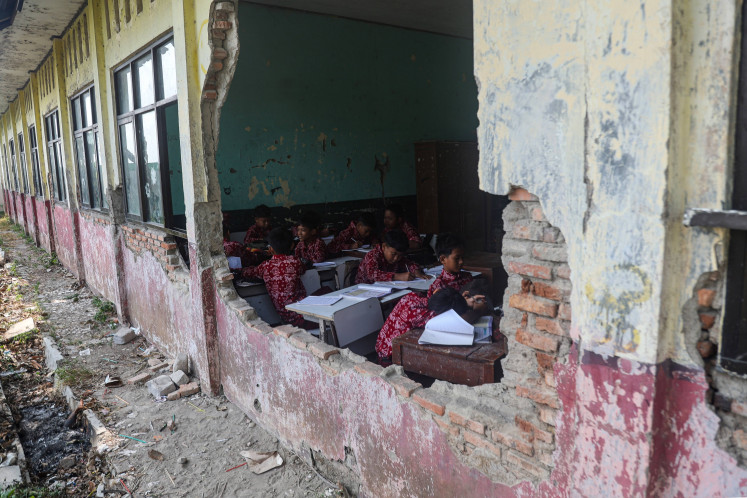
While a shortfall of a few hundred thousand rupiah per student may appear modest on paper, the cumulative deficit for an entire institution translates into millions of rupiah annually. To stay operational, administrators are forced to defer facility maintenance, curtail extracurricular activities, delay equipment upgrades, or request supplementary contributions from parents.

This structural underfunding is even more pronounced in vocational education. Currently, BOSP allocations treat vocational tracks almost identically, ignoring the vastly different capital requirements of specific disciplines. A business administration track may cost approximately Rp 2 million per student to deliver, whereas maritime studies require nearly Rp 4.8 million, and agribusiness exceeds Rp 4.3 million. Specialized laboratories, heavy machinery, safety protocols, and technical instruction inherently carry higher price tags than standard classroom-based instruction.