The Jakarta Post
Please Update your browser
Your browser is out of date, and may not be compatible with our website. A list of the most popular web browsers can be found below.
Just click on the icons to get to the download page.


Popular Reads
Top Results
No results found. Please check your search term and try again
Can't find what you're looking for?
View all search results
Popular Reads
Top Results
No results found. Please check your search term and try again
Can't find what you're looking for?
View all search resultsTwenty years on, BRICS faces a defining choice
Amid shifting global power dynamics and emerging economies seeking a stronger voice, a central issue for BRICS today is whether it should continue as an informal group or take steps toward becoming a formal organization.
Change text size
Gift Premium Articles
to Anyone
Share the best of The Jakarta Post with friends, family, or colleagues. As a subscriber, you can gift 3 to 5 articles each month that anyone can read—no subscription needed!
 Set as preferred source
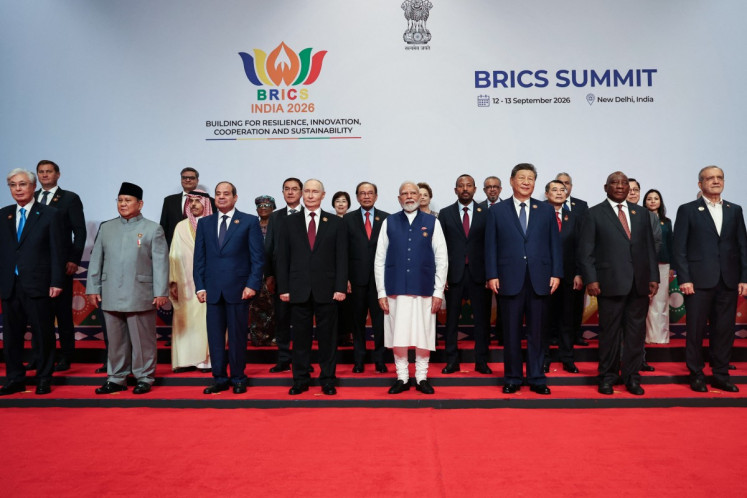
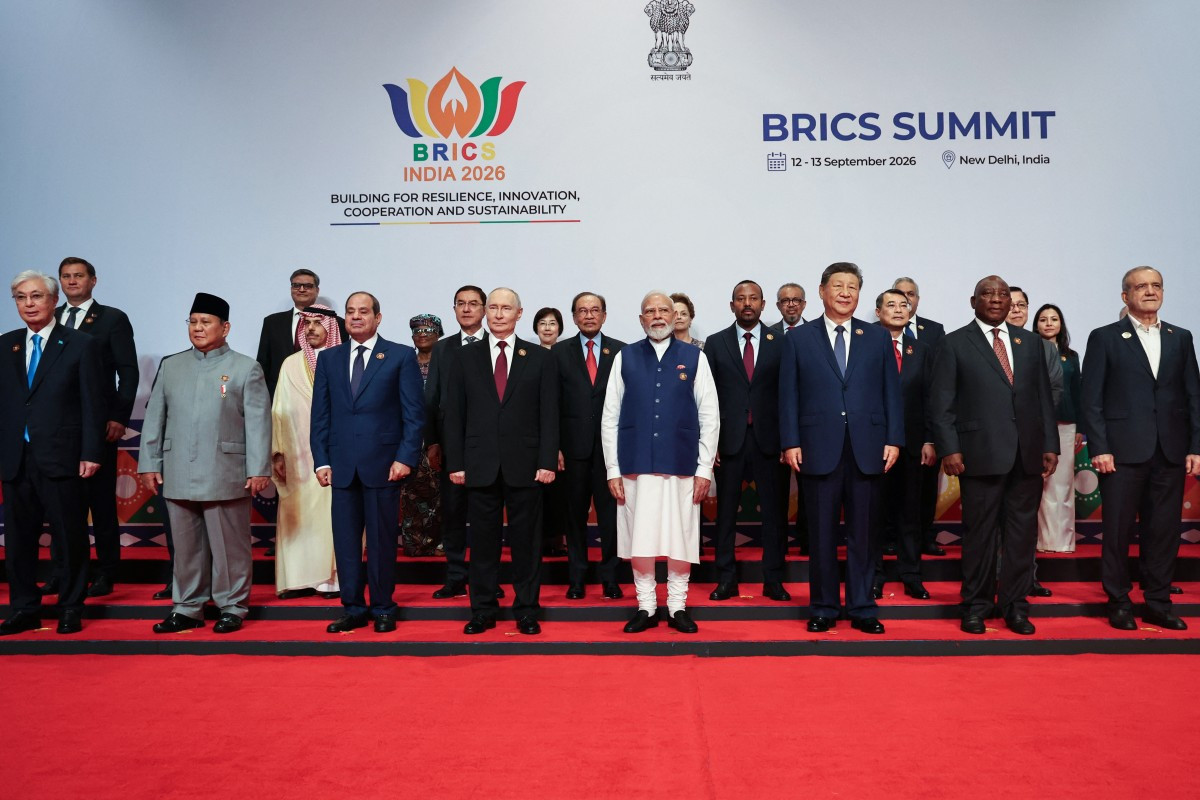 The leaders of participating countries take a “family photograph” on Sept. 13, 2026, during the 18th BRICS Summit in New Delhi. (AFP/Sputnik)
B
RICS has just concluded its summit in India, celebrating two decades since the group’s inception. Over the years, BRICS has steadily carved out its place in international affairs, offering an alternative platform.
Unlike treaty-based bodies, BRICS does not operate under a formal charter or constitutive treaty. Rather, it functions as an informal partnership similar to the Group of Seven (G7): a forum grounded in consensus and voluntary cooperation among member states. This approach has allowed BRICS to remain flexible, but it also raises questions about the group’s long-term structure and effectiveness.
A central issue for BRICS today is whether it should continue as an informal group or take steps toward becoming a formal international organization. This decision carries significant implications.
If BRICS were to formalize its status, there would be both advantages and drawbacks. On the one hand, formalization could bring challenges such as increased budgetary demands and more rigid decision-making procedures. On the other, becoming an international organization would position BRICS as a more effective counterbalance, not only to the G7 but also to other international organizations dominated by the United States and Western European countries.
At this juncture, despite both being informal groups, the distinction between the G7 and BRICS is significant. The G7, while highly influential, operates without legal personality and lacks a binding charter. In contrast, BRICS has demonstrated its capacity to create formal institutions, most notably through the establishment of the New Development Bank (NDB) in 2014.
Founded in Durban, South Africa, the NDB is governed by its own articles of agreement, with Article 29(a) explicitly granting the bank full international legal personality.

If BRICS were to formalize its status by adopting a founding charter or treaty, it would gain legal personality as recognized under international law.