The Jakarta Post
Please Update your browser
Your browser is out of date, and may not be compatible with our website. A list of the most popular web browsers can be found below.
Just click on the icons to get to the download page.


Popular Reads
Top Results
No results found. Please check your search term and try again
Can't find what you're looking for?
View all search results
Popular Reads
Top Results
No results found. Please check your search term and try again
Can't find what you're looking for?
View all search resultsAnalysis: Consumer confidence slips as livelihoods come under pressure
The Consumer Confidence Index (CCI) fell 3.1 points from 120.9 in May to 117.8 in June, the lowest reading since the index stood at 115 in September 2025, driven by weaker assessments of both current economic conditions and future expectations.
Change text size
Gift Premium Articles
to Anyone
Share the best of The Jakarta Post with friends, family, or colleagues. As a subscriber, you can gift 3 to 5 articles each month that anyone can read—no subscription needed!
 Set as preferred source
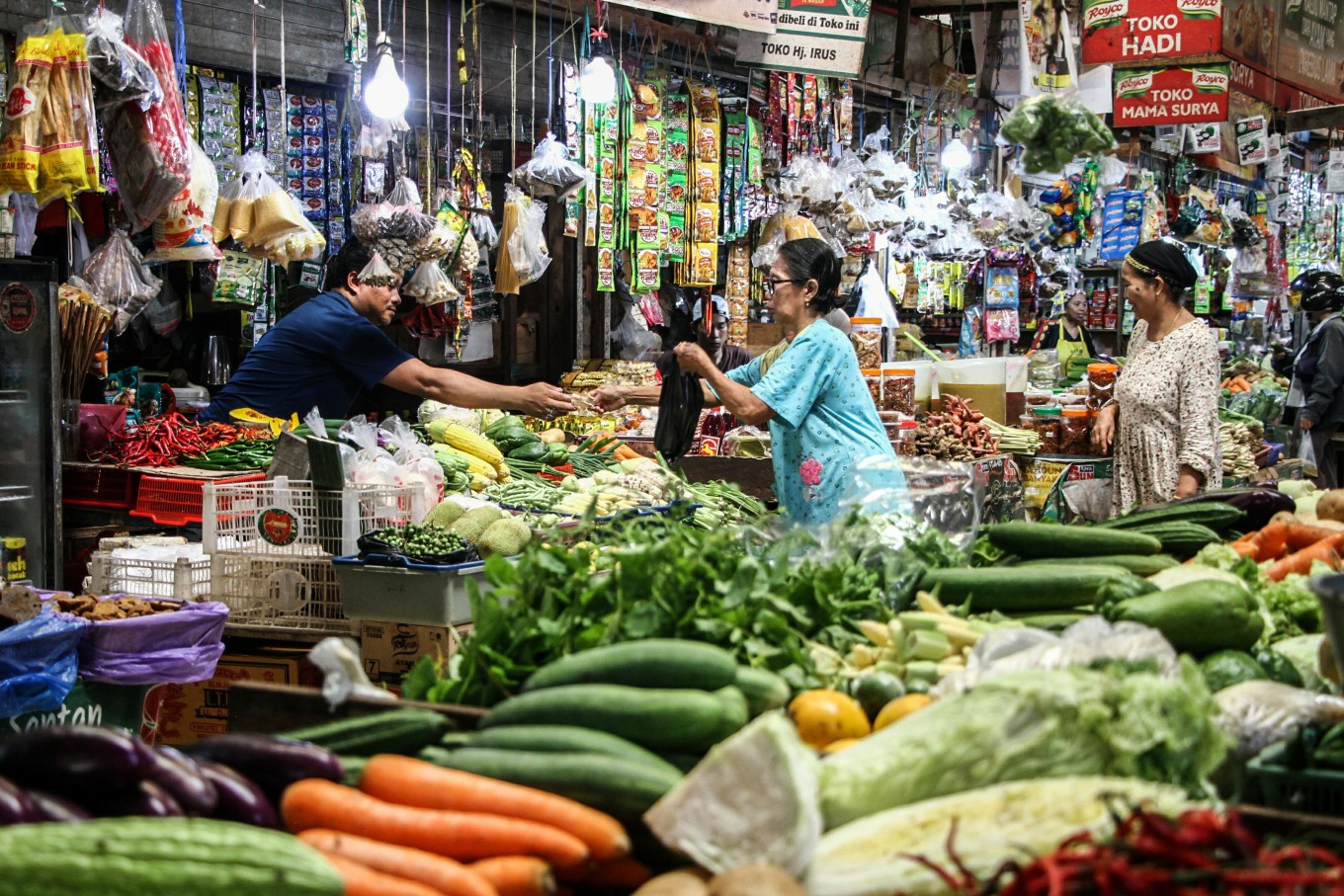 A vendor serves customers shopping for staple foods on June 11 at Kahayan Market in Palangka Raya, Central Kalimantan. (Antara/ Auliya Rahman)
I
ndonesian consumers are increasingly feeling the pinch from the combined effects of external and domestic pressures on the economy, with the impact extending beyond the country's productive sectors into household finances.
The Consumer Confidence Index (CCI) fell 3.1 points from 120.9 in May to 117.8 in June, the lowest reading since the index stood at 115 in September 2025, driven by weaker assessments of both current economic conditions and future expectations.
The Current Economic Condition Index (CECI) fell 3.0 points from 112.2 in May to 109.2 in June. All three of its components weakened: the Current Income Index (IPSI) stood at 119.8, the Job Availability Index (IKLK) at 101.8 and the Durable Goods Purchase Index (IPDG) at 105.9. The largest decline was in the ISPSI, which dropped 3.4 points, indicating that households felt their income conditions had deteriorated.
Similarly, the Consumer Expectation Index (CEI) fell 3.3 points from 129.7 to 126.4, with all three components recording lower readings. The Income Expectations Index (IEP) stood at 133.6, the Job Availability Expectations Index (IEKLK) at 124.4 and the Business Activity Expectations Index (IEKU) at 121.2. The largest decline was recorded in the IEKLK at 3.7 points, suggesting growing concerns about future employment prospects.
Across expenditure groups, respondents spending more than Rp 5 million (US$278.29) per month remained the most optimistic, recording the highest CCI and CECI at 121.4 and 129.7, respectively. Meanwhile, the highest CEI of 108.8 was recorded among respondents spending between Rp 3.1 million and Rp 4 million. This was also the only expenditure group to record an increase in the CEI between May and June.
By age, consumers between 20 and 30 remained the most optimistic, posting a CCI of 124.3 as well the highest scores across all CECI and CEI components. In contrast, the IKLK and the IPDG fell into pessimistic territory for respondents aged 41 and above, suggesting that older consumers saw job opportunities as limited and were delaying durable goods purchases.

A similar pattern emerged across education groups. Respondents with only a senior high school education recorded an IKLK of 98.3, below the optimistic threshold, while their IPDG also slipped into pessimistic territory. Postgraduate degree holders were even more pessimistic about job availability, with an IKLK of 92.7.