The Jakarta Post
Please Update your browser
Your browser is out of date, and may not be compatible with our website. A list of the most popular web browsers can be found below.
Just click on the icons to get to the download page.


Popular Reads
Top Results
No results found. Please check your search term and try again
Can't find what you're looking for?
View all search results
Popular Reads
Top Results
No results found. Please check your search term and try again
Can't find what you're looking for?
View all search resultsWe are confronting not just systemic but networked corruption
Indonesia will never defeat corruption by simply locking up individual officials; it must dismantle the resilient, invisible networks that keep the system alive.
Change text size
Gift Premium Articles
to Anyone
Share the best of The Jakarta Post with friends, family, or colleagues. As a subscriber, you can gift 3 to 5 articles each month that anyone can read—no subscription needed!
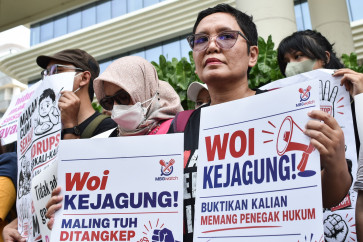
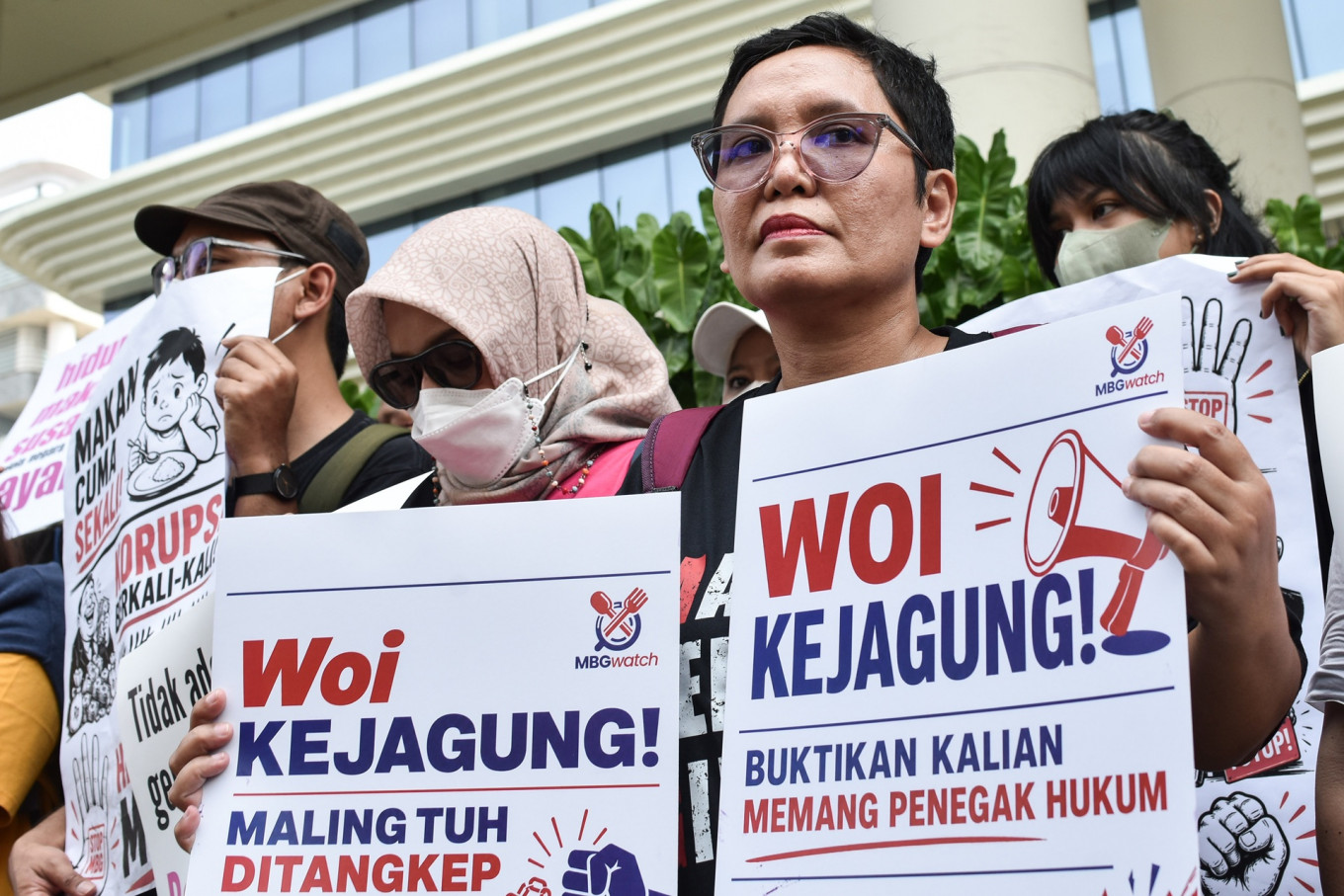 Demonstrators from the civil society coalition MBG Watch hold posters during a rally in front of the Attorney General's Office (AGO) building in South Jakarta on July 15, 2026. The protesters urged the AGO to completely investigate alleged corruption pertaining to President Prabowo Subianto's flagship free nutritious meal program. (Antara/Fakhri Hermansyah)
T
oday, Indonesia has become accustomed to corruption scandals, including those allegedly involving a top prosecutor who has been linked to several high-profile cases. Every few months, a new headline dominates the news cycle. Public attention shifts routinely from one investigation to another, from one institution to another and from one powerful figure to another.
While names change, sectors differ and alleged financial losses vary dramatically, the public conversation increasingly follows a familiar pattern: Citizens no longer ask merely who committed corruption, but who else is connected?
This subtle shift in public perception reveals a significant structural reality. Indonesia no longer faces corruption simply as a collection of individual crimes. Instead, it is confronting what can be termed networked corruption, a phenomenon sustained not primarily by isolated offenders, but by resilient networks that connect political authority, economic interests, legal expertise, regulatory discretion and institutional influence.
The distinction matters because policy responses designed to prosecute individuals are often insufficient to dismantle adaptive networks. For nearly three decades following the 1998 Reform era, Indonesia has invested heavily in criminal enforcement. The Corruption Eradication Commission (KPK), the Attorney General’s Office and other law enforcement agencies have successfully prosecuted ministers, governors, legislators, judges, prosecutors, police officers and corporate executives. These achievements fundamentally transformed public expectations regarding accountability and should not be underestimated.
Yet, corruption remains persistent. Indonesia scored 37 out of 100 in Transparency International’s 2024 Corruption Perceptions Index, reflecting continuing institutional vulnerabilities despite sustained enforcement efforts. This paradox suggests that the country’s governance challenges have evolved; the central problem is no longer the sheer number of corrupt officials, but rather the durability of the networks that bind them.
The term "systemic corruption" has long been used to describe malfeasance embedded within institutions. However, it fails to fully explain how modern corruption operates. Today’s corruption increasingly resembles interconnected ecosystems rather than isolated institutional failures.

Political actors influence bureaucratic appointments; corporate interests cultivate regulatory access; professional intermediaries provide sophisticated legal and financial engineering; corporate vehicles obscure beneficial ownership; financial transactions move across multiple jurisdictions; and public procurement frequently intersects with campaign financing.