The Jakarta Post
Please Update your browser
Your browser is out of date, and may not be compatible with our website. A list of the most popular web browsers can be found below.
Just click on the icons to get to the download page.


Popular Reads
Top Results
No results found. Please check your search term and try again
Can't find what you're looking for?
View all search results
Popular Reads
Top Results
No results found. Please check your search term and try again
Can't find what you're looking for?
View all search resultsWhat we can learn from mandatory B50 before B60
As we race from B50 toward a B60 biodiesel mandate, the nation must ensure its quest for energy sovereignty is backed by logistical readiness and social equity rather than just political ambition.
Change text size
Gift Premium Articles
to Anyone
Share the best of The Jakarta Post with friends, family, or colleagues. As a subscriber, you can gift 3 to 5 articles each month that anyone can read—no subscription needed!
 Set as preferred source
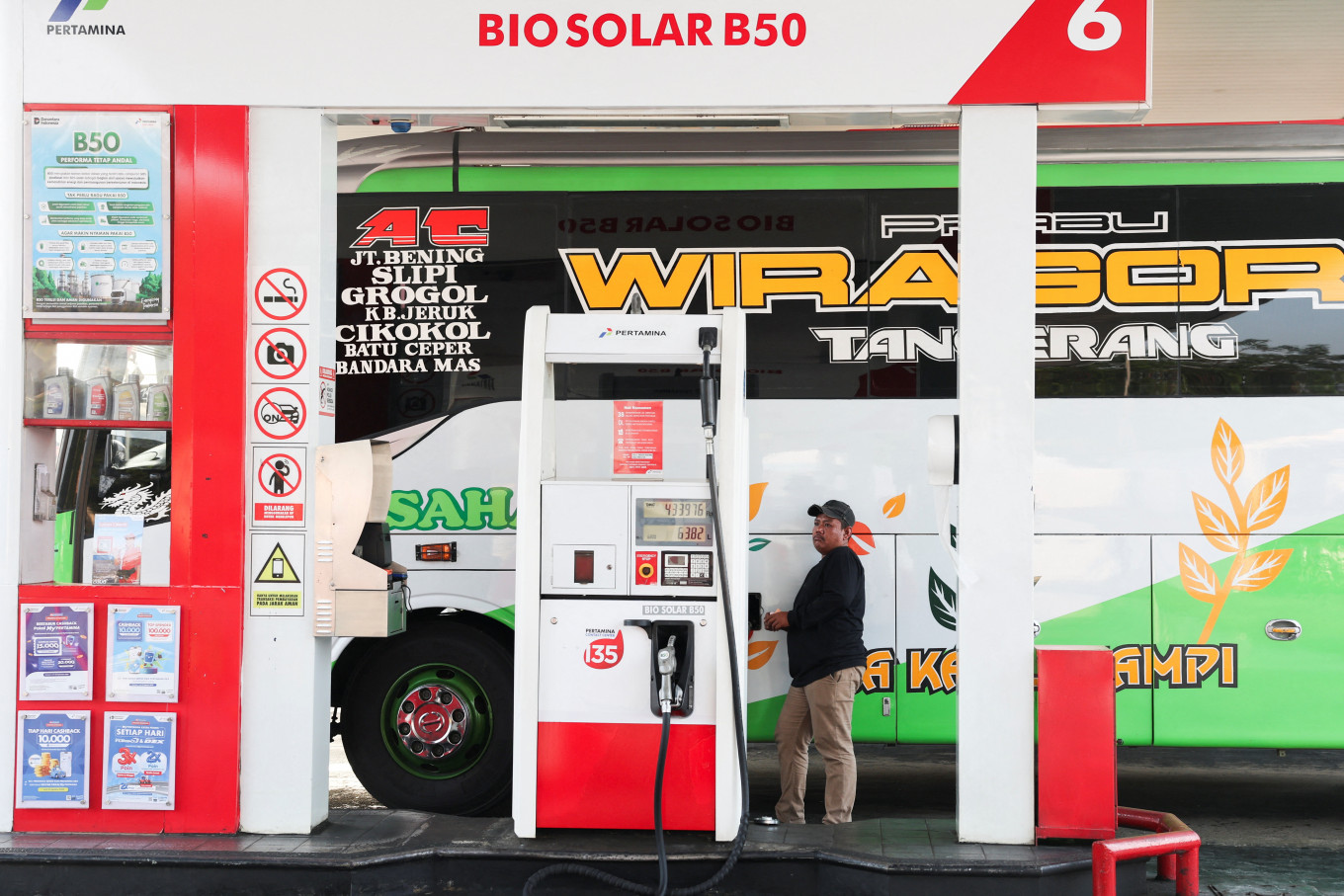 A driver refuels on July 9, 2026, a vehicle with biodiesel containing 50 percent diesel fuel made of palm oil at a petrol station in Karawang, West Java. (Reuters/Ajeng Dinar Ulfiana)
I
ndonesia’s ambitious biodiesel program has progressed from B2.5 in 2008 to B50 in 2026 through successive evolutions in fuel standards, production capacity, distribution infrastructure, and engine testing. Spanning multiple administrations, the policy has endured fluctuating oil prices, shifting fiscal priorities, and changing political leadership.
In a country where long-term initiatives frequently lose momentum during portfolio transitions, B50 represents nearly two decades of accumulated industrial and institutional expertise.
Yet, the ink was barely dry on the B50 mandate when President Prabowo Subianto began questioning when the nation could transition to B60. Reducing imported diesel, retaining greater value from palm oil and diminishing reliance on foreign fuel carry immense political weight in a nation whose natural resources were historically extracted for external benefit.
Observing this discourse, a colleague posed a poignant question: “What happens when the blend rises above B50?” The rapid pivot toward B60 underscores how easily the next percentage milestone can become a symbol of progress before the current one has been sustained or fully understood.
Public and policy discourse in Indonesia frequently navigates the nuanced concepts of swasembada energi (energy self-sufficiency), ketahanan energi (energy security), kemandirian energi (energy independence) and kedaulatan energi (energy sovereignty):
Swasembada evaluates whether domestic production satisfies domestic demand. Ketahanan energi, as defined by Government Regulation No. 40/2025, emphasizes long-term availability, accessibility, and affordability, while incorporating environmental protections.

Kemandirian energi focuses on utilizing domestic resources, technology, and components. Kedaulatan energi concerns the sovereign authority of the state to determine energy policies that safeguard national independence and security.