The Jakarta Post
Please Update your browser
Your browser is out of date, and may not be compatible with our website. A list of the most popular web browsers can be found below.
Just click on the icons to get to the download page.


Popular Reads
Top Results
No results found. Please check your search term and try again
Can't find what you're looking for?
View all search results
Popular Reads
Top Results
No results found. Please check your search term and try again
Can't find what you're looking for?
View all search resultsEnergy volatility is Asia's real stress test
Governments can prepare for persistently high energy prices, but they cannot anticipate every possible market outcome.
Change text size
Gift Premium Articles
to Anyone
Share the best of The Jakarta Post with friends, family, or colleagues. As a subscriber, you can gift 3 to 5 articles each month that anyone can read—no subscription needed!
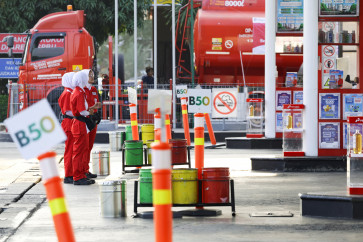
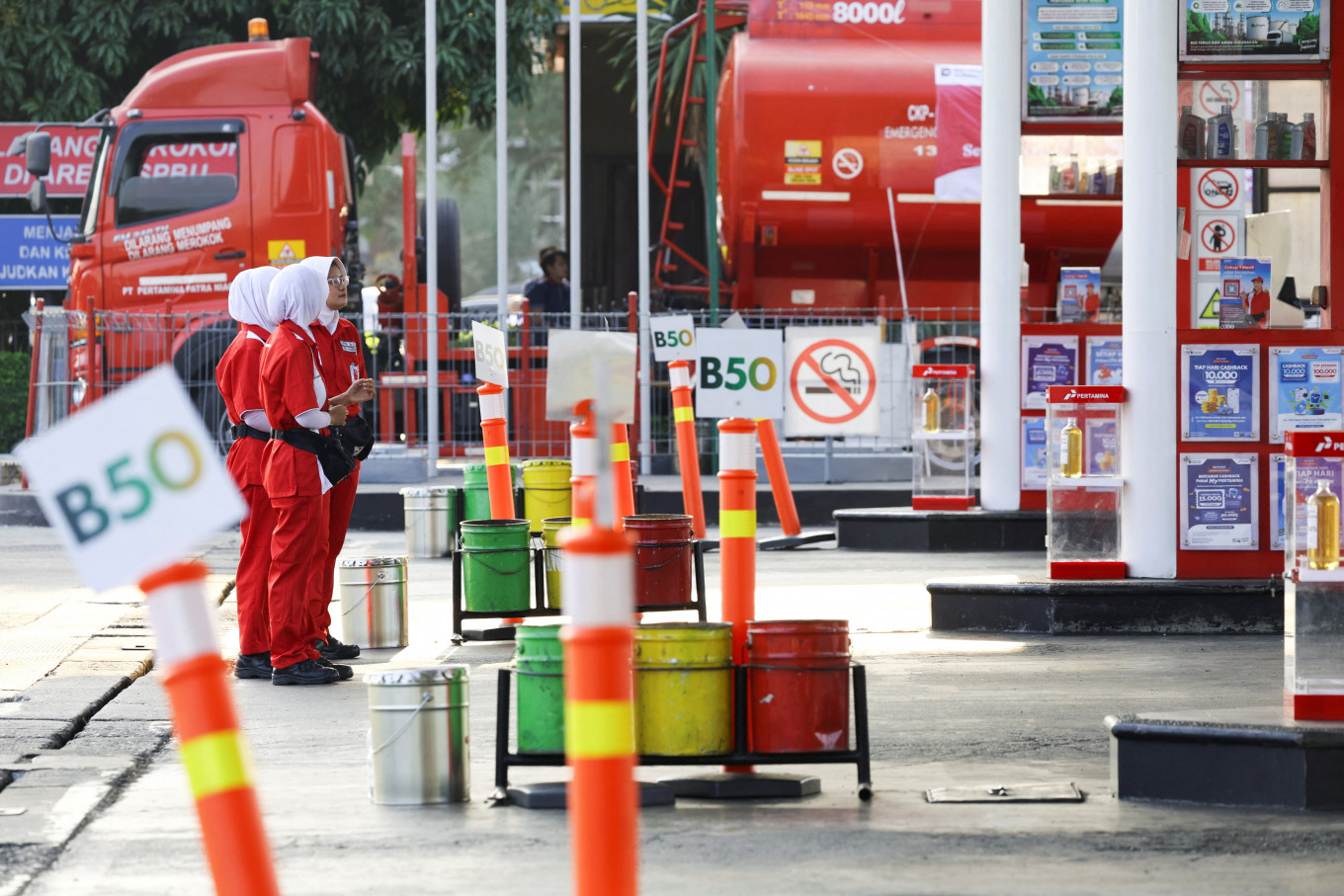 Workers stand at a petrol station for biodiesel containing 50 percent diesel fuel made of palm oil in Karawang, West Java, on July 9, 2026. (Reuters/Ajeng Dinar Ulfiana)
T
he past four months have demonstrated just how volatile oil markets can be. In March, Brent Crude climbed above US$100 a barrel for the first time in four years, reaching $119 on March 9, its highest level since the 2022 energy crisis, as Iran’s closure of the Strait of Hormuz brought tanker traffic to a near-standstill. Prices remained elevated for months and were still above $105 in mid-May.
After the United States and Iran agreed to a ceasefire in June and began negotiations on a permanent settlement, the Strait gradually reopened, though the process has been repeatedly interrupted by renewed clashes. As a result, prices declined sharply, falling into the low $70s by late June, before ticking up again with the resumption of hostilities.
These dramatic swings have provided a real-world stress test for energy-importing economies, particularly the ASEAN+3 countries. With roughly 84 percent of crude shipments through the Strait of Hormuz destined for Asian markets, and China sourcing nearly 50 percent of its oil imports through that single choke point, the region bore the brunt of the global energy shock.
While the debate about energy resilience understandably focuses largely on how well economies can withstand high oil prices, the more important question is how well they cope with persistent volatility. This year’s price whiplash suggests that resilience hinges on institutional preparedness: improving energy efficiency, reducing oil dependence, maintaining adequate reserves and preserving sufficient policy space to absorb price spikes.
Governments can prepare for persistently high energy prices, but they cannot anticipate every possible market outcome. What they can do is build institutions that remain effective across a wide range of scenarios. Resilience, in other words, should be measured less by how economies cope with a single shock than by their capacity to function through successive bouts of uncertainty.
Oil shocks also have a paradoxical effect. In the short run, supply disruptions often push countries back toward coal and other fossil fuels as energy security temporarily takes precedence over decarbonization. Over time, however, recurring bouts of volatility strengthen the economic case for diversifying energy sources and accelerating the transition to renewables.

But resilience rests on capital allocation as much as it does on energy policy. If policymakers and investors treat price spikes as temporary disruptions, capital will continue to flow toward fossil fuels. If, instead, they view repeated bouts of volatility as evidence of a chronic condition, capital is more likely to shift toward clean energy.