The Jakarta Post
Please Update your browser
Your browser is out of date, and may not be compatible with our website. A list of the most popular web browsers can be found below.
Just click on the icons to get to the download page.


Popular Reads
Top Results
No results found. Please check your search term and try again
Can't find what you're looking for?
View all search results
Popular Reads
Top Results
No results found. Please check your search term and try again
Can't find what you're looking for?
View all search resultsThe purpose of development cooperation is to be unnecessary
Instead of simply asking how development cooperation should be financed, OECD governments should be asking what it should achieve.
Change text size
Gift Premium Articles
to Anyone
Share the best of The Jakarta Post with friends, family, or colleagues. As a subscriber, you can gift 3 to 5 articles each month that anyone can read—no subscription needed!
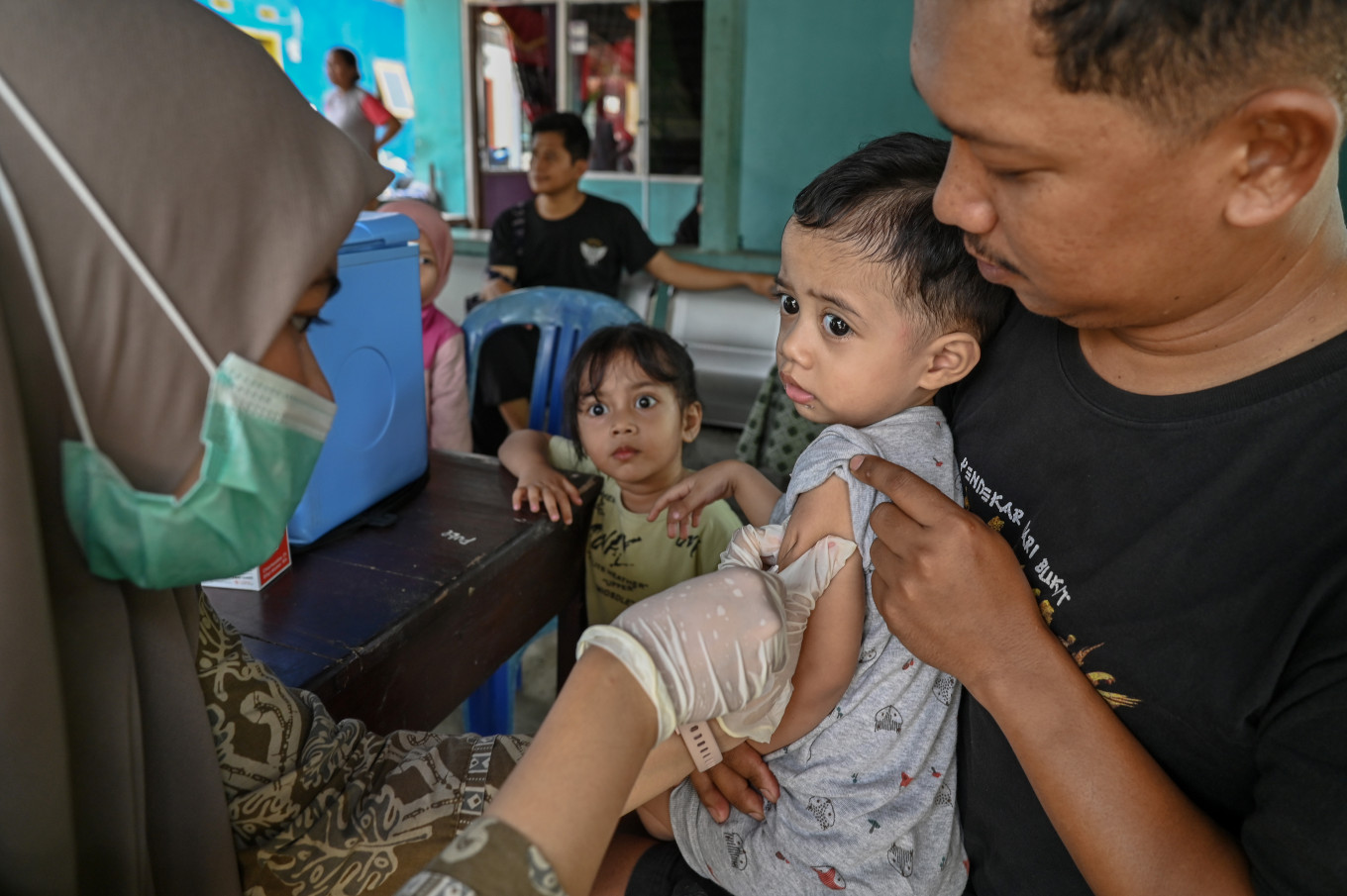 A healthcare worker from the Nosarara community health center (Puskesmas) administers a measles vaccine to a child at the Melati integrated health services post (Posyandu) in Palupi village, Palu, Central Sulawesi, on April 2, 2026. (Antara/Basri Marzuki )
I
n an increasingly unstable geopolitical environment, governments across the Organisation for Economic Co-operation and Development (OECD) are rethinking their spending priorities. As they direct more funds toward defense, industrial competitiveness and energy security, they are seeking offsetting expenditure cuts, and, in many cases, the axe is falling on development financing. In fact, members of the OECD’s Development Assistance Committee (DAC) are currently conducting reviews of their development-cooperation strategies and external-financing priorities.
This is not altogether bad news: development cooperation was long in need of a reassessment. But the reviews so far are focusing on the wrong thing. They want to adapt development cooperation to donors’ changing geopolitical, security and commercial needs and objectives. What is really needed is an examination of the system’s ability to support the structural transformation required to reduce developing countries’ dependence on foreign aid. In other words, instead of simply asking how development cooperation should be financed, OECD governments should be asking what it should achieve.
Development cooperation has produced important progress, especially in health, education, humanitarian response and public-sector capacity. But its original promise was not to support individual projects or deliver incremental social gains; it was to help countries overcome poverty, build productive economies and gradually reduce their dependence on external resources. Yet after decades of effort, many developing countries are still grappling with persistent poverty, limited industrial capacity, rising debt burdens and dependence on commodity exports and external finance.
Since the turn of the century, efforts to improve aid effectiveness, embodied by the 2002 Monterrey Consensus on Financing for Development, the 2005 Paris Declaration on Aid Effectiveness, the 2008 Accra Agenda for Action, and the 2011 Busan Partnership for Effective Development Co-operation, centered on how developing countries should change.
Development partners thus emphasized principles like country ownership, transparency and mutual accountability. While developing countries were expected to strengthen country systems, improve institutions, and demonstrate visible results, less attention was paid to the incentives shaping donor behavior.
This approach clearly failed to translate progress on social development into economic transformation. But adapting development cooperation to suit donors’ new geopolitical realities, the approach the DAC members’ reviews are taking, will do no better. It also fails to address the incentives shaping donor behavior, let alone the fundamental question of whether cooperation is helping to overcome dependency.

Migration offers an illustration of the reframing that is needed. In recent years, migration has become central to cooperation between many European governments and African countries, with development financing, diplomatic engagement, and partnership frameworks being linked to border management, return and readmission agreements, anti-smuggling initiatives and migration containment.