The Jakarta Post
Please Update your browser
Your browser is out of date, and may not be compatible with our website. A list of the most popular web browsers can be found below.
Just click on the icons to get to the download page.


Popular Reads
Top Results
No results found. Please check your search term and try again
Can't find what you're looking for?
View all search results
Popular Reads
Top Results
No results found. Please check your search term and try again
Can't find what you're looking for?
View all search resultsThe real competitiveness trap
For two decades, capital has been abundant and cheap and corporate profits strong; yet investment, productivity and wages have stalled.
Change text size
Gift Premium Articles
to Anyone
Share the best of The Jakarta Post with friends, family, or colleagues. As a subscriber, you can gift 3 to 5 articles each month that anyone can read—no subscription needed!
 Set as preferred source
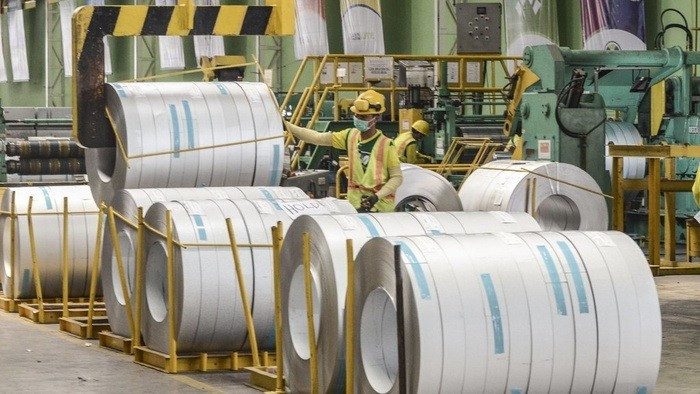 A worker at a steel factory in the Cikarang Industrial Estate in Bekasi, West Java, inspects the quality of the product on Oct. 4, 2019. (Antara/Fakhri Hermansyah)
T
hroughout the developed world, you hear the same anxious story. From Brussels to Washington, political and business leaders warn that our economies have grown uncompetitive because wages are too high, and regulation too burdensome. Make labor cheaper and deregulate, we are told, and private investment will abound.
This diagnosis may sound like common sense to some. But we now have ample evidence and real-world experience to know that it is dead wrong. In a new study for the European Trade Union Confederation, my colleagues and I followed the money to test this hypothesis, analyzing the financial records of Europe’s 300 largest publicly listed non-financial corporations over the last 25 years. Our findings should trouble policymakers both in Europe and beyond. For two decades, capital has been abundant and cheap and corporate profits strong; yet investment, productivity and wages have stalled. The binding constraint on growth has not been the price of labor, but the allocation of capital.
Our study details how large firms maintain healthy profit margins for their shareholders even as real operations are squeezed. Companies increasingly earn their keep as financial actors, collecting interest on bonds or treasuries, receiving dividends, and lending to their own customers, rather than as producers. As a result, shareholder payouts have grown faster than the profits that fund them. Not only does the non-financial corporate sector in Europe now save more than it invests, but since 2009, it has been a net lender to the rest of the economy, a striking inversion of its historic role.
When the profits of Europe’s largest firms are increasingly routed into share buybacks, dividends and financial assets rather than into production and innovation, the result is a mounting social cost of misdirected capital. As the returns on productive capital fall, it becomes more attractive to put each additional euro into financial assets than toward a new factory or laboratory.
Across the firms we studied, the capital stock is in net depletion; and across Europe’s non-financial corporate sector, net capital formation has more than halved as a percentage of GDP since 2000, from 3.7 percent to 1.6 percent. For every euro of profit Europe’s non-financial corporations earned, the share reinvested, net of depreciation, in new productive capacity more than halved, falling from 18.9 percent in 2000 to just 7.4 percent in 2024.
Workers have paid for this continued financial accumulation. Labor’s share of income in the real economy is lower today than it was in 2000, and it is still declining in several major European countries. More than two-thirds of the companies we examined had announced restructuring events, putting 2.7 million European jobs at risk, and nearly 80 percent of those announcements came from firms that booked a profit the same year.

The implication is that jobs were cut not as a response to losses, but as a tactic for lifting returns. Over the past quarter-century, profits grew almost twice as fast as wages in the non-financial corporate sector, and shareholder payouts grew even faster. The gains from two decades of profit growth have flowed to capital, not to the workers who produced it.