The Jakarta Post
Please Update your browser
Your browser is out of date, and may not be compatible with our website. A list of the most popular web browsers can be found below.
Just click on the icons to get to the download page.


Popular Reads
Top Results
No results found. Please check your search term and try again
Can't find what you're looking for?
View all search results
Popular Reads
Top Results
No results found. Please check your search term and try again
Can't find what you're looking for?
View all search resultsIs a European single market for energy such a good idea?
The most plausible path to optimal solutions may require trial and error, and such experimentation is obviously best pursued at the national, rather than the European, level.
Change text size
Gift Premium Articles
to Anyone
Share the best of The Jakarta Post with friends, family, or colleagues. As a subscriber, you can gift 3 to 5 articles each month that anyone can read—no subscription needed!
 Set as preferred source
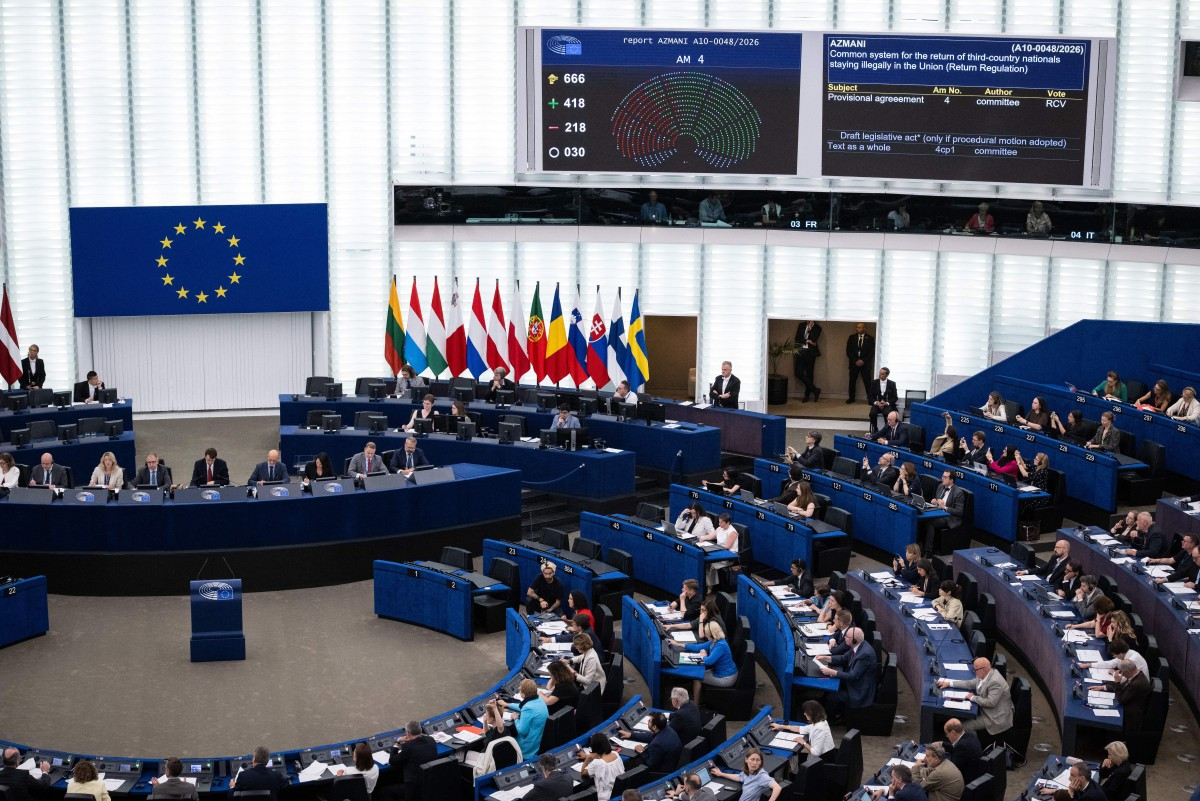 Members of the European Parliament vote at the European Parliament in Strasbourg, eastern France, on June 17, 2026. (AFP/Sebastien Bozon)
W
hatever happens with the United States-Iran peace process and global energy prices, the strategic implications of this year’s supply disruptions are already clear. The crisis is further confirmation of the need to phase out fossil fuels, both to mitigate climate change and to strengthen energy security. But for Europe, which remains heavily dependent on imported energy, some less obvious implications may ultimately prove more consequential. To address the precipitous decline in its share of global GDP this century, Europe must lower its energy costs.
European de-industrialization stems not just from the decline of energy-intensive output such as chemicals, fertilizers and steel, but also from the fact that European industries pay twice as much for electricity as their US and Chinese competitors. As long as that remains true, the continent will fall behind in the industries of the future, not least AI, which depends on power-guzzling computing power.
We have all heard the optimistic pitch for a transition from imported fossil fuels to domestically produced, price-competitive renewable energy. But like the energy crisis triggered by Russia’s 2022 invasion of Ukraine, the latest shock has helped to expose the wishful thinking behind this vision. Solar and wind power may be generated domestically, but the industry is far from indigenous. Renewables depend on far-flung supply chains dominated by China. Though the cost of the equipment is constantly falling, the drop is but a fraction of the full cost of keeping the lights on amid the transition to renewables.
For example, Europe still needs massive investment in transmission networks, owing to the growing share of electricity in total energy consumption and the distance that many renewables facilities are from existing grids. The burden of recovering these costs will ultimately fall on electricity consumers.
Moreover, electricity prices have been inflated by the intermittency of renewable power, implying a need for battery storage or alternative energy sources when the sun is not shining, and the wind is not blowing, and by the European Union’s two-decade drive to create frontier-free wholesale power markets. This combination calls attention to the divide between national and “federal” (EU-wide) energy agendas, an issue that is poised to come to a head in next year’s French presidential election.
The EU’s internal electricity market uses a marginal pricing model, whereby the most expensive megawatt hour needed to meet all demand sets the price for the entire market. Since the marginal supply source (to plug gaps when the sun does not shine or the wind does not blow) is electricity generated by gas turbines, the price recently spiked when the closure of the Strait of Hormuz disrupted Qatari gas exports.

Textbook microeconomics shows why this model is efficient for Europe as a whole. The same logic underpins former European Central Bank president Mario Draghi’s recommendation to remove as many internal barriers as possible across European product and services markets. But a better outcome for Europe overall could still be a bad deal for countries producing abundant low-carbon electricity at minimal marginal cost. Chief among these are solar-power-rich Spain and Portugal and nuclear-powered France.