The Jakarta Post
Please Update your browser
Your browser is out of date, and may not be compatible with our website. A list of the most popular web browsers can be found below.
Just click on the icons to get to the download page.


Popular Reads
Top Results
No results found. Please check your search term and try again
Can't find what you're looking for?
View all search results
Popular Reads
Top Results
No results found. Please check your search term and try again
Can't find what you're looking for?
View all search resultsFrom strategic autonomy to strategic incorporation: Prabowo’s grand strategy?
Prabowo’s foreign policy begins to look less like a collection of diplomatic initiatives, which is lacking, and more like the external dimension of an ambitious industrial strategy.
Change text size
Gift Premium Articles
to Anyone
Share the best of The Jakarta Post with friends, family, or colleagues. As a subscriber, you can gift 3 to 5 articles each month that anyone can read—no subscription needed!
 Set as preferred source
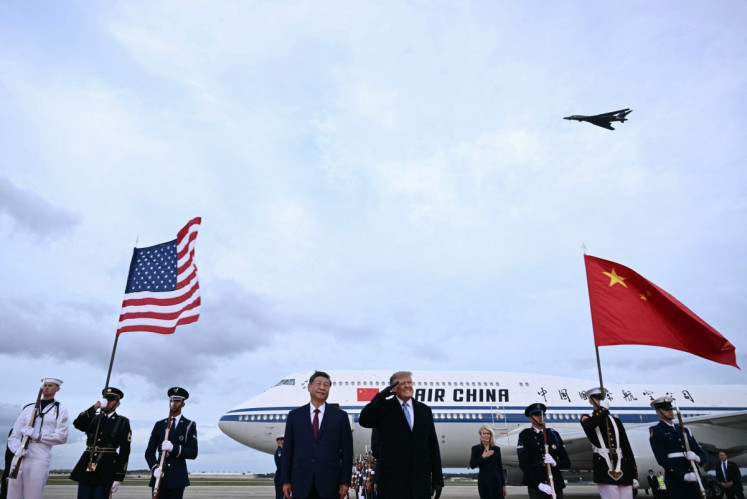
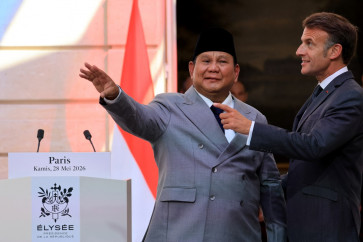
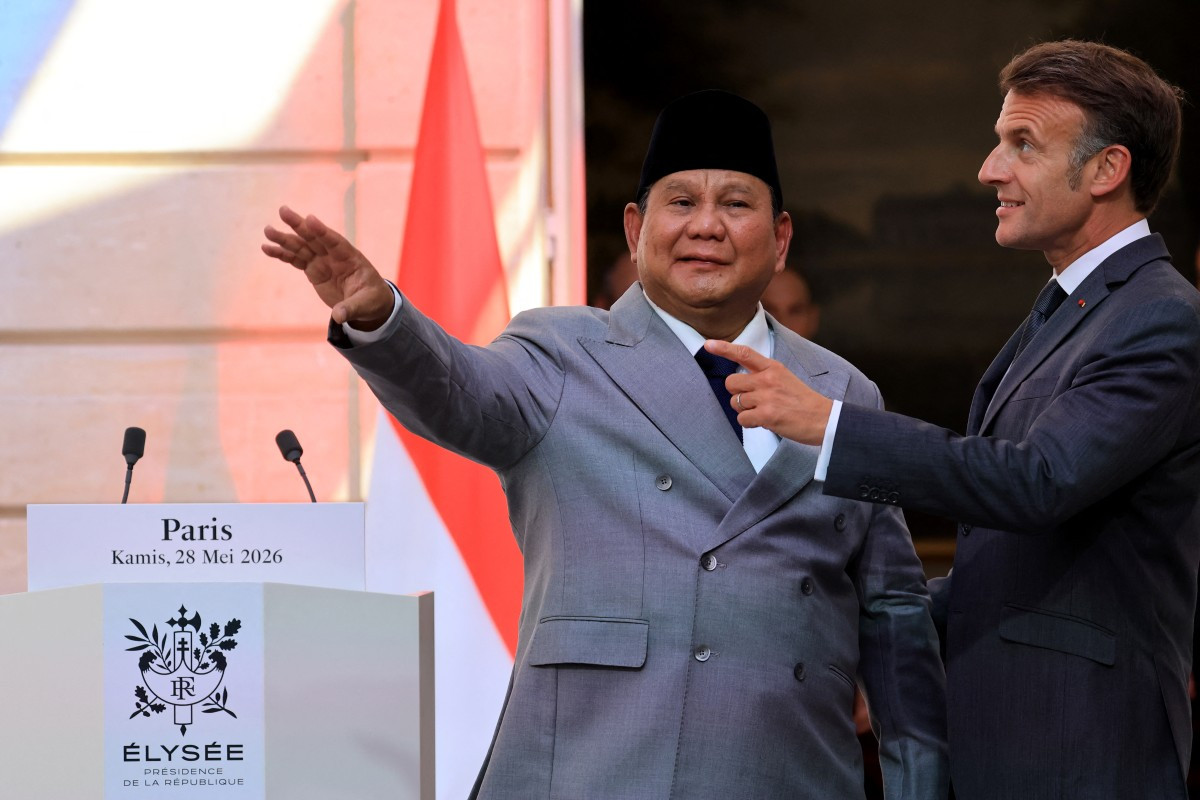 President Prabowo Subianto (left) and French President Emmanuel Macron gesture during a joint press statement at the Elysee Presidential Palace in Paris, France on May 28, 2026. (AFP/Pool/Ludovic Marin)
P
resident Prabowo Subianto has been criticized for spending too much time abroad. His frequent overseas visits have prompted questions about whether his administration has a coherent foreign policy strategy or is simply pursuing diplomacy for diplomacy’s sake. Judged by the number of summits, bilateral meetings or state visits, his foreign policy indeed appears directionless.
But perhaps we are looking in the wrong place.
Prabowo has yet to articulate a comprehensive foreign policy doctrine. That is true. Yet grand strategy is not always found in policy documents. More often, we should infer a foreign policy vision by examining a president’s speeches on domestic priorities. Read through that lens, Prabowo’s foreign policy begins to look less like a collection of diplomatic initiatives, which is lacking, and more like the external dimension of an ambitious industrial strategy.
His emphasis on Indonesia Incorporated seeks to align the state, state-owned enterprises and private businesses to increase national competitiveness. Danantara is designed to mobilize state capital for strategic investment. His focus on food security, energy resilience and the defense industry reflects a common concern with reducing Indonesia’s strategic vulnerabilities while building domestic industrial and technological capabilities.
Read together, these are not isolated initiatives. They suggest that foreign policy is increasingly being treated as an instrument for industrial transformation.
This observation also raises a deeper issue. Indonesia’s foreign-policy debate remains anchored in a vocabulary developed for a different era. For decades, bebas-aktif (independent and active) has largely been interpreted as the pursuit of strategic autonomy, reflected in the slogan “a thousand friends and zero enemies”. That principle served Indonesia well during an era of expanding globalization that provided relatively open markets and stable supply chains. Strategic autonomy meant preserving diplomatic flexibility while engaging all major powers.

The world that made the strategy successful, however, has fundamentally changed.