The Jakarta Post
Please Update your browser
Your browser is out of date, and may not be compatible with our website. A list of the most popular web browsers can be found below.
Just click on the icons to get to the download page.


Popular Reads
Top Results
No results found. Please check your search term and try again
Can't find what you're looking for?
View all search results
Popular Reads
Top Results
No results found. Please check your search term and try again
Can't find what you're looking for?
View all search resultsCopyright and journalism
The government should focus on helping journalists and media organizations rebuild sustainable business models that enable Indonesian journalism to remain financially viable while continuing to serve democracy and the public interest.
Change text size
Gift Premium Articles
to Anyone
Share the best of The Jakarta Post with friends, family, or colleagues. As a subscriber, you can gift 3 to 5 articles each month that anyone can read—no subscription needed!
 Set as preferred source
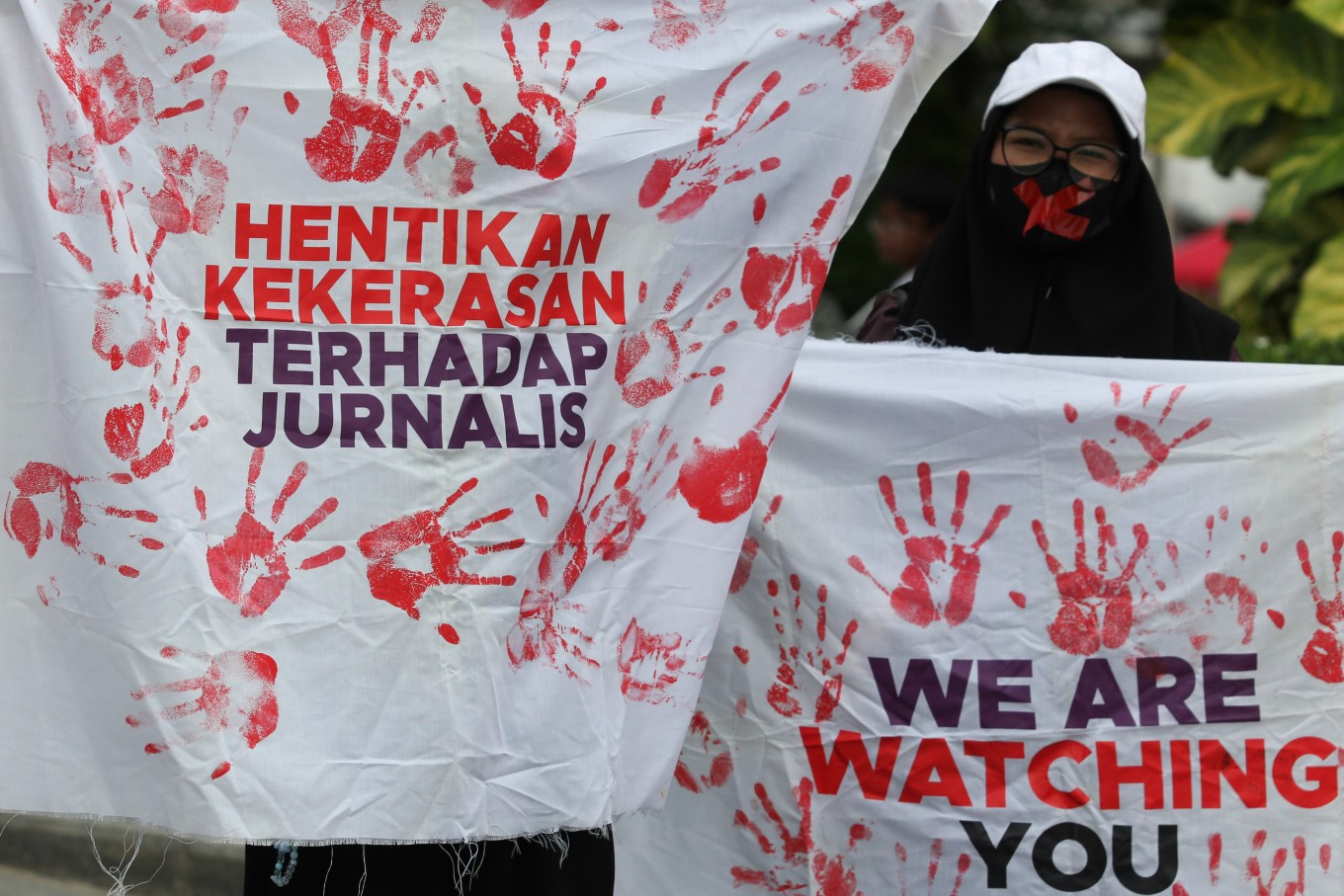 Journalists hold banners during a protest to commemorate World Press Freedom Day on May 2, 2025, in Surabaya, East Java. (Antara/Didik Suhartono)
The planned amendment to the 2014 Copyright Law offers a mixed bag for journalists and press institutions in Indonesia.
On the positive side, the bill, which is set to be deliberated by the House of Representatives, recognizes journalistic works as copyrighted works—the first formal recognition of its kind in the country. This places journalism on an equal footing with other creative and intellectual works.
Amid mounting pressures from failing business models and an increasingly restrictive government that have constrained both the press and civil society, the amendment seeks to safeguard the economic rights of journalists and media organizations as the producers and owners of journalistic works, including news content.
Article 30 of the bill, for example, stipulates that digital platforms must compensate producers of journalistic works if they derive direct or indirect profits from using such content through activities including aggregation, curation, republication, or advertising.
These provisions are a welcome development after a series of legal setbacks for news publishers in their pursuit of fair compensation from digital platforms. The most significant setback came with the Agreement of Reciprocal Trade (ART) between Indonesia and the United States, signed by President Prabowo Subianto and US President Donald Trump.
The agreement stipulates that Indonesia may not require US digital service providers—including Google, Meta and X—to support Indonesian news organizations through paid licensing, user data sharing or revenue-sharing arrangements.

This provision runs counter to the 2024 Publishers' Rights Regulation (Presidential Regulation No. 32/2024), which requires digital platforms to compensate news publishers for using their content. If the copyright amendment is enacted, it would provide journalists and media organizations with stronger legal standing in their dealings with digital platforms.