The Jakarta Post
Please Update your browser
Your browser is out of date, and may not be compatible with our website. A list of the most popular web browsers can be found below.
Just click on the icons to get to the download page.


Popular Reads
Top Results
No results found. Please check your search term and try again
Can't find what you're looking for?
View all search results
Popular Reads
Top Results
No results found. Please check your search term and try again
Can't find what you're looking for?
View all search resultsThe energy-nationalism dilemma
When populist price caps collide with soaring global markets, resource nationalism doesn't protect the public—it just leaves them in the dark.
Change text size
Gift Premium Articles
to Anyone
Share the best of The Jakarta Post with friends, family, or colleagues. As a subscriber, you can gift 3 to 5 articles each month that anyone can read—no subscription needed!
 Set as preferred source
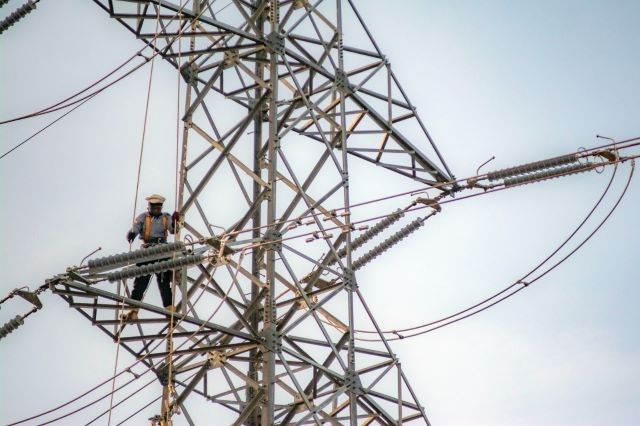 A technician from state electricity company PLN stands atop a transmission tower during regular maintenance work on Dec. 27, 2023, in Palu, Central Sulawesi.
(Antara/Basri Marzuki)
A technician from state electricity company PLN stands atop a transmission tower during regular maintenance work on Dec. 27, 2023, in Palu, Central Sulawesi.
(Antara/Basri Marzuki)
I
ndonesia, the world's largest coal exporter, currently finds itself in a striking paradox: rolling electricity blackouts are hitting Java, the nation's economic heartland, following disruptions at two major coal-fired power plants.
While the government and state electricity monopoly PLN have rejected any direct link between these blackouts and coal supply constraints, reality on the ground suggests otherwise, raising uncomfortable questions about the resilience of the national energy system.
Since 2018, Indonesia has required coal miners to allocate at least 25 percent of their output to the domestic market under the domestic market obligation (DMO) policy. In practice, this means producers can export only up to three-quarters of their annual production quota, with the remainder reserved for local buyers like PLN and mineral smelters.
The policy perfectly embodies Jakarta's resource-nationalism agenda. By reserving a fixed portion of coal output for domestic consumption, the government aims to safeguard energy security from the volatility of global commodity markets, where soaring prices frequently tempt producers to prioritize lucrative overseas buyers over domestic needs.
However, a critical problem arises because coal supplied to PLN under the DMO scheme is subject to a government-imposed price cap of just US$70 per tonne, far below the prevailing global market price of around $120 per tonne. As a result, PLN often struggles to secure its share. Coal producers have little commercial incentive to sell to the state utility when they can instead fulfill their DMO quotas by supplying other designated domestic buyers, such as mineral smelters, at full market prices.
Nor can PLN simply choose to pay more. Raising procurement prices would drive up electricity generation costs, forcing the government to either increase subsidies from the state budget or pass higher tariffs on to consumers, both of which are politically and fiscally painful choices. The structural deficit is real: Energy and Mineral Resources Minister Bahlil Lahadalia recently acknowledged that PLN is still short of roughly 20 million tonnes of medium-grade coal needed to secure its operations for the year.

On the other hand, coal miners cannot be entirely blamed for sidestepping the national agenda. They are operating under mounting cost pressures, including rising stripping ratios (SR), a key operational metric measuring how much overburden rock must be removed to extract a single tonne of coal.