The Jakarta Post
Please Update your browser
Your browser is out of date, and may not be compatible with our website. A list of the most popular web browsers can be found below.
Just click on the icons to get to the download page.


Popular Reads
Top Results
No results found. Please check your search term and try again
Can't find what you're looking for?
View all search results
Popular Reads
Top Results
No results found. Please check your search term and try again
Can't find what you're looking for?
View all search resultsSLAPPs: How ASEAN can shield its environmental defenders
While Southeast Asian nations promote green growth, their legal systems are being weaponized against the very people fighting to protect the region's climate-vulnerable landscapes.
Change text size
Gift Premium Articles
to Anyone
Share the best of The Jakarta Post with friends, family, or colleagues. As a subscriber, you can gift 3 to 5 articles each month that anyone can read—no subscription needed!
 Set as preferred source
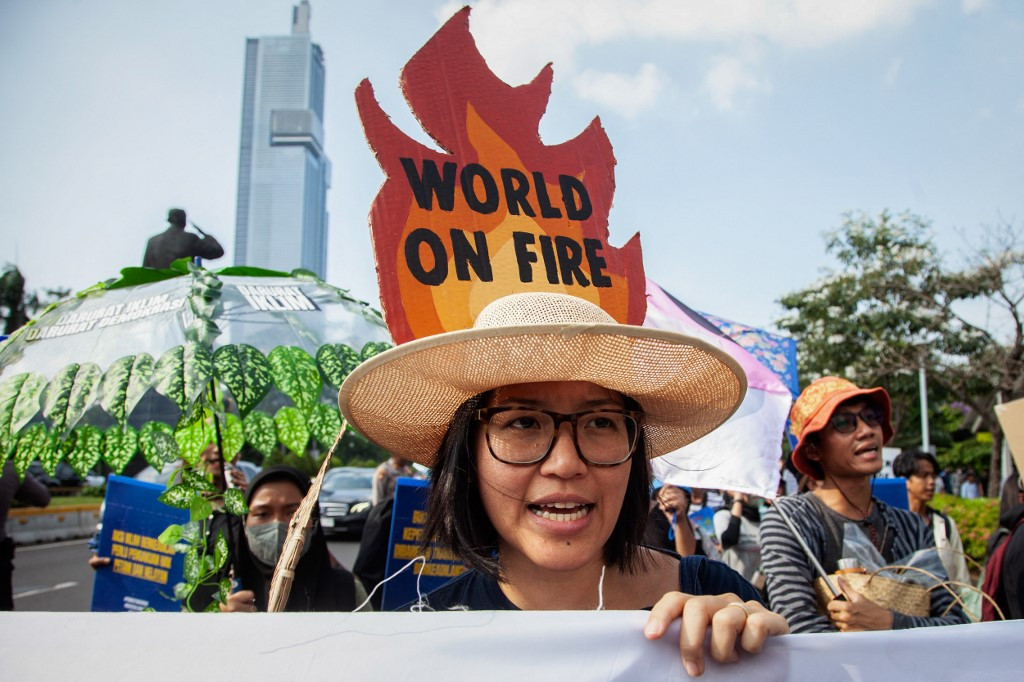 Environmental activists march on Sept. 27, 2024, against 10 years of Joko “Jokowi“ Widodo's presidency's administration, criticizing the worsening climate crisis and democratic backsliding, during the Global Climate Strike 2024 action in Jakarta. (AFP/Aditya Irawan)
A
s we marked World Environment Day on Friday, governments across Southeast Asia continue to promote green growth and climate resilience. Yet, many of those defending the region's forests, rivers, coastlines and Indigenous territories face rampant intimidation, criminalization, and judicial harassment.
One of the most common weapons deployed against them is the Strategic Lawsuit Against Public Participation (SLAPP). Often framed as criminal defamation, cybercrime, incitement or public order cases, SLAPPs are designed less to seek justice than to intimidate critics, drain activists financially, and discourage public scrutiny of environmentally destructive projects.
Environmental activists, journalists, Indigenous leaders, lawyers and community organizations are increasingly targeted simply for exposing pollution, illegal logging, land grabs, and corporate abuse. The ultimate goal is not necessarily to win in court, but to make resistance so costly that people are forced into silence.
The rise of SLAPPs reflects a wider regional crisis: shrinking civic space amid escalating environmental threats. As one of the world’s most climate-vulnerable regions, Southeast Asia faces intensifying floods, droughts, sea-level rise, deforestation and biodiversity loss driven by extractive industries and large-scale development projects. Yet, instead of being protected, environmental defenders are treated as obstacles to development, a practice that severely undermines transparency, public participation and environmental governance.
Weak rule of law, limited judicial independence, and cozy ties between political and business elites have enabled legal systems to be weaponized against the public. Consequently, SLAPPs do not merely silence individuals; they weaken democratic governance itself.
Indonesia clearly illustrates this contradiction. On paper, the country boasts one of the region’s stronger anti-SLAPP frameworks. Article 66 of the Environmental Protection and Management Law protects environmental defenders from criminal prosecution and civil lawsuits, while Supreme Court Regulation (PERMA) No. 1/2023 strengthens safeguards for public participation in environmental cases. In practice, however, defenders continue to face intimidation, online harassment, arbitrary arrest and criminal charges under broadly worded laws like the Electronic Information and Transactions (ITE) Law.

Recent cases highlight this deep chasm between legal protection and reality. Environmental activist Dera Pramandira was arrested after assisting farming communities challenging environmental violations in Central Java. Indigenous defender Dewi Anakoda, who opposed nickel mining in Halmahera, North Maluku, faced intense intimidation and physical attacks. In Sangihe, North Sulawesi, Jull Takaliuang and her fellow activists faced criminalization and cyber harassment for opposing mining projects, despite eventually winning a milestone court ruling that revoked the company’s permit.