The Jakarta Post
Please Update your browser
Your browser is out of date, and may not be compatible with our website. A list of the most popular web browsers can be found below.
Just click on the icons to get to the download page.


Popular Reads
Top Results
No results found. Please check your search term and try again
Can't find what you're looking for?
View all search results
Popular Reads
Top Results
No results found. Please check your search term and try again
Can't find what you're looking for?
View all search resultsJapan and Asia’s new balance
Tokyo is not wringing its hands; it is acting to defend itself and help others secure themselves against Chinese expansionism and the US volatility.
Change text size
Gift Premium Articles
to Anyone
Share the best of The Jakarta Post with friends, family, or colleagues. As a subscriber, you can gift 3 to 5 articles each month that anyone can read—no subscription needed!
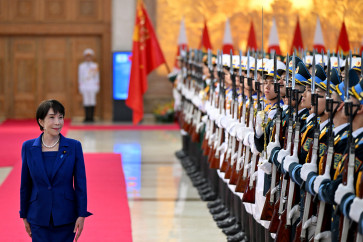
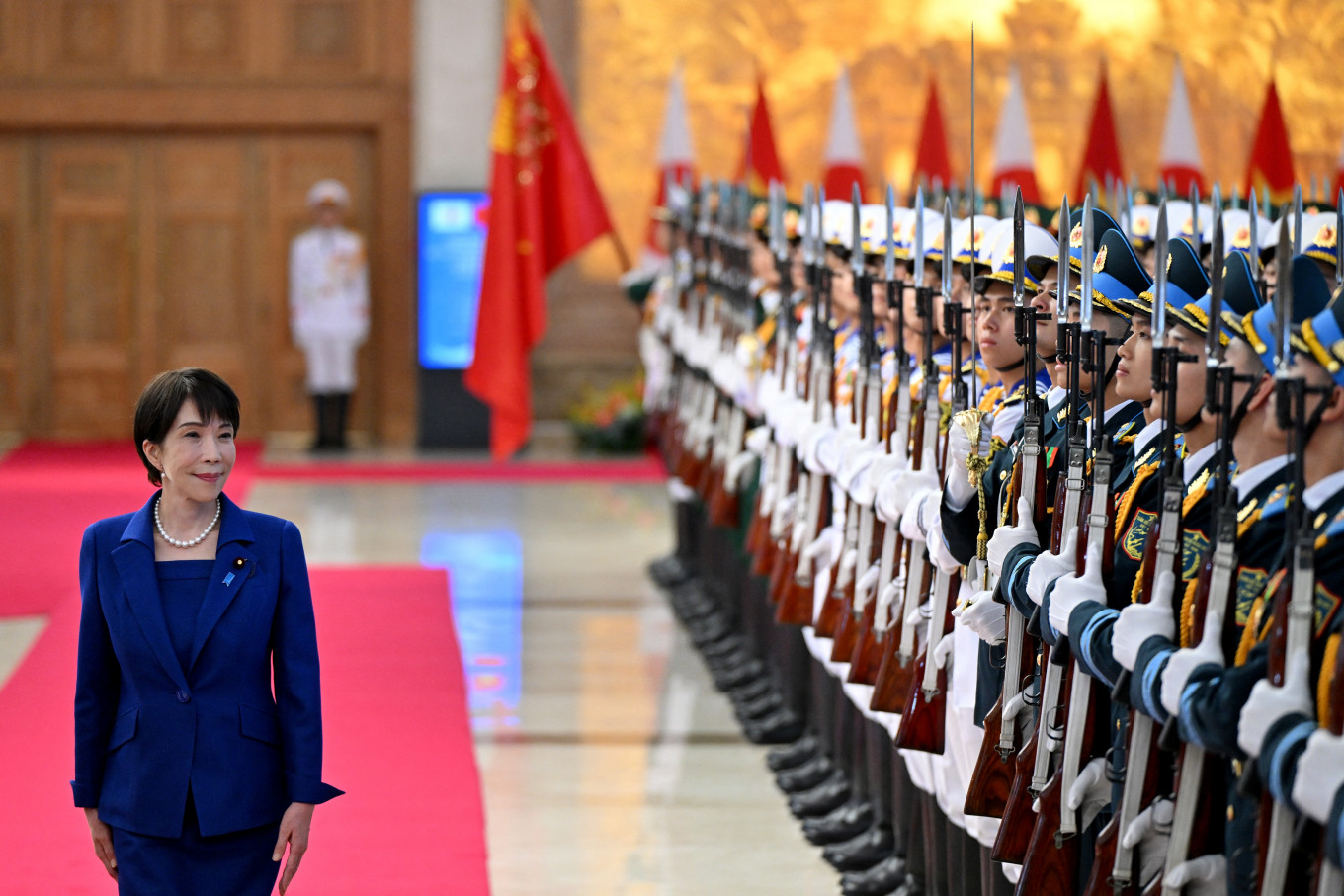 Japan’s Prime Minister Sanae Takaichi reviews a guard of honor on May 2, 2026, during a welcoming ceremony at the Government Office in Hanoi. (AFP/Pool/Nhac Nguyen )
S
ince World War II, Japan has deliberately defined itself as a peaceful nation. Relying on the United States for its security, Tokyo built one of the world’s largest economies while renouncing nuclear weapons, avoiding the use of force and refusing to project its conventional military power. That era is now drawing to a close.
China’s growing regional assertiveness and US ambivalence in Asia, especially regarding the defense of Taiwan against potential Beijing aggression, has caused much of Asia to complain about US President Donald Trump’s administration and mutter about its likely abandonment of the region. Tokyo, however, is not wringing its hands; it is acting to defend itself and help others secure themselves against Chinese expansionism and US volatility.
At the annual Shangri-La Dialogue in Singapore last week, Japanese Defense Minister Shinjiro Koizumi unveiled three broad directions of a new security policy: to step up national defense spending and military modernization, increase defense cooperation with friendly nations and lift restrictions on the export of arms. The shift marks one of the major transformations in Asian geopolitics since the end of the Cold War.
For decades, Japan’s defense industry was largely inward-looking. Strict policy controls limited arms exports and constrained military cooperation with foreign partners. Tokyo has now reached a very different conclusion. It is arguing that preserving peace in Asia requires active participation in shaping the regional balance of power. The result is a historic relaxation of arms exports announced in April this year.
The most visible symbol of this change is the agreement last month to supply 11 upgraded Mogami-class frigates to Australia. The contract, estimated at nearly US$7 billion is the largest defense export in Japan’s post-war history, goes beyond a simple commercial transaction. It creates a framework for Japan’s long-term defense-industrial collaboration with Australia and other regional partners. It also points to the construction of regional defense networks that are not dependent on Washington.
In Singapore, Koizumi announced New Zealand is also interested in the purchase of Mogami class frigates from Tokyo. The emerging Japan-Australia-New Zealand security triangle is not a formal alliance but part of a new web of defense cooperation involving production, logistics, technology sharing and interoperability. Similar conversations are unfolding between Japan and the Philippines, as well as with other maritime states anxious about the changing balance of power in Asia.

In Singapore, Koizumi rejected China’s high-pitched accusations about Japan’s militarism and rearmament. Pointing to China’s expanding nuclear arsenal and growing conventional military power, Koizumi gently suggested that “the pot is calling the kettle black”. China cannot dramatically build up its own military capabilities, indulge in coercion of all kinds and accuse others of rearmament and militarism.