The Jakarta Post
Please Update your browser
Your browser is out of date, and may not be compatible with our website. A list of the most popular web browsers can be found below.
Just click on the icons to get to the download page.


Popular Reads
Top Results
No results found. Please check your search term and try again
Can't find what you're looking for?
View all search results
Popular Reads
Top Results
No results found. Please check your search term and try again
Can't find what you're looking for?
View all search resultsThe broken promise of coal transition finance
The $20 billion climate flop: a flagship plan to phase out coal in Indonesia hasn’t shut a single power plant.
Change text size
Gift Premium Articles
to Anyone
Share the best of The Jakarta Post with friends, family, or colleagues. As a subscriber, you can gift 3 to 5 articles each month that anyone can read—no subscription needed!
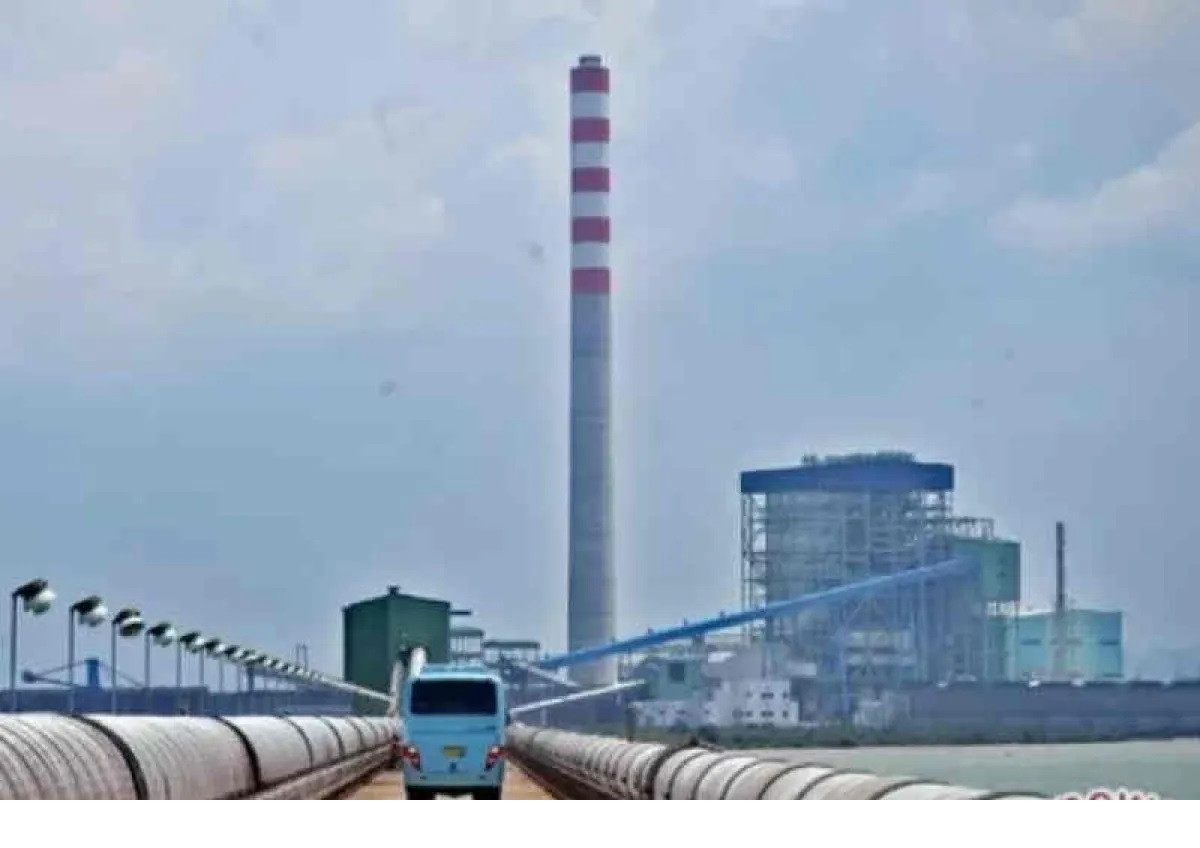 A bus travels on a road on Oct. 18, 2020, toward near Cirebon-1 coal-fired power plant in Cirebon, West Java. (Antara/Yudhi Mahatma)
In December 2025, Indonesia quietly abandoned plans to close the Cirebon-1 coal power plant.
This was no ordinary power plant. Cirebon-1 was supposed to be the centerpiece of a US$21.4 billion international deal backed by the United States, the United Kingdom, Japan and the European Union to help Indonesia end coal use.
Indonesia’s so-called Just Energy Transition Partnership (JETP) was launched at a G20 summit in Bali in 2022. Similar deals have been struck with South Africa, Vietnam and Senegal. They are widely regarded as the most ambitious attempt at getting international climate finance to end coal use in populous, coal-dependent middle-income countries.
The UK government once touted the JETPs as “a template on how to support just transition around the world”. This refers to efforts to ensure that the phase-out of fossil fuels and phase-in of low-carbon technologies is fair, inclusive and reflects the demands of workers and affected communities.
But if this approach cannot retire a single plant in Indonesia, the world’s fourth-largest coal consumer, there is reason to question whether the model itself works. Our research suggests these partnerships are better understood as a cautionary tale.
The idea underpinning the JETPs is elegant in theory: use public money from rich countries to attract private investment for renewable energy projects and closing down coal plants.

Grants from governments and low-cost loans supposedly reduce the risk enough to bring in billions more from banks and asset managers. The public money “unlocks” the private money, and together they fund an energy transition that benefits the public through cleaner air, reliable energy and reduced climate risk. Win, win.
But across all four JETP countries, the private money has yet to materialize at the scale envisioned. In Indonesia, as of early 2025, only around $1.1 billion of public money had been disbursed. But the country’s plan for decarbonizing electricity estimates it needs $97 billion in investment by 2030, a cavernous gap.
More troubling still is the lack of consolidated financial reporting for the JETP funds. Fifty separate funding packages within the Indonesian JETP, all with their own financial instruments and accounting frameworks, make it all but impossible to track how much money has been spent.
As international climate law expert Lukas Bogner has argued, this kind of finance creates complex bureaucratic layers that recipient countries must navigate.
Decommissioning a coal plant is not like building a new one. It means buying out existing contracts, compensating investors for lost future profits, and renegotiating complex legal agreements.
Even then, the electricity the plant provided still needs to be replaced. This requires further investment in generation systems that may not yet exist. Investors have little appetite for any of this, and the costs fall primarily on the state.
In fact, the supposed unlocking of private investment with public money raises a perennial tendency: private capital moves where returns are highest and risks lowest.
Investors in London and New York, for example, demand high returns from middle-income economies like Indonesia, yet balk at complex regulatory environments, state-owned electricity companies, powerful coal interests and mounting sovereign debt burdens. Public money can make some projects more attractive, but will not remove the supposed political and economic risks investors see in countries like Indonesia.
The JETP also means loading Indonesia with more debt. Of the $21.4 billion now pledged, only 2.6 percent comes in the form of interest-free grants. Most JETP finance would arrive as commercially-priced loans which Indonesia must eventually repay.
In other words, Indonesia is being asked to borrow more to decommission coal assets that currently generate government revenue and employment. At the same time, it will have to purchase renewable electricity from the privatized companies that would replace them.
In the words of one of our interviewees, the Indonesian state is expected to “pay twice”, once to close the old system, and again to buy power from the new one. Trade unions in Indonesia have been blunt about what this means in practice. Under the JETP model, they warn electricity will no longer be treated as a public good, but as a commodity that ordinary Indonesians will pay more for.
The JETP model can also weaken the same state institutions needed to manage the energy transition. Countries that have managed rapid clean-energy booms, from China to Vietnam, have done so through strong state-owned enterprises, clear industrial strategies, and the ability to direct investment and discipline business.
The JETPs, by contrast, are designed around a diminished role for the state and a central role for private capital. This happens through regulatory reform, the creation of new private markets, or through investor-friendly technologies.
In the case of Indonesia, this “de-risking” agenda explains the pressure to break up the national electricity company and sell off its assets, a prospect fiercely resisted by trade unions, civil society and even wealthy groups who profit from the existing system.
International climate finance remains important. Rich countries must still fund energy transitions in the Global South. But the Indonesian JETP suggests that relying on private investors to deliver coal phase-outs may be the wrong model.
Alternatives do exist, from proposals for much larger grant-based financing to the Bridgetown Initiative proposed by Barbados’s Prime Minister Mia Mottley which would use International Monetary Fund resources to support climate investment. More radical proposals call for publicly-owned, worker-led transitions. But so far, these ideas have made little progress.
Our research suggests just transitions are more likely when governments receive direct grants that help them retain the capacity to shape their own energy systems and to support domestic industries through green industrialization.
The failure to decommission Cirebon-1 matters beyond Indonesia. It suggests the world’s flagship model for financing the end of fossil fuels is not working. And the longer it takes to admit that, the harder the transition becomes, for Indonesia, and for everyone.
---
Freddie Daley is a research associate at the Centre for Global Political Economy and Charlie Lawrie is a postdoctoral associate at University of Sussex, the United Kingdom This article is republished under a Creative Commons license.