The Jakarta Post
Please Update your browser
Your browser is out of date, and may not be compatible with our website. A list of the most popular web browsers can be found below.
Just click on the icons to get to the download page.


Popular Reads
Top Results
No results found. Please check your search term and try again
Can't find what you're looking for?
View all search results
Popular Reads
Top Results
No results found. Please check your search term and try again
Can't find what you're looking for?
View all search resultsAfter landmark law, domestic workers in Indonesia wait for wages to catch up
The new Domestic Workers Protection Law grants long-sought legal recognition, but key rules on wages and enforcement could take another year, leaving workers like Arnida waiting for tangible change.
Change text size
Gift Premium Articles
to Anyone
Share the best of The Jakarta Post with friends, family, or colleagues. As a subscriber, you can gift 3 to 5 articles each month that anyone can read—no subscription needed!
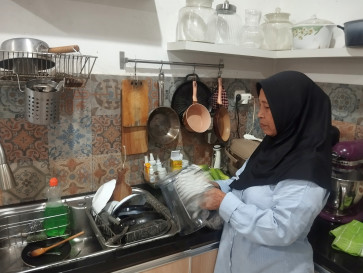
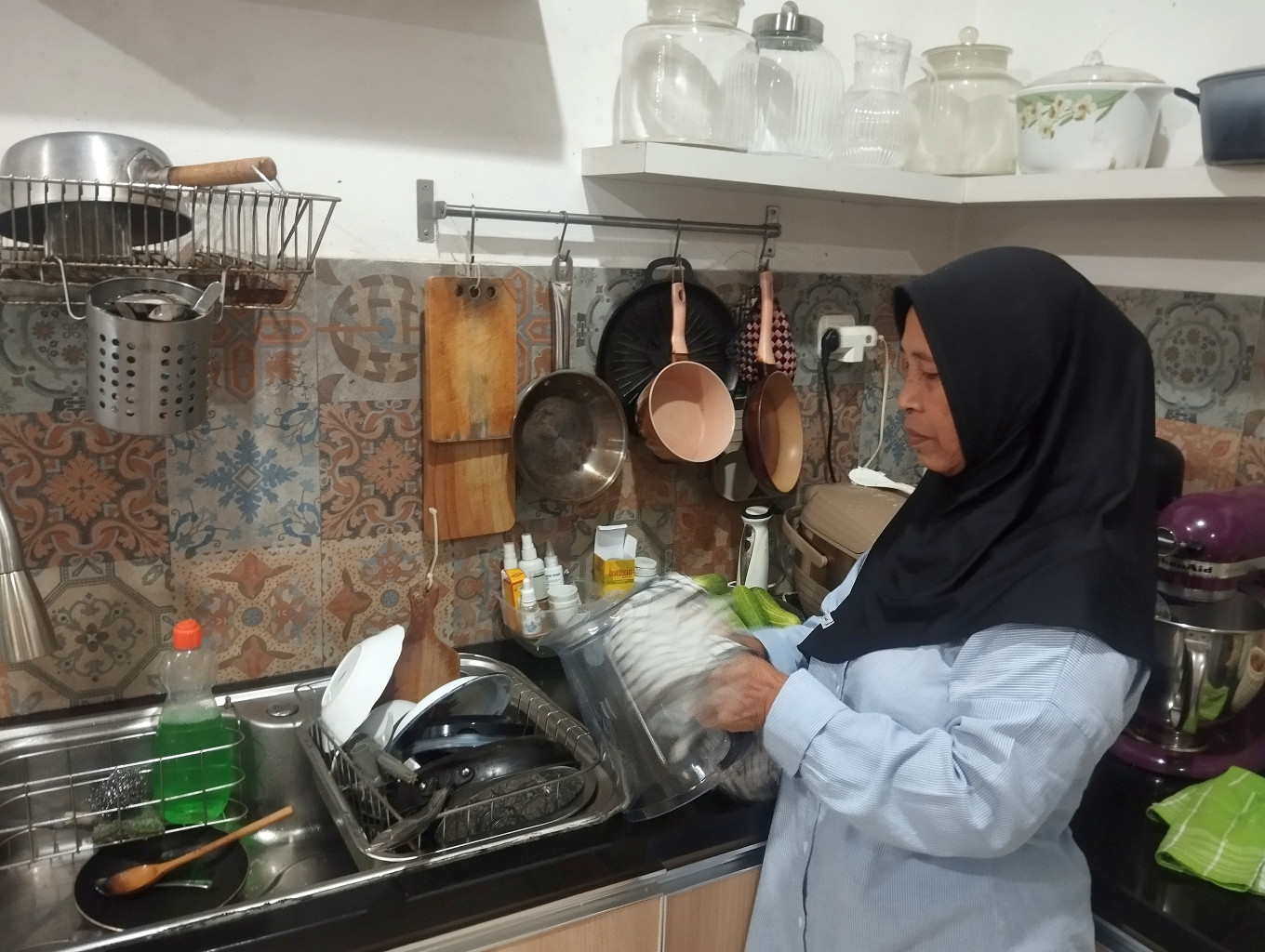 Holding on: Iti cleans kitchen utensils at the home of her employer, Vita Oktarina, in Depok, West Java, on the outskirts of Jakarta, on May 17, 2026. She began working as a domestic worker after her husband died in 2010. (JP/Nur Janti)
A
t the age of 18, Arnida Rahman began working as a domestic worker in Makassar, South Sulawesi shortly after finishing junior high school, just like more than 25 million workers in the country whose education ended at that level.
Her family was unable to afford tuition for senior high school, so instead of wearing the white-and-gray uniform of a high school student and sitting in a classroom, she spent her days cleaning the home of a garment business owner.
Required to live in, she slept in a 16-square-meter room with four other domestic workers.
“We all slept in one room. There was no privacy,” Arnida, now 40, recalled.
Although her home was less than an hour away, Arnida was only allowed to return during Idul Fitri and Idul Adha, usually for just one or two days before being called back to work.
Years later, Arnida worked as a live-out nanny for a civil servant family. During the COVID-19 pandemic, her wages were delayed for three months as employers struggled financially.

“I kept asking about my salary, but they said the economy was difficult,” she said.