The Jakarta Post
Please Update your browser
Your browser is out of date, and may not be compatible with our website. A list of the most popular web browsers can be found below.
Just click on the icons to get to the download page.


Popular Reads
Top Results
No results found. Please check your search term and try again
Can't find what you're looking for?
View all search results
Popular Reads
Top Results
No results found. Please check your search term and try again
Can't find what you're looking for?
View all search results‘Labbayk’ portraits reflect Dutch Muslims’ pilgrimages
A photo exhibition at Erasmus Huis captures Dutch Muslims from diverse backgrounds, revealing their personal umrah and haj journeys that have shaped both faith and belonging.
Change text size
Gift Premium Articles
to Anyone
Share the best of The Jakarta Post with friends, family, or colleagues. As a subscriber, you can gift 3 to 5 articles each month that anyone can read—no subscription needed!
 Set as preferred source
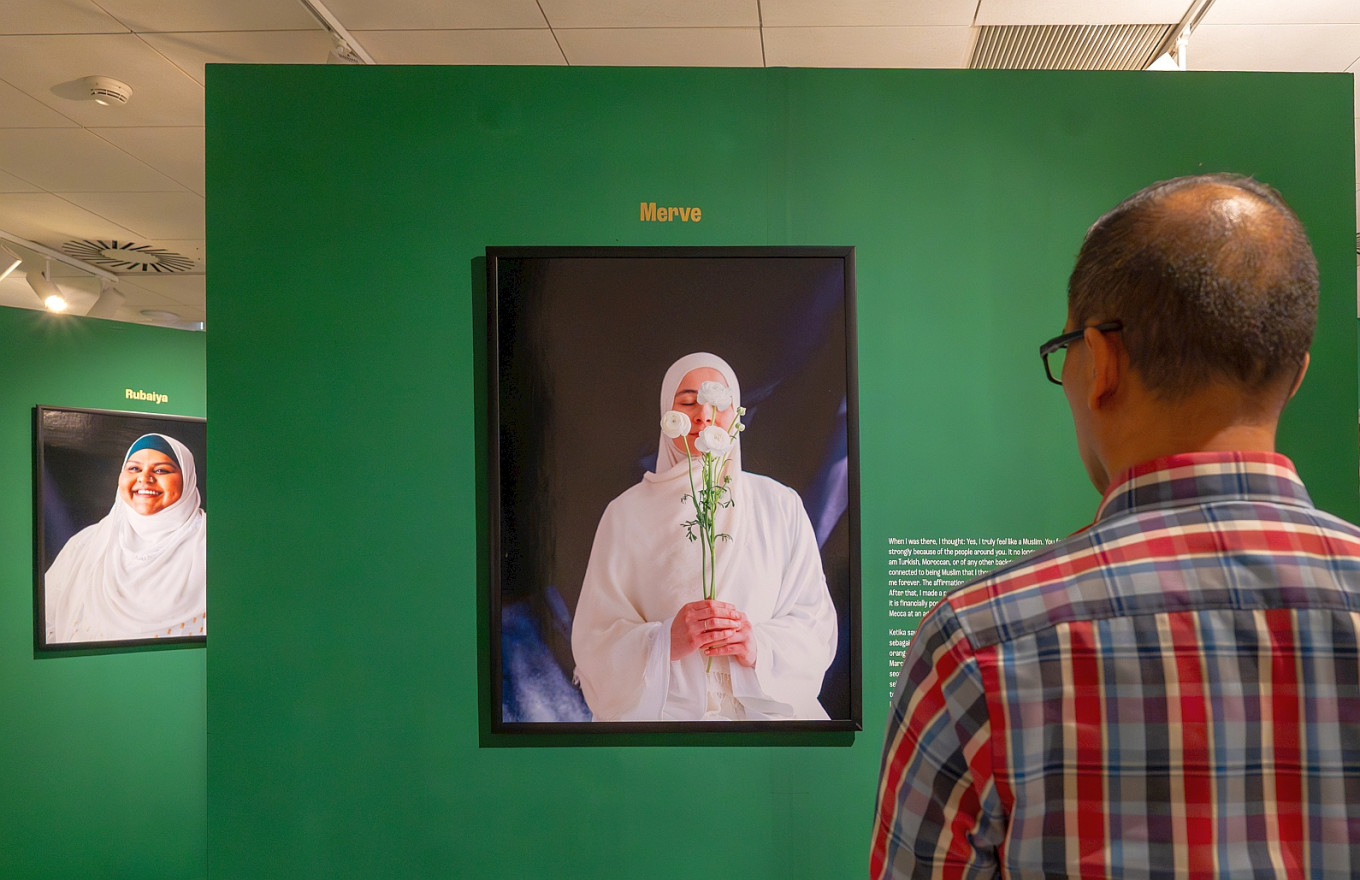 Private faith: A visitor contemplates a portrait of a Dutch Muslim woman concealing her face with a bunch of flowers on May 19, 2026, during the opening of Labbayk: Here I Am, a photo exhibition by Turkish-Dutch sociologist and photographer Ebru Aydin at Erasmus Huis in Setiabudi, South Jakarta. (Courtesy of Erasmus Huis Jakarta/-)
M
illions of people dressed in white circumambulate the Kaaba in Mecca, chanting serenely in unison. From above, their counterclockwise movement looks precise and harmonious, like the intricate workings of a treasured timepiece.
This mesmerizing scene is screened on a television standing in a corner of the foyer at Erasmus Huis in Setiabudi, Jakarta. Surrounded it are portraits of women and men reflecting on their pilgrimage experience.
These images are part of Labbayk: Here I Am, a photo exhibition by Turkish-Dutch sociologist and photographer Ebru Aydin, which also features photographs of religious sites in Mecca and Medina she took during umrah (minor pilgrimage).
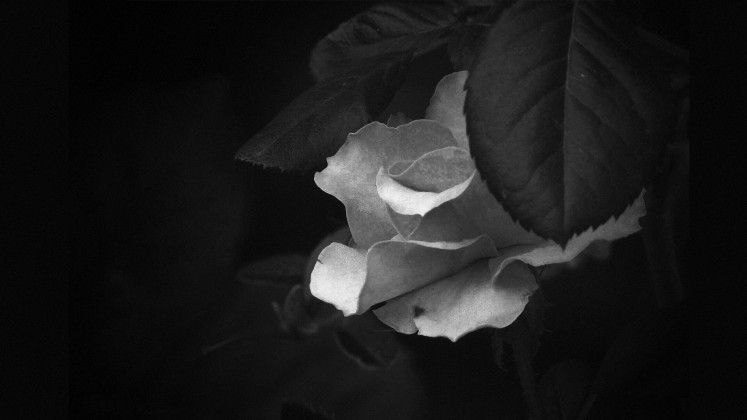
"This exhibition offers an intimate glimpse into the haj and umrah journeys of Dutch Muslims through photographs and personal stories," Dutch Ambassador Mark Gerritsen said during the exhibition opening on May 19.
"The Netherlands is shaped by cultural and religious diversity, as is Indonesia," he continued.
"Muslim communities are an integral part of Dutch society. By sharing these experiences, we hope to offer a broader view of the many voices and identities that make up the Netherlands."
In Arabic, labbayk can also be translated as “at your service”. It conveys deep devotion and is the first word in the Talbiyah, a prayer recited during the pilgrimage.
More from The Weekender
All aboard: The case for staying grounded
An eight-hour train ride from Jakarta to Surabaya shows that getting there can be half the fun.
Questioning and nurturing the self with Abell Octovan
The visual artist explores new grounds and mediums in his first solo exhibition, Am I an Artist.

Radio still gives you something an algorithm can't
You can choose almost anything you want to hear these days. So why are young people still tuning in to radio?