The Jakarta Post
Please Update your browser
Your browser is out of date, and may not be compatible with our website. A list of the most popular web browsers can be found below.
Just click on the icons to get to the download page.


Popular Reads
Top Results
No results found. Please check your search term and try again
Can't find what you're looking for?
View all search results
Popular Reads
Top Results
No results found. Please check your search term and try again
Can't find what you're looking for?
View all search resultsThe perseverance of Wayan Karja
Sitting on a wooden chair in an open pavilion bordering that beautiful panorama, painter I Wayan Karja glanced south toward his spacious family compound anda thin, almost unseen, smile formed on his lips.
Change text size
Gift Premium Articles
to Anyone
Share the best of The Jakarta Post with friends, family, or colleagues. As a subscriber, you can gift 3 to 5 articles each month that anyone can read—no subscription needed!
 Set as preferred source
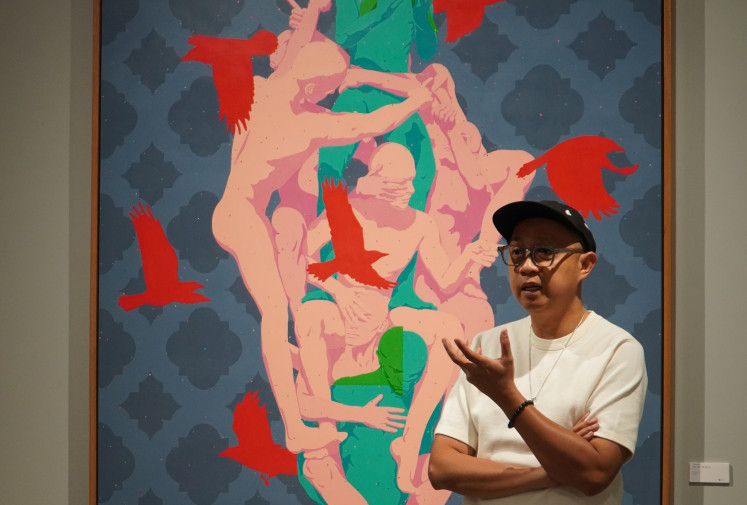
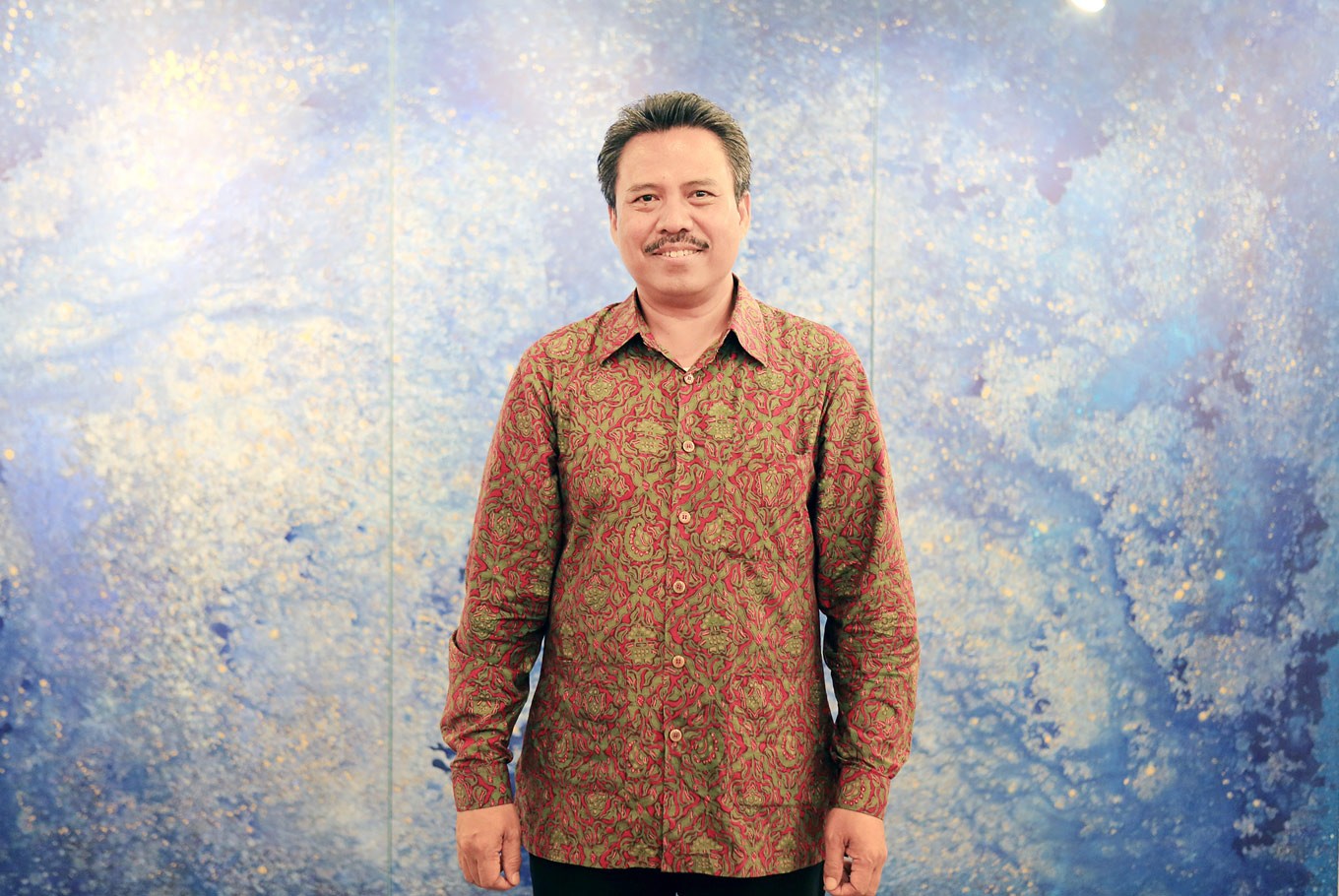 Artist I Wayan Karja (JP/Seto Wardhana)
That morning a drizzle had turned the lush rice fields in Penestanan Kaje hamlet into a relaxing vista.
Sitting on a wooden chair in an open pavilion bordering that beautiful panorama, painter I Wayan Karja glanced south toward his spacious family compound anda thin, almost unseen, smile formed on his lips.
"I bought the land here in 1981 when it was still inexpensive, around Rp 6 million [US$466] per 100 square meter plot of land. Initially, I just wanted to build a studio.

Nowadays, the compound comprises four large buildings set on more than 700 square meters of land with manicured gardens and trees. A two-story building serves as Karja's main studio, while the other buildings house his family members and students, who come from as far as Norway, to learn painting and his signature visual meditation of Pengider Bhuana, which was named after the aesthetic period that catapulted his name onto the international stage.
Classy villas with western architecture and tropical-style houses now dot the area, which in the
1980s was dominated by rice fields and narrow dirt trails. It is one of the favorite residential hubs preferred by tourists and expatriates who want to escape the rowdy traffic of Ubud without having to relocate to the far-away Payangan or Tegalalang.
It is very tempting to assume, from his material success, academic stature and aesthetic achievement, that Karja has achieved all that a man can dream of. His calm demeanor and soft voice further strengthen that assumption.

More from The Weekender

Travels in the land of Gen Z
To become a professor to Gen Z today is to take a disorienting journey to an exotic land. First of two parts.
More trains, more stations, but Greater Jakarta still isn’t connected
Jakarta now has more trains and stations. But getting to them from Depok, Bogor, Tangerang or Bekasi still means an ojek or a car ride.

The app life
Living in China, where all of life's needs have been telescoped into the mobile phone, feels like the future the rest of the world is queuing for.