The Jakarta Post
Please Update your browser
Your browser is out of date, and may not be compatible with our website. A list of the most popular web browsers can be found below.
Just click on the icons to get to the download page.


Popular Reads
Top Results
No results found. Please check your search term and try again
Can't find what you're looking for?
View all search results
Popular Reads
Top Results
No results found. Please check your search term and try again
Can't find what you're looking for?
View all search resultsRethinking ferry tariffs to strengthen Indonesia’s connectivity
For many regions, ferries are not merely a transport option; they provide essential access to jobs, education, health care and markets. Ferry tariff policies must therefore do more than keep travel affordable. They must also ensure that operators can deliver reliable and safe services.
Change text size
Gift Premium Articles
to Anyone
Share the best of The Jakarta Post with friends, family, or colleagues. As a subscriber, you can gift 3 to 5 articles each month that anyone can read—no subscription needed!
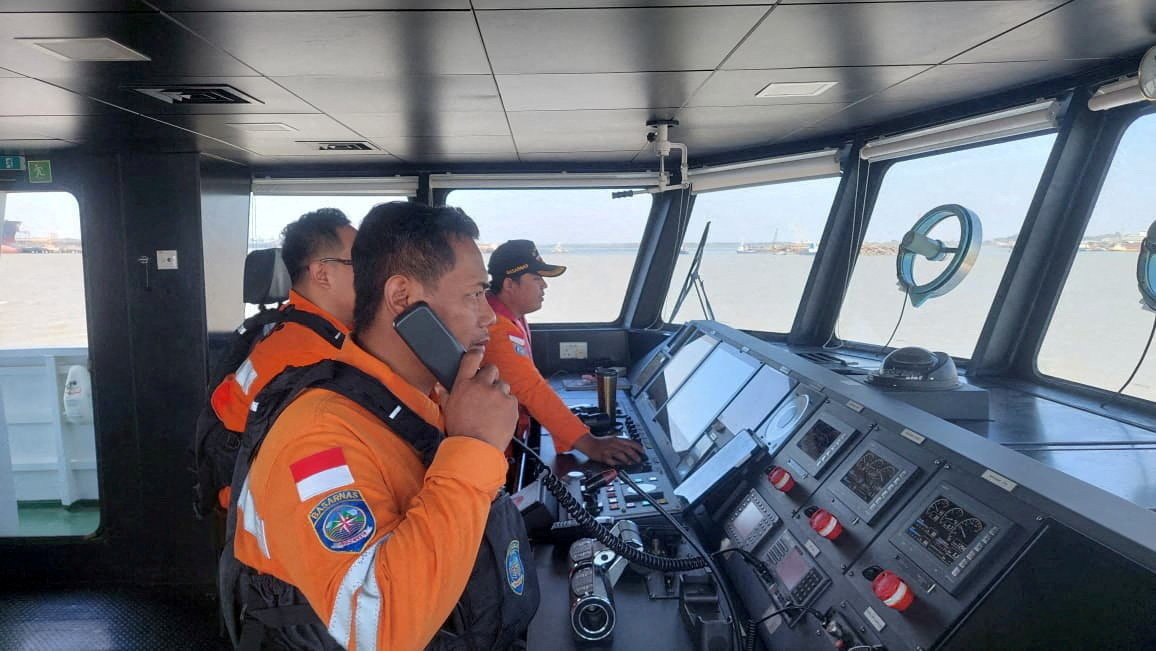 Rescuers work during a search operation on Sept. 13 after the Virgo Transport 8 ferry sank in the Java Sea while sailing from Surabaya, East Java, to Banjarmasin, South Kalimantan. (Reuters/Basarnas/Handout)
A
s an archipelagic nation, Indonesia relies heavily on ferry services to connect communities, facilitate trade and support economic activity across its islands. For many regions, ferries are not merely a transport option; they provide essential access to jobs, education, health care and markets. Ferry tariff policies must therefore do more than keep travel affordable. They must also ensure that operators can deliver reliable and safe services.
The challenge is balancing three priorities: affordability for passengers, financial sustainability for operators and the government’s responsibility to maintain connectivity, including on routes with limited commercial demand. Tariffs set too low without adequate funding can undermine operators’ ability to maintain service quality. Conversely, unaffordable fares can burden households and raise distribution costs. Effective tariff policy must account for these interests through a transparent and well-defined framework.
In Indonesia, ferry tariffs are governed in part by Transportation Ministry Regulation No. 66 of 2019, which establishes the mechanism and formula for determining ferry transport tariffs. Minimum service standards are addressed under Transportation Ministry Regulation No. 62 of 2019. Together, these regulations highlight the need to align fares with service quality: transport costs must reflect operational requirements, while services must meet the standards established by the government.
On commercial routes with relatively strong demand, ticket revenue is a major source of operating income. The Merak–Bakauheni corridor, for example, is a strategic link between Java and Sumatra, supporting passenger and vehicle movements. Since Nov. 1, 2024, the fare for an adult foot passenger on this route has been Rp 23,400. Fare adjustments can help operators respond to changing costs, but higher prices alone do not guarantee better services. Passengers also need reliable schedules, transparent fare information, orderly boarding procedures and effective safety protections.
The situation differs on pioneer routes. In some island regions, passenger demand and vehicle volumes are too limited to sustain commercially viable operations. Yet discontinuing these services could cut communities off from economic centers and essential public services.
Government subsidies are therefore an important instrument for keeping these routes operational. Such subsidies should not be viewed merely as financial assistance to operators, but as an investment in basic connectivity where market demand alone cannot support an adequate transport network.

In 2025, the Transportation Ministry allocated Rp 622.62 billion to pioneer ferry services covering 269 routes and Rp 10.33 billion to Long Distance Ferry (LDF) services covering two routes. This support is intended to sustain ferry services, particularly on routes that are essential for regional connectivity but cannot rely entirely on commercial revenue.
However, the effectiveness of subsidies should not be measured solely by budget size or the number of routes covered. The government must also ensure that public funding delivers services that communities genuinely need. Information on subsidised routes, departure schedules, service frequency, carrying capacity, service standards and performance should be publicly accessible. Regular evaluations can identify routes requiring additional support, services needing improvement and opportunities to operate more efficiently.
Indonesia can draw lessons from the Public Service Obligation (PSO) framework used for railway services operated by state-owned PT Kereta Api Indonesia. Under this approach, clearly defined public service obligations provide the basis for government compensation. Relevant principles for ferry transportation include specifying service requirements, calculating compensation based on service needs and evaluating service quality and delivery.
However, the model should not be copied mechanically. Ferry operations have a different cost structure, shaped by vessel characteristics, port requirements, route distances, weather conditions and varying demand across regions.
Indonesia therefore needs a more transparent, performance-based framework for ferry subsidies. The government could establish measurable service obligations for each route and link subsidy payments to compliance with schedules, service frequency, carrying capacity, safety requirements and minimum service standards.
Compensation should reflect reasonable operating costs and route-specific characteristics while encouraging efficiency without compromising safety. This would strengthen the link between public expenditure and the benefits delivered to communities.
Improving connectivity also requires more than adding vessels or providing subsidies. Ferry schedules should be coordinated with buses, local transportation and other modes to reduce waiting times and onward travel costs. Information on schedules, fares, capacity and service changes should be easy to access, particularly for passengers planning inter-island journeys. In areas where demand is growing, regular reviews of routes and service frequency can help ensure that capacity keeps pace with local needs.
At the same time, affordable fares must never come at the expense of safety. The government and operators must ensure that vessels meet seaworthiness requirements, passenger and vehicle capacity limits are enforced, crew members are adequately qualified and technical inspections are conducted consistently.
Decisions to sail must also take weather conditions and safety warnings into account. Oversight should include pre-departure inspections, operational monitoring, complaint handling and meaningful penalties for violations. Safety must be a fundamental condition of service, not merely an additional indicator in performance assessments.
Ultimately, ferry tariff reform should move beyond a narrow focus on prices toward a system that considers affordability, service quality, funding efficiency and safety together. Fair tariffs, transparent subsidies, measurable service obligations and consistent oversight can strengthen public confidence while supporting operators’ long-term viability.
For Indonesia, affordable and reliable ferry services are not simply a transportation issue; they are a foundation for more balanced development and deeper economic integration across the archipelago.
*****
The writer is an analyst at Bank Mandiri.