The Jakarta Post
Please Update your browser
Your browser is out of date, and may not be compatible with our website. A list of the most popular web browsers can be found below.
Just click on the icons to get to the download page.


Popular Reads
Top Results
No results found. Please check your search term and try again
Can't find what you're looking for?
View all search results
Popular Reads
Top Results
No results found. Please check your search term and try again
Can't find what you're looking for?
View all search resultsOfficial, banker remain positive on Indonesia’s growth potential
Indonesia’s government bond markets have remained resilient, supported by policy credibility and a stable domestic investor base amid global volatility, a deputy finance minister said.
Change text size
Gift Premium Articles
to Anyone
Share the best of The Jakarta Post with friends, family, or colleagues. As a subscriber, you can gift 3 to 5 articles each month that anyone can read—no subscription needed!
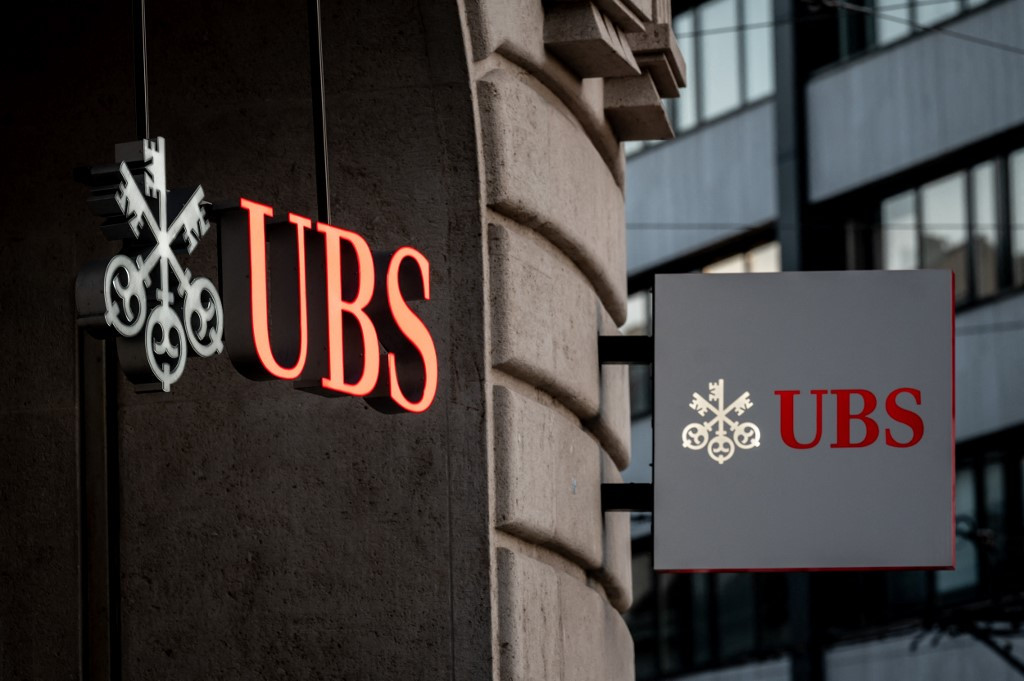 Signs of Swiss bank giant UBS bank are seen in Basel, Switzerland, on April 4, 2023. The investment bank is optimistic that Indonesia's growth outlook remains stable, supported by resilient domestic demand, prudent fiscal and monetary policy, and continued momentum in manufacturing and services. (AFP/Fabrice Coffrini)
S
trong domestic drivers, including consumer spending, investment, manufacturing and services, continue to support Indonesia’s economy while at the same time fiscal discipline remains the anchor of the country’s policy credibility, a top finance official has said.
“The 3 percent deficit ceiling is not only a fiscal rule, but a signal of Indonesia’s commitment to prudent and sustainable economic management,” Second Deputy Finance Minister Suahasil Nazara said, in a press release issued by UBS on Tuesday.
“Even amid global volatility, Indonesia’s government bond markets have remained resilient, supported by policy credibility and a stable domestic investor base.”
Nazara was speaking at the UBS Asian Investment Conference held across Singapore and Hong Kong on May 29-30, where he shared how Indonesia is charting its path forward in light of shifting trade dynamics in the current geopolitical environment.
“The state budget will continue to act as a shock absorber, protecting purchasing power, maintaining macroeconomic stability,” he added.
The rupiah traded at 17,816 against the United States dollar during the conference. The Indonesia Stock Exchange (IDX) Composite index stood at 6,180.80 at the end of trading on May 29.

As the market closed on Thursday, the rupiah had weakened to 18,023 against the greenback, an all-time low, while the IDX Composite slumped to 5,846.84.
Meanwhile, UBS head of Indonesia research, Joshua Tanja, said that the investment bank was optimistic that the growth outlook “remains stable, supported by resilient domestic demand, prudent fiscal and monetary policy and continued momentum in manufacturing and services.”
“Consumer spending is also benefiting from targeted fiscal support, which should underpin near-term growth,” he said in the press release.
The conference covered various topics including global trade, commodities and policy shifts against the backdrop of global trade and policy dynamics being discussed in keynote conversations, in-depth panel discussions, side events and UBS-led research tours.
A dialogue on technology, power and the future of growth, for example, presented 2024 Nobel Laureate Simon Johnson and former Australian prime minister Kevin Rudd, on how politics and technology are reshaping global growth, inflation and capital flows.
Other topics included “Global capital at an inflection” and “What next for monetary policy?”
There were also separate sessions discussing the current conditions of the economy in China and Japan.
Participants also pondered the evolving global landscape during a session titled “Geopolitics: Who holds the cards?”, with British political analyst Alastair Campbell, former Singaporean defense minister Ng Eng Hen and US Ambassador to Denmark Carla Sands.