The Jakarta Post
Please Update your browser
Your browser is out of date, and may not be compatible with our website. A list of the most popular web browsers can be found below.
Just click on the icons to get to the download page.


Popular Reads
Top Results
No results found. Please check your search term and try again
Can't find what you're looking for?
View all search results
Popular Reads
Top Results
No results found. Please check your search term and try again
Can't find what you're looking for?
View all search resultsChina commits to early conclusion of South China Sea code, Philippines says
ASEAN and China were unable to conclude negotiations on a long-delayed South China Sea code of conduct under the Philippines' chairmanship, despite reaching provisional agreement on about 80 percent of the draft, Manila's foreign minister said on Sunday.
Change text size
Gift Premium Articles
to Anyone
Share the best of The Jakarta Post with friends, family, or colleagues. As a subscriber, you can gift 3 to 5 articles each month that anyone can read—no subscription needed!
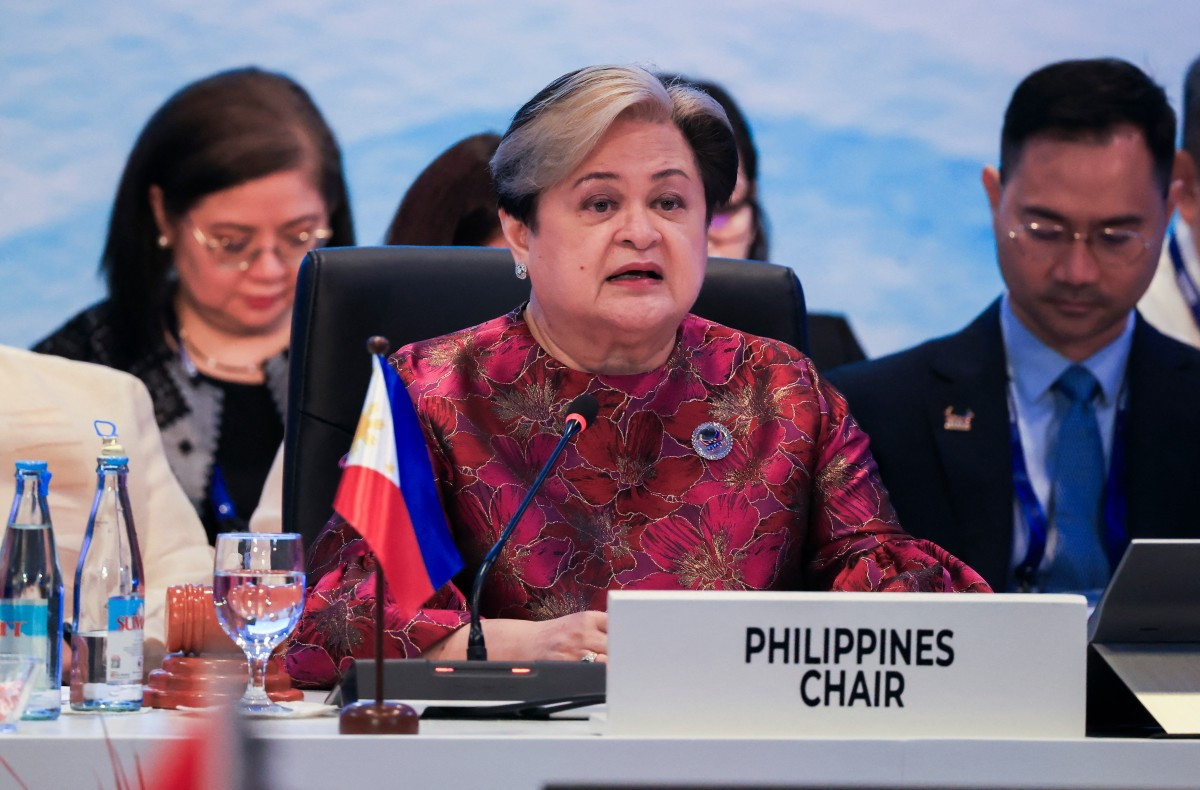 ASEAN Chair and Philippine Foreign Secretary Theresa Lazaro delivers an opening statement during the Association of Southeast Asian Nations (ASEAN) Foreign Ministers' Meeting in Pasay, Metro Manila on July 21, 2026. (AFP/Eloisa Lopez)
C
hinese Premier Li Qiang on Monday committed during a meeting with Southeast Asian leaders to an effective, substantive and early conclusion of a code of conduct for the South China Sea, the Philippines' foreign minister said.
ASEAN and China were unable to conclude negotiations on a long-delayed South China Sea code of conduct under the Philippines' chairmanship, despite reaching provisional agreement on about 80 percent of the draft, Manila's foreign minister said on Sunday.
Negotiations on an ASEAN-China Code of Conduct in the South China Sea have dragged on for over two decades, but the Philippines, as current chair, had committed to speed up those talks and conclude the code this year.
Philippine Foreign Secretary Theresa Lazaro, who had previously said negotiations were "80 percent complete", was quoted by Reuters as saying that she trusted "that Singapore will be able to finish the discussions" next year.
Beijing claims most of the South China Sea despite an international ruling that its assertion has no legal basis, and its coast guard has clashed repeatedly with that of the Philippines.
The row has reared its head at inopportune times over the Philippines' year in ASEAN's rotating chairmanship, with a July foreign ministers summit opening less than a day after Chinese and Philippine sailors engaged in a clash.
Negotiations on an ASEAN-China Code of Conduct in the South China Sea have dragged on for over two decades, but the Philippines, as current chair, had committed to speed up those talks and conclude the code this year.
Analysts say the disagreements are not only between ASEAN and China.
Collin Koh, a senior fellow at Singapore's S. Rajaratnam School of International Studies, said divisions among ASEAN members, including over the geographical scope of the code, had also slowed negotiations.
"Other than Beijing, intramural divergences within ASEAN also play a significant role," he said.
Koh said the remaining differences would be difficult to resolve and would require "major concessions" from the various parties.
Singapore will inherit the task of trying to secure agreement on the code of conduct when it assumes the ASEAN chairmanship next year.