The Jakarta Post
Please Update your browser
Your browser is out of date, and may not be compatible with our website. A list of the most popular web browsers can be found below.
Just click on the icons to get to the download page.


Popular Reads
Top Results
No results found. Please check your search term and try again
Can't find what you're looking for?
View all search results
Popular Reads
Top Results
No results found. Please check your search term and try again
Can't find what you're looking for?
View all search resultsSouth Korea records its highest-ever temperature of 42.5C
The southeastern city of Yangsan saw the temperature reach 42.5C at 1:26 pm (0426 GMT), the Korea Meteorological Administration said on its website.
Change text size
Gift Premium Articles
to Anyone
Share the best of The Jakarta Post with friends, family, or colleagues. As a subscriber, you can gift 3 to 5 articles each month that anyone can read—no subscription needed!
 Set as preferred source
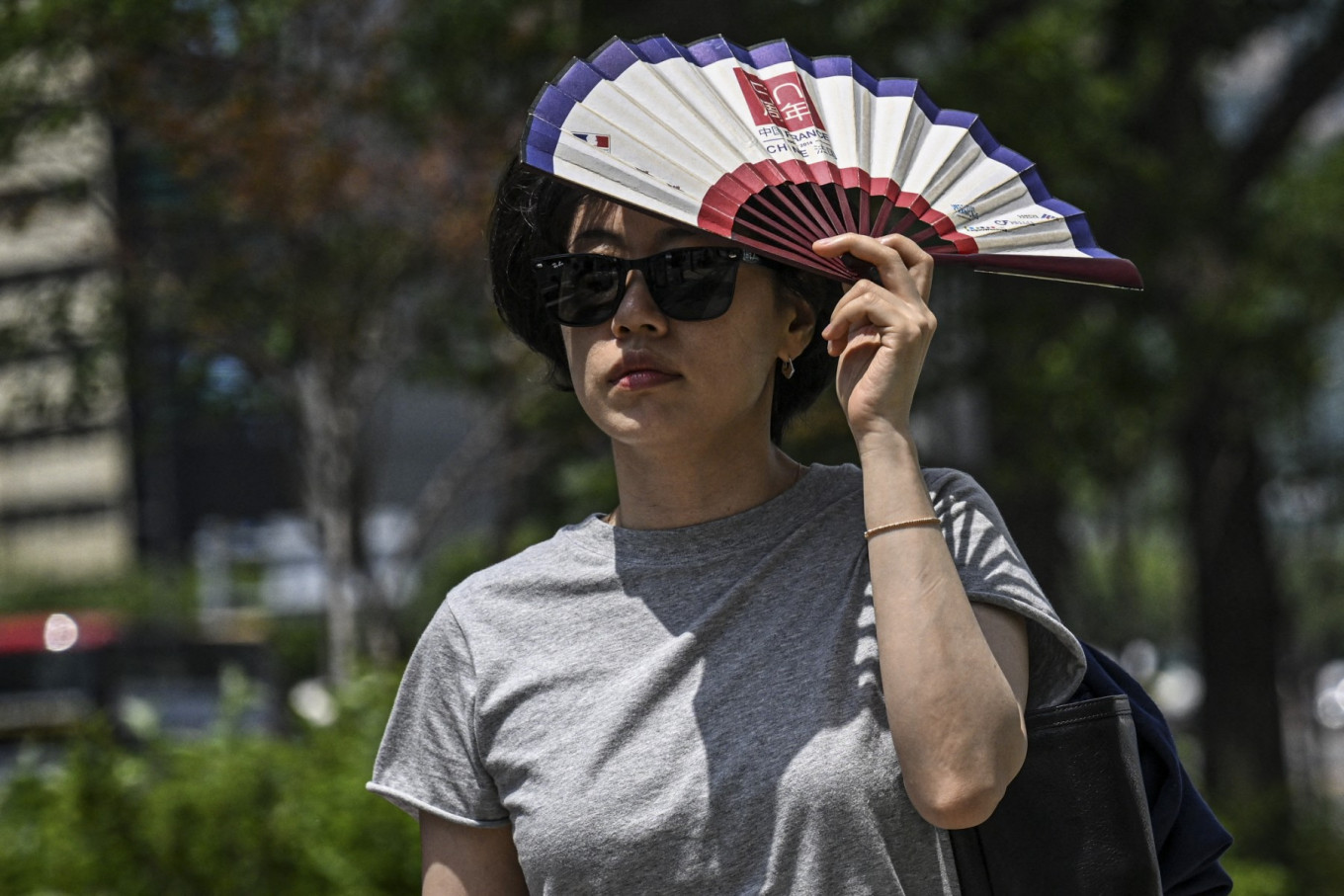 A woman uses a fan to shelter from the sun on a street in Seoul on July 12, 2026. (AFP/Jade Gao)
S
outh Korea registered on Sunday its highest temperature since records began more than a century ago, according to the state weather agency.
The southeastern city of Yangsan saw the temperature reach 42.5C at 1:26 pm (0426 GMT), the Korea Meteorological Administration said on its website.
Yangsan has been the epicentre of the ongoing heatwave, where temperatures exceeded 40C for a fifth consecutive day on Sunday.
Much of South Korea has been placed under heat warnings, with many cities seeing temperatures climb into the high 30C.
More than 20 localities were on Sunday under emergency heatwave alerts, a new warning category introduced this year to better address rising temperatures.
An emergency alert is issued when areas experiencing a heatwave are forecast to hit perceived temperatures of 38C or an actual temperature of 39C for one day.
KMA data show the average annual number of heatwave days in the country has more than doubled to 19 over the past five years, from eight in the 1970s.
A heatwave day is defined as one with a maximum temperature of at least 33C, while a tropical night is one when the overnight low remains 25C or above.
Scientists warn that extreme weather events such as heatwaves are becoming more frequent and intense as a result of human-induced climate change.
Last month, Japan sizzled under sweltering, life-threatening heat, with temperatures expected to top 40 degrees Celsius (104 degrees Fahrenheit) in some cities in what the government has newly designated as a "brutally hot day."
The weather agency issued heat stroke alerts for much of the country, forecasting a second straight day of "kokushobi" - literally meaning brutally hot day - with temperatures expected to reach 40 C in Kumagaya, north of Tokyo, and Nagoya, in centralJapan.
Authorities urged residents to use air conditioning liberally, hydrate regularly and avoid spending long hours outdoors.
Japan has experienced increasingly severe summers in recent years, with the country recording its all-time high temperature of 41.8 C last year.