The Jakarta Post
Please Update your browser
Your browser is out of date, and may not be compatible with our website. A list of the most popular web browsers can be found below.
Just click on the icons to get to the download page.


Popular Reads
Top Results
No results found. Please check your search term and try again
Can't find what you're looking for?
View all search results
Popular Reads
Top Results
No results found. Please check your search term and try again
Can't find what you're looking for?
View all search resultsLebanon, Israel and US sign trilateral framework pact
The agreement, which includes a pilot effort in which Lebanese soldiers take control of two areas occupied by Israel as well as a process aimed at disarming Hezbollah, is the result of five rounds of talks in the US capital.
Change text size
Gift Premium Articles
to Anyone
Share the best of The Jakarta Post with friends, family, or colleagues. As a subscriber, you can gift 3 to 5 articles each month that anyone can read—no subscription needed!
 Set as preferred source
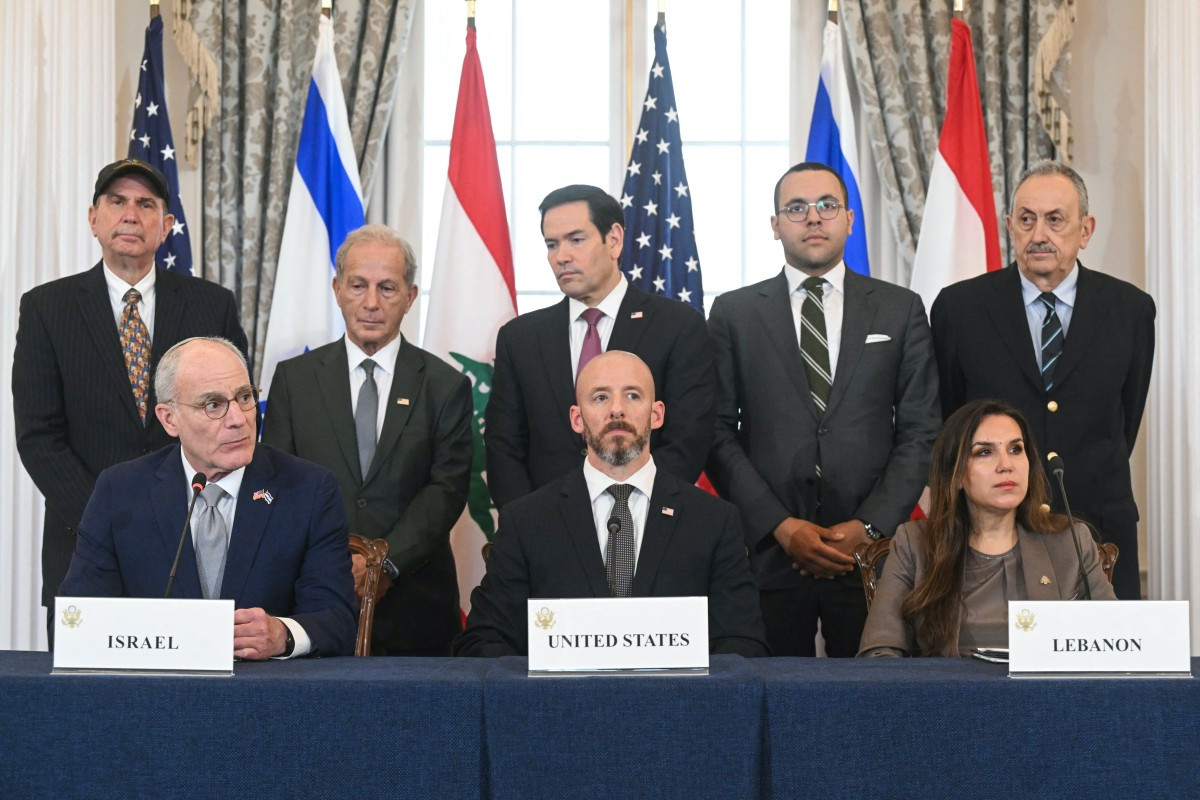 Israeli Ambassador to the United States Yechiel Leiter (front left) speaks during a signing ceremony hosted by US Secretary of State Marco Rubio (back center) as State Department Chief of Staff Daniel Holler (front center) and Lebanese Ambassador to the US Nada Hamadeh (front right) at the US Department of State in Washington, DC, on June 26, 2026. Lebanon, Israel and the US on Friday signed a trilateral framework agreement aimed at paving the way for a peace deal between the two long-time Middle East adversaries. (AFP/Saul Loeb)
L
ebanon, Israel and the United States on Friday signed a trilateral framework agreement aimed at paving the way for a peace deal between the two long-time Middle East adversaries.
The agreement, which includes a pilot effort in which Lebanese soldiers take control of two areas occupied by Israel as well as a process aimed at disarming Hezbollah, is the result of five rounds of talks in the US capital.
The deal "begins to put in place a framework for lasting peace and security," US Secretary of State Marco Rubio said at the signing ceremony, noting: "It's the beginning of the beginning. There's a lot of work ahead."
Lebanon's ambassador to Washington, Nada Hamadeh Moawad, said the accord "is a first step on the road to restoring Lebanese sovereignty and territorial integrity, securing a permanent and final cessation of hostilities (and) enabling our people to go back to their land."
Israel's US envoy, Yechiel Leiter, said that under the deal, "Iran is out, Hezbollah is out, and the road to peace between Israel and Lebanon is in."
Hezbollah drew Lebanon into the broader Middle East war on March 2 with rocket fire aimed at Israel to avenge the killing of Iran's supreme leader Ayatollah Ali Khamenei in US-Israeli strikes.
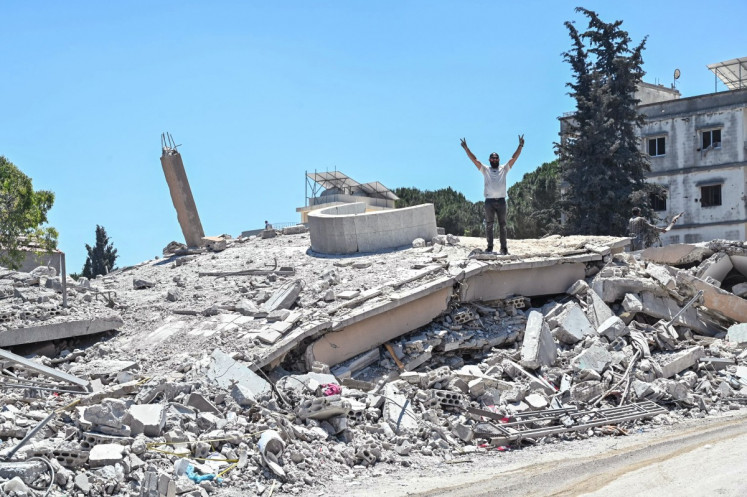
Israel responded with heavy airstrikes and a ground invasion, and its troops continue to occupy swaths of southern Lebanon, where they have been carrying out extensive demolition of homes and other buildings.
According to the agreement, whose text was released late Friday by the State Department, Israel and Lebanon "declare their intent to conclusively end the conflict, address its underlying causes, and to therewith formally conclude any state of war between them."
It also establishes a process by which the Lebanese Armed Forces (LAF) would restore "sovereign authority over all Lebanese territory," pending the "verified disarmament of non-state armed groups," particularly Hezbollah.
That in turn would allow the Israeli Defense Forces to "progressively redeploy out of the Lebanese territory," the agreement states.
Despite the deal, Israel and its bitter enemy Hezbollah, which is part of the Lebanese government but also maintains a powerful armed wing outside state control, made clear that major differences remain.
'Pilot areas'
Hezbollah chief Naim Qassem said earlier Friday that Israel has "no option but to withdraw completely from every inch of our Lebanese land," and that its forces "must leave unconditionally."
Israeli Prime Minister Benjamin Netanyahu however said in a pre-recorded video shared with Israeli media shortly after the framework agreement was announced that Israel has no plans to exit Lebanon until Hezbollah gives up its weapons.
Prior to the release of the text, Netanyahu said his country's military would allow the Lebanese army to take control of territory in "two pilot areas", one south of Lebanon's Litani River and another north of it.
According to the text, "the LAF will assume full and effective security responsibility in these zones, internationally supported reconstruction efforts will begin, and Lebanese civilians will be able to safely return to these areas."
Rubio meanwhile said in a statement that the agreement establishes a "clear and structured process" to disarm Hezbollah and its infrastructure, as well as a US-facilitated military working group to help implement the deal.
Washington's top diplomat also said the US would commit $100 million in humanitarian assistance in coordination with the United Nations, and would reimburse Lebanon's army for $30 million as it seeks to "improve the capability and capacity" of those forces.
The UN chief of humanitarian affairs, Tom Fletcher, hailed the agreement and called the signing in Washington "a moment of hope and opportunity."
Under US pressure, Lebanese and Israeli officials began direct talks in April in Washington, and a truce was announced on April 17 that ultimately failed to stop the fighting.
A new but very fragile ceasefire was declared this month as Tehran insisted Lebanon must be included in its deal with Washington to end the broader war.
The conflict has displaced more than one million Lebanese and left more than 4,200 dead, according to Lebanese authorities.