The Jakarta Post
Please Update your browser
Your browser is out of date, and may not be compatible with our website. A list of the most popular web browsers can be found below.
Just click on the icons to get to the download page.


Popular Reads
Top Results
No results found. Please check your search term and try again
Can't find what you're looking for?
View all search results
Popular Reads
Top Results
No results found. Please check your search term and try again
Can't find what you're looking for?
View all search resultsUS attacks Iranian coastal sites after Iran launches drones in latest flare-up
The US and Iran have been engaged in largely indirect negotiations to secure an interim deal to halt the three-month-old war that would leave issues including Iran's nuclear programme to further negotiations.
Change text size
Gift Premium Articles
to Anyone
Share the best of The Jakarta Post with friends, family, or colleagues. As a subscriber, you can gift 3 to 5 articles each month that anyone can read—no subscription needed!
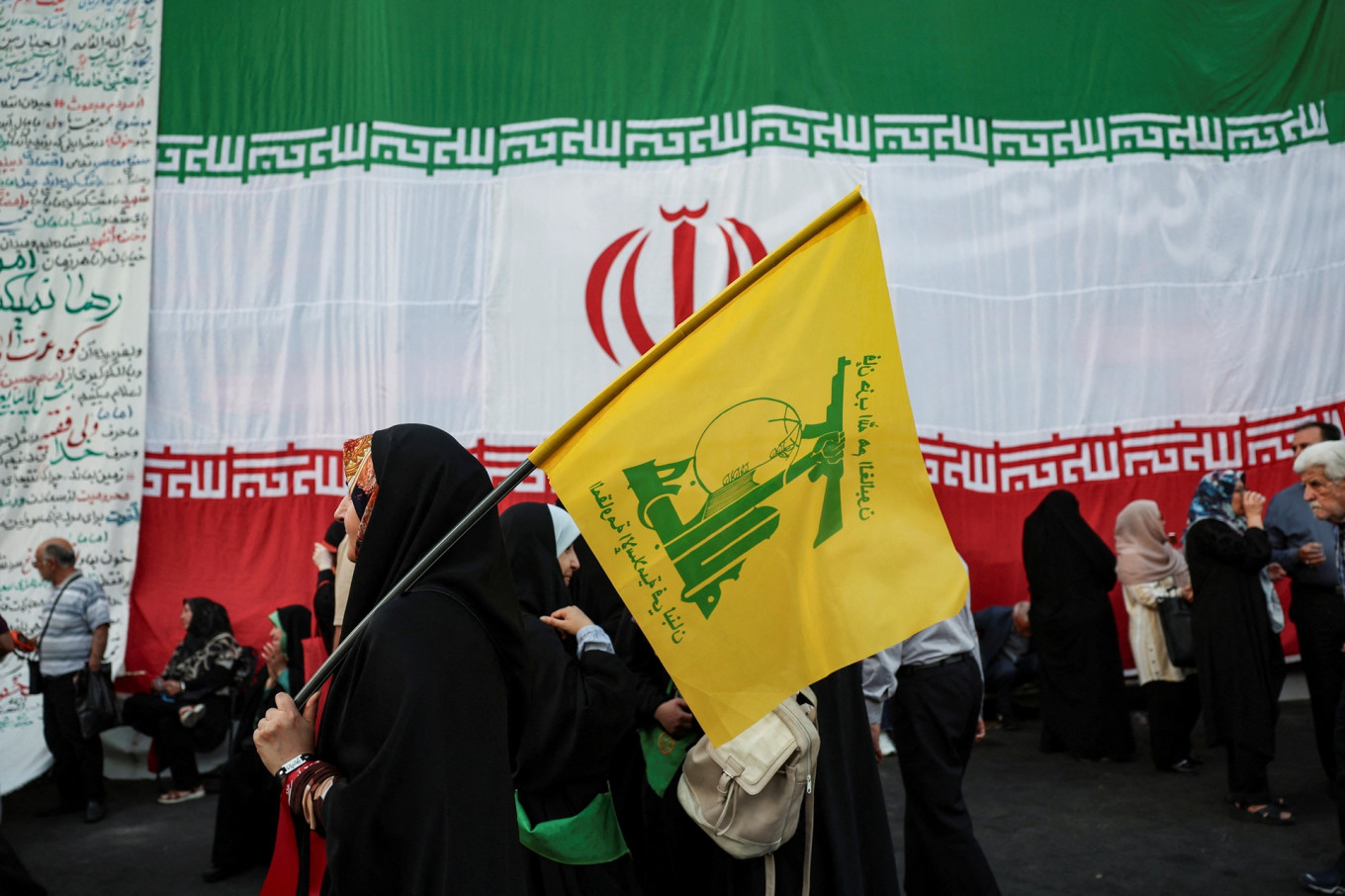 A woman holds a Hezbollah flag during a rally in support of Iran's Supreme Leader Mojtaba Khamenei in Tehran, Iran, on June 4, 2026. (-/Majid Asgaripour/WANA (West Asia News Agency) via Reuters)
U
nited States forces struck Iranian coastal radar sites on Saturday after shooting down drones launched by Iran toward the Strait of Hormuz, the US military said, in the latest escalation complicating efforts to end the war between the two countries.
The US military believes the four Iranian drones were targeting regional maritime traffic, a US official told Reuters. US Central Command said on X that the US then struck Iran's surveillance sites in Goruk and Qeshm Island, which are both on the Strait of Hormuz.
The US and Iran have been engaged in largely indirect negotiations to secure an interim deal to halt the three-month-old war that would leave issues including Iran's nuclear programme to further negotiations.
As part of any agreement, Tehran wants access to billions of dollars in oil revenue, waivers on sanctions on crude exports, the lifting of a US blockade on its ports and leverage over the strait. Iran has effectively blocked the strait, where about a fifth of the world's oil transited before the war.
US President Donald Trump is facing mounting domestic political pressure due to rising gas prices to bring the unpopular war to an end. He told NBC that while most of Iran's drone and missile manufacturing facilities had been destroyed, the Iranians still have access to about a fifth of their missiles.
"They have some missiles, they have some drones. I would say percentage wise, maybe 21%-22% of their missiles. It's a lot of missiles, but it's not what it was when we first attacked," Trump told NBC News' "Meet the Press" program, according to excerpts released by the network on Friday.
When asked why Iran’s leaders, if as desperate as he has portrayed them, were not more inclined to strike a deal, Trump said:
"Because they are strong. They're proud. There are things they never thought they'd be doing that they're going to have to do, they've got no choice, and it takes a little while."
Israel and the US launched the war with strikes on Iran in late February.
Fighting flares despite ceasefires
In a parallel conflict in Lebanon, Iran-aligned armed group Hezbollah said on Friday it had carried out two attacks on Israeli troops in south Lebanon, including near the recently captured Beaufort Castle, while Lebanese security services said Israeli airstrikes hit towns across southern Lebanon.
Iran has reaffirmed support for Hezbollah while demanding that Israel withdraw from southern Lebanon. Tehran has made a ceasefire between Israel and Hezbollah a condition for any peace deal with Washington to resolve the regional war, now in its fourth month, and restart shipping through the Strait of Hormuz.
The latest round of fighting between Hezbollah and Israel erupted at the start of March, two days after the US and Israel launched strikes against Iran. Hezbollah said its actions were in support of Tehran.
Hezbollah leader Naim Qassem this week rejected a US-brokered pact between Israel and the Lebanese government to halt the fighting in Lebanon. The deal did not provide for an Israeli withdrawal and Hezbollah had not been party to the negotiations.
Israel has kept up strikes in southern Lebanon, and it has said its forces would not withdraw or halt operations in the country amid increasing friction with the US.
Lebanon's parliament speaker and Hezbollah ally Nabih Berri said on Friday he would agree to the withdrawal of the group from southern Lebanon if Israeli troops simultaneously left territory they occupy in the country.
Along with Lebanon, residents of Gaza, northern Israel and Kuwait have all been under fire this week, despite US-arranged ceasefires that Trump said involved "shooting in a more moderate manner", rather than a total halt to fighting.