The Jakarta Post
Please Update your browser
Your browser is out of date, and may not be compatible with our website. A list of the most popular web browsers can be found below.
Just click on the icons to get to the download page.


Popular Reads
Top Results
No results found. Please check your search term and try again
Can't find what you're looking for?
View all search results
Popular Reads
Top Results
No results found. Please check your search term and try again
Can't find what you're looking for?
View all search resultsWHO confirms eight cases of Andes hantavirus in outbreak
Change text size
Gift Premium Articles
to Anyone
Share the best of The Jakarta Post with friends, family, or colleagues. As a subscriber, you can gift 3 to 5 articles each month that anyone can read—no subscription needed!
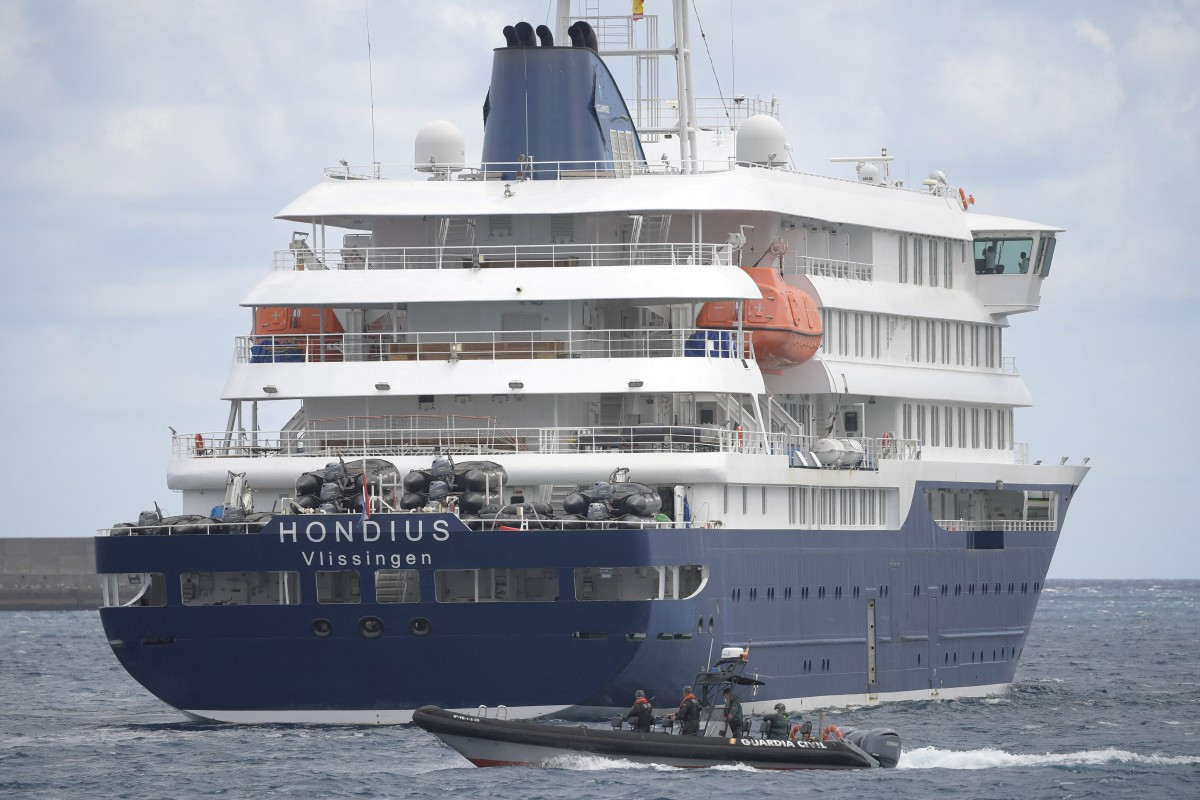 A Spain's Guardia Civil boat sails next to Dutch flagged hantavirus-stricken cruise ship MV Hondius in the port of Granadilla de Abona on the island of Tenerife in Spain's Canary Islands on May 11, 2026. A complex repatriation operation from the Canary Islands on May 10 flew out 94 passengers and crew of 19 different nationalities from the Dutch-flagged MV Hondius, which had been at the center of an international alert after three passengers died. (AFP/Jorge Guerrero)
E
ight people infected in the hantavirus outbreak aboard the MV Hondius cruise ship have tested positive for the Andes virus, the only strain transmitted between humans, the World Health Organization said Wednesday.
"Eight cases were laboratory-confirmed for Andes virus [ANDV] infection, two are probable, and one case remains inconclusive and undergoing further testing," the UN health agency said in its latest update on the outbreak.
Three people from the ship have died since it set sail from Argentina on April 1 for a cruise across the Atlantic Ocean.
Two of the victims had confirmed Andes virus infections, and the third is listed as a "probable" case, according to the WHO.
Hantavirus typically spreads from the urine, feces and saliva of infected rodents.
There are no vaccines or specific treatments for the rare disease.
All known cases in the current outbreak were people aboard the cruise ship.
The case listed as inconclusive is an American passenger repatriated to the United States, who is "currently asymptomatic" and undergoing further testing after one positive and one negative result, the WHO said.
It maintained its assessment of the public-health risk from the outbreak at "moderate" for those who were on the ship and "low" for the rest of the world.
The origin of the outbreak is still unknown.
The WHO says the original infection happened before the cruise, because the first victim, a 70-year-old Dutch man, started showing symptoms on April 6, while the virus' incubation period is one to six weeks.