The Jakarta Post
Please Update your browser
Your browser is out of date, and may not be compatible with our website. A list of the most popular web browsers can be found below.
Just click on the icons to get to the download page.


Popular Reads
Top Results
No results found. Please check your search term and try again
Can't find what you're looking for?
View all search results
Popular Reads
Top Results
No results found. Please check your search term and try again
Can't find what you're looking for?
View all search resultsSeven cases of deadly hantavirus confirmed or suspected on stranded cruise ship
Around 150 people are still stuck on the Hondius that was carrying mostly British, American and Spanish passengers on a trip that set off from Argentina in March and is now off the coast of West Africa.
Change text size
Gift Premium Articles
to Anyone
Share the best of The Jakarta Post with friends, family, or colleagues. As a subscriber, you can gift 3 to 5 articles each month that anyone can read—no subscription needed!
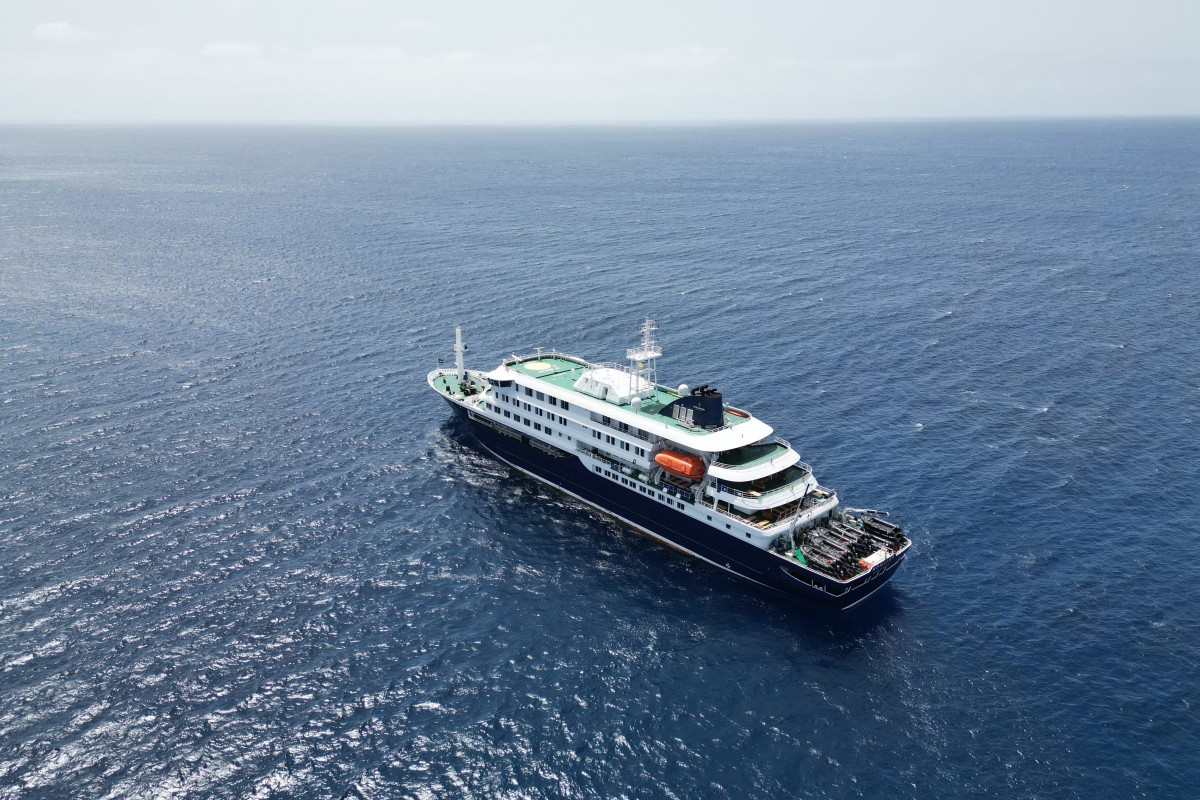 This aerial picture shows a general view of the cruise ship MV Hondius stationary off the port of Praia, the capital of Cape Verde, on May 4, 2026. (AFP/AFP)
T
wo cases of the deadly hantavirus have been confirmed, and five more are suspected among people who were on a luxury cruise ship now held in the Atlantic near Cape Verde, the World Health Organization said in its most detailed update on the outbreak.
Around 150 people are still stuck on the Hondius that was carrying mostly British, American and Spanish passengers on a trip that set off from Argentina in March and is now off the coast of West Africa.
The seven cases included three people who had died, one who was critically ill and three with mild symptoms, the WHO said in a statement late on Monday.
The three fatalities were a Dutch couple and a German national, and a British national was evacuated from the ship from Ascension and is being treated in South Africa, officials have said.
"The atmosphere on board m/v Hondius remains calm, with passengers generally composed", the ship's operator, Oceanwide Expeditions, said in a statement late on Monday. It said it was working on getting the passengers screened and disembarked, and was considering sailing to Spain's Las Palmas or Tenerife.
The UN health body reiterated its advice that the risk to the wider public was low from the disease typically spread from infected rodents that only rarely passes between humans.
Cape Verde - an island nation off the coast of West Africa - has asked the ship to stay at sea as a precaution.
The first stricken passenger, the Dutch man, died on April 11 as the ship steamed towards Tristan da Cunha. His body remained on board until April 24, when it "was disembarked on St Helena, with his wife accompanying the repatriation," Oceanwide Expeditions said.
Three days later, the man's wife also fell sick and later died, while another passenger, a Briton, became "seriously ill and was medically evacuated to South Africa," the company said.
South African authorities have confirmed that the British patient, who is being treated in a Johannesburg hospital, tested positive for the hantavirus. The Netherlands has confirmed the virus in the Dutch woman who died.
Data from maritime analytics provider MarineTraffic shows the ship had been visiting some of the most remote places on Earth, including Tristan da Cunha, an island in the south Atlantic between Argentina and South Africa.
The Hondius left Ushuaia in southern Argentina in March, according to company documentation, on a voyage marketed as an Antarctic nature expedition, with berth prices ranging from 14,000 to 22,000 euros ($16,000 to $25,000).
Each hantavirus is associated with a specific rodent reservoir species, in which it can cause long-term infection without apparent illness.
Only a few hantavirus species are known to cause human disease.
The virus is named after the Hantan River in South Korea, where more than 3,000 troops fell seriously ill after becoming infected with it during the 1950-1953 Korean War, Switzerland's FOPH health ministry says.
Transmission of hantaviruses to humans occurs from contact with contaminated urine, droppings or saliva of infected wild rodents, such as mice or rats. More rarely, infection may occur through bites.
The French National Public Health Agency says human infection generally occurs through inhaling contaminated dust and aerosols.