The Jakarta Post
Please Update your browser
Your browser is out of date, and may not be compatible with our website. A list of the most popular web browsers can be found below.
Just click on the icons to get to the download page.


Popular Reads
Top Results
No results found. Please check your search term and try again
Can't find what you're looking for?
View all search results
Popular Reads
Top Results
No results found. Please check your search term and try again
Can't find what you're looking for?
View all search resultsThe fossil-fuel endgame doesn't require a COP consensus
The only question is whether a coalition of the willing can use policy to push markets toward a faster, fairer and smoother transition than the traditional COP process can deliver.
Change text size
Gift Premium Articles
to Anyone
Share the best of The Jakarta Post with friends, family, or colleagues. As a subscriber, you can gift 3 to 5 articles each month that anyone can read—no subscription needed!
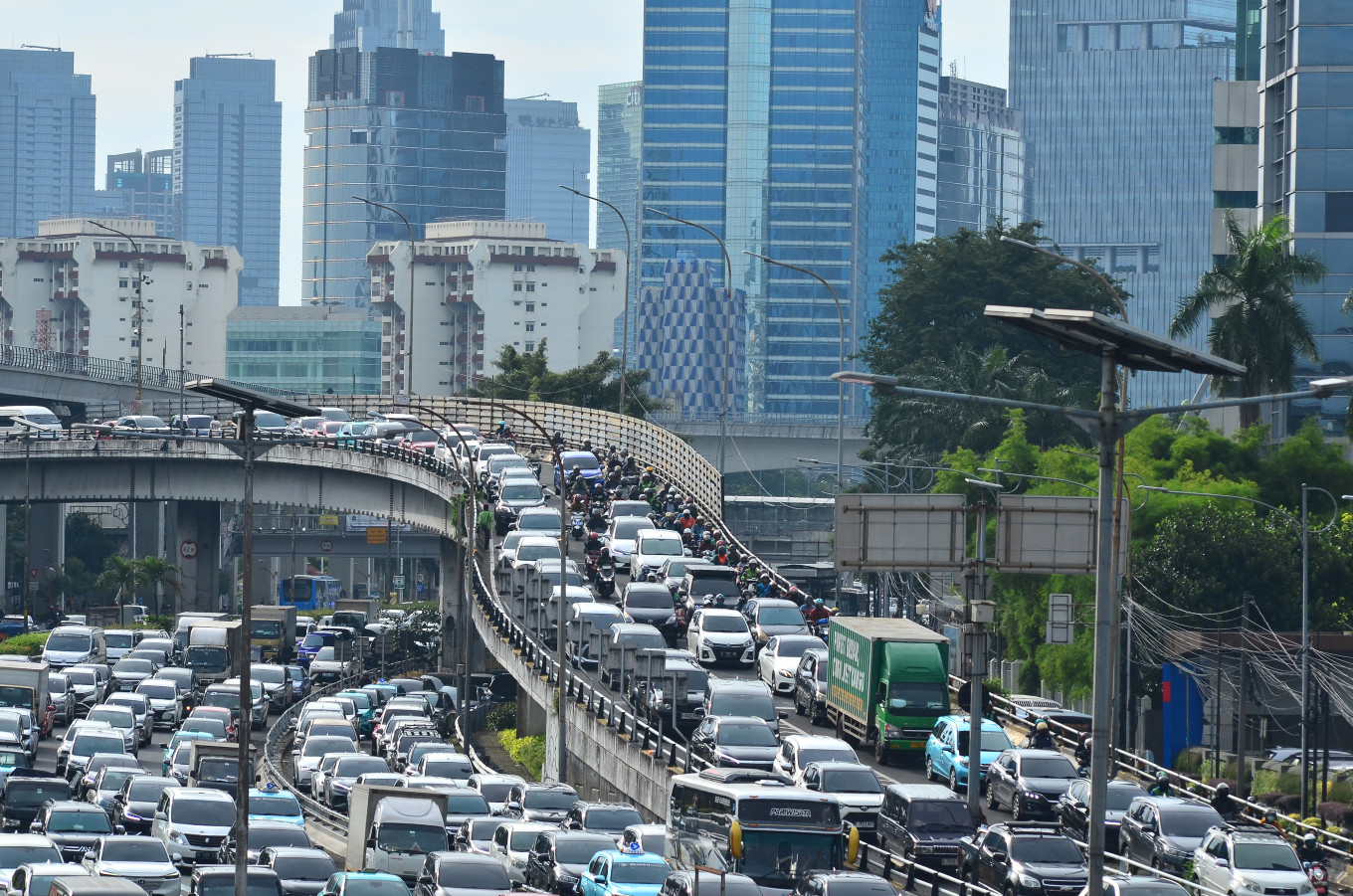 Heavy rush hour traffic crawls along Jl. Gatot Subroto in South Jakarta on Feb. 25, 2026. (JP/Iqro Rinaldi)
T
his year’s United Nations climate talks in Antalya, Turkey, broke up without an agreement. Nearly 200 countries spent two weeks arguing about whether the final agreement could even mention phasing out fossil fuels. Apparently, it could not. Like last year’s conference in Belém, Brazil, which also failed to adopt a fossil-fuel roadmap, COP31 further reveals the limits of consensus-driven diplomacy.
But these high-profile failures do not mean that the global response to climate change is stalled. On the contrary, the energy transition is moving faster than ever, even if it still is not fast enough.
Consider the latest headline figures. In the past ten years, solar photovoltaic costs have fallen by about 90 percent, onshore wind by about 70 percent, and batteries by over 90 percent. Global clean-energy investment now tops US$2 trillion per year. Electric-vehicle sales keep rising. Transportation accounts for roughly 60 percent of global oil demand, most of it from cars and trucks and EVs are simply the better technology. They are more efficient, cost less to operate and are increasingly cheaper to buy. Once that becomes obvious to consumers everywhere, oil demand won’t just plateau. It will fall off a cliff, perhaps as soon as within the next decade or two.
Incumbents know this, even if their lobbyists won’t say it. ExxonMobil and Saudi Aramco have both pledged to reach net-zero emissions from their own operations by 2050. Though they have since gone quiet about these targets, cutting emissions to near-zero may happen anyway. Norway, after all, pursues a similar strategy, with Norwegians buying almost only EVs, and the grid operating fully on renewables. Shell’s influential forecasters see the world reaching near-zero emissions by 2100 even in their gloomiest scenario: the “Archipelago” of fragmented, nationalistic strategies that one finds today.
But even if the end of the fossil-fuel era is a foregone conclusion, timing is everything. A world that reaches net-zero around 2100 will suffer average global warming of around 2.2–2.8 degrees Celsius above pre-industrial levels, making irreversible tipping points all but inevitable. Getting there decades sooner will save many lives and livelihoods, not to mention trillions of dollars in climate-related damage.
Speed matters for economic reasons, too. The energy shock from the Iran war has once again exposed how dependent many economies remain on globally traded, geopolitically volatile commodities. Call it “fossilflation”: the inflationary cost of tying prices, budgets and national security to oil and gas markets that a handful of producers and conflicts can move at will. The fix for that macroeconomic exposure is the same as the fix for climate change: phase out fossil fuels.

So, why do official talks keep stalling? There are two structural reasons. First, the UN process focuses on outcomes, targets, tons and dates, while largely ignoring the root cause: the extraction and supply of coal, oil and gas. Second, the process requires a consensus among some 200 countries, which gives governments (and companies) with the most to lose an effective veto over the final language.