The Jakarta Post
Please Update your browser
Your browser is out of date, and may not be compatible with our website. A list of the most popular web browsers can be found below.
Just click on the icons to get to the download page.


Popular Reads
Top Results
No results found. Please check your search term and try again
Can't find what you're looking for?
View all search results
Popular Reads
Top Results
No results found. Please check your search term and try again
Can't find what you're looking for?
View all search resultsWho bears the cost of stabilizing the rupiah?
While BI's efforts to stabilize the rupiah are necessary, the choice of instruments influences how the costs and risks of stabilization are distributed across investors, businesses, households and public institutions.
Change text size
Gift Premium Articles
to Anyone
Share the best of The Jakarta Post with friends, family, or colleagues. As a subscriber, you can gift 3 to 5 articles each month that anyone can read—no subscription needed!
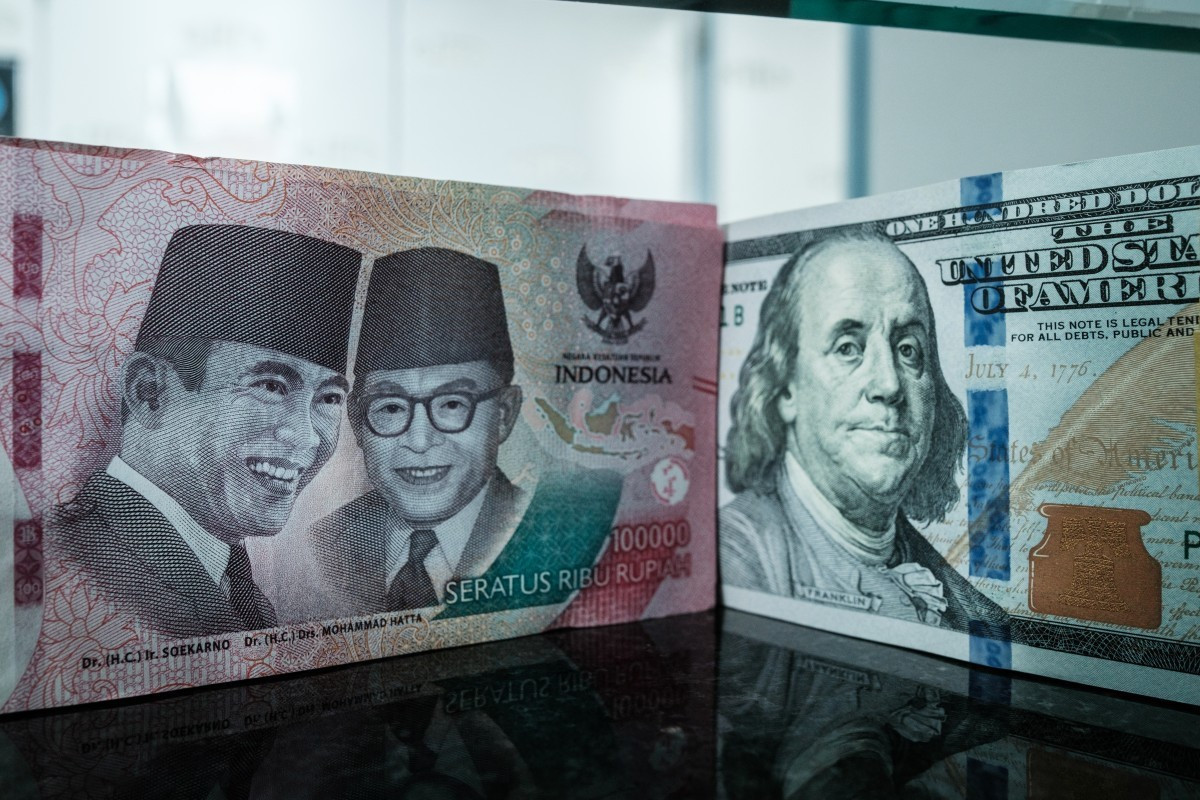 An Rp 100,000 banknote is pictured next to a US$100 banknote on June 4 at a currency exchange office in Jakarta. (AFP/Yasuyoshi Chiba)
O
n Nov. 18, Bank Indonesia (BI) raised its benchmark interest rate by 25 basis points to 6 percent, bringing cumulative rate increases since May to 125 basis points. With the rupiah trading near record lows, BI has also expanded foreign exchange hedging incentives and maintained substantial liquidity support for banks.
These measures reflect BI's efforts to stabilize the currency while sustaining economic activity. Their implications, however, extend beyond defending the rupiah.
While BI's efforts to stabilize the rupiah are necessary, the choice of instruments influences how the costs and risks of stabilization are distributed across investors, businesses, households and public institutions.
Choosing the right policy mix therefore requires consideration of its distributional consequences alongside its effectiveness in maintaining monetary stability.
The benefits of currency stabilization extend well beyond financial markets. Persistent depreciation raises the domestic cost of imported energy, food, machinery and intermediate goods, while increasing the debt-servicing burden of businesses with unhedged foreign-currency liabilities.
Although a weaker currency can improve export competitiveness, these gains may be limited for industries dependent on imported inputs. With inflation reaching 3.23 percent in October, further depreciation could erode purchasing power, particularly among lower-income households that spend a larger share of their income on basic necessities.

Higher interest rates are a conventional response to such pressures. They can make rupiah-denominated assets more attractive, moderate domestic demand, and help contain inflation expectations.