The Jakarta Post
Please Update your browser
Your browser is out of date, and may not be compatible with our website. A list of the most popular web browsers can be found below.
Just click on the icons to get to the download page.


Popular Reads
Top Results
No results found. Please check your search term and try again
Can't find what you're looking for?
View all search results
Popular Reads
Top Results
No results found. Please check your search term and try again
Can't find what you're looking for?
View all search resultsMaking Danantara's waste-to-energy plan work
Indonesia has finally solved the financing puzzle holding back its WtE ambitions, but the program’s survival now hinges on three things money cannot buy: dry feedstock, fiscal transparency and real technology transfer.
Change text size
Gift Premium Articles
to Anyone
Share the best of The Jakarta Post with friends, family, or colleagues. As a subscriber, you can gift 3 to 5 articles each month that anyone can read—no subscription needed!
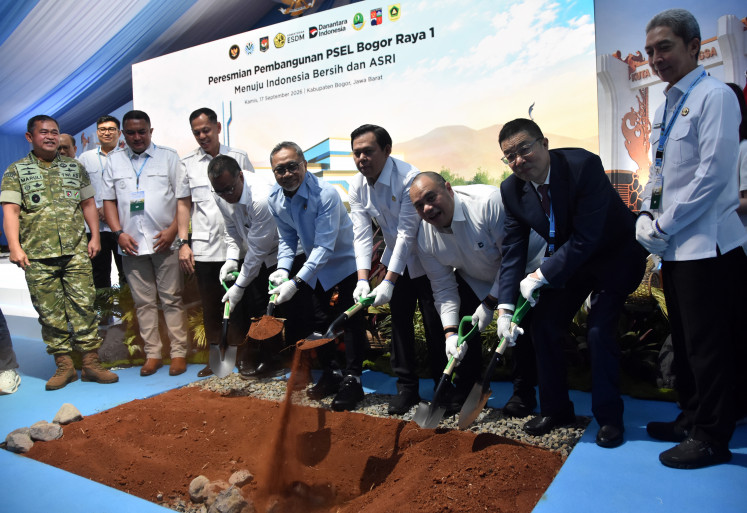
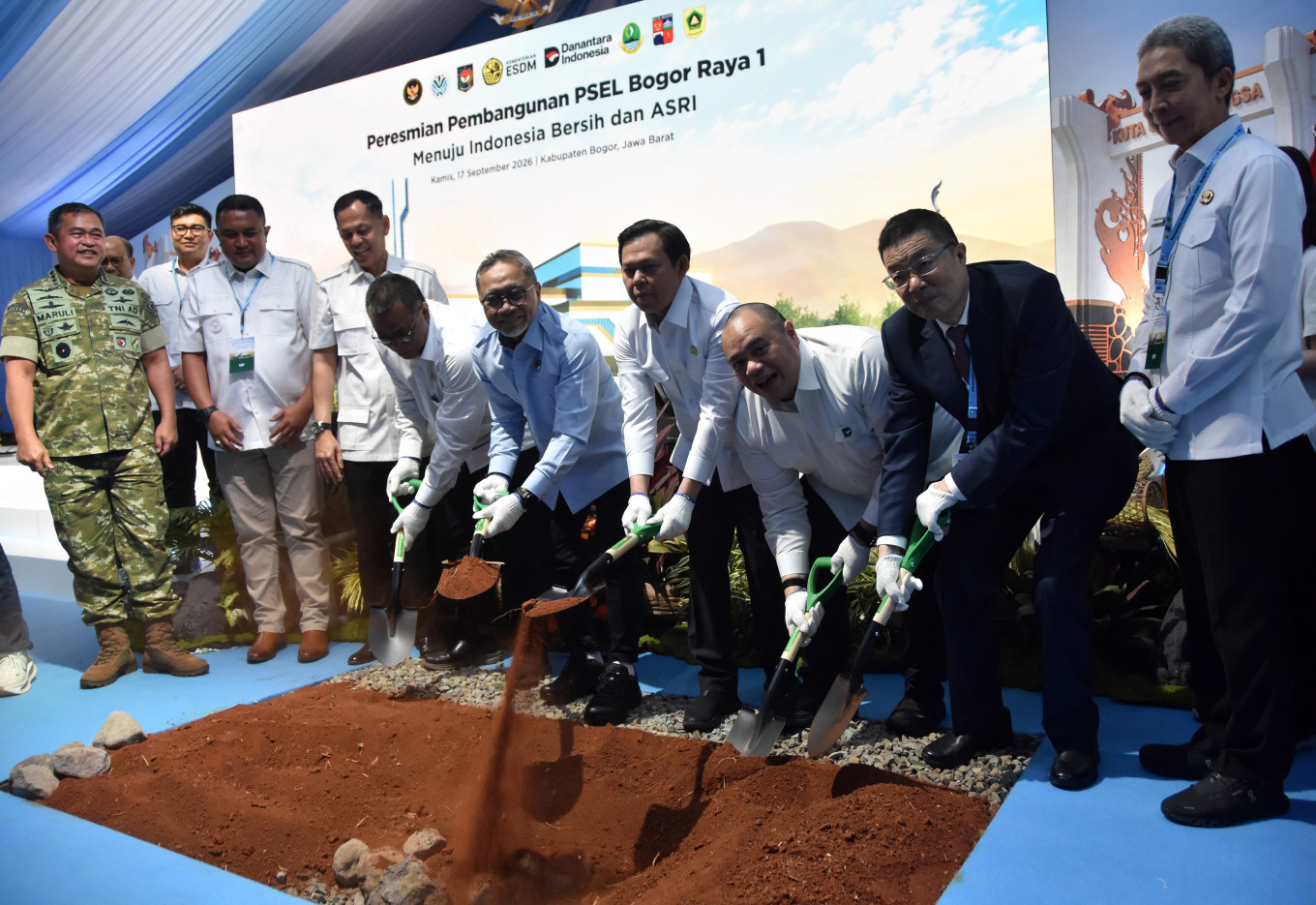 Danantara chief investment officer Pandu Patria Sjahrir (third right), Coordinating Food Minister Zulkifli Hasan (fifth left) and Environment Minister Mohammad Jumhur Hidayat (fourth left), alongside other officials, shovel earth on Sept 17, 2026, during the groundbreaking ceremony for the Bogor Raya 1 waste-to-energy plant in Galuga village, Bogor regency, West Java. (Antara Foto/Arif Firmansyah)
P
residential Regulation (Perpres) No. 109/2025 has resolved the financing bottleneck that stalled Indonesia’s waste-to-energy (WtE) ambitions for more than a decade. Yet the program will only succeed if it also overcomes three challenges that capital alone cannot solve: feedstock quality, the long-term fiscal burden and genuine technology transfer.
In July, construction began on a WtE facility in the Balinese capital designed to process up to 1,500 tonnes of municipal waste daily from Greater Denpasar, the first project under a new initiative from state asset fund Danantara. Groundbreakings in Jakarta’s buffer cities Bekasi and Bogor, both in West Java, followed respectively in August and September.
At each ceremony, the project company executed a power purchase agreement (PPA) with state electricity firm PLN. Eight additional consortia received conditional awards in July and are scheduled to complete feasibility studies by mid-November.
Indonesia has trodden this path before. In 2016, a Perpres aimed at fast-tracking WtE plants across seven cities was struck down by the Supreme Court within months. A 2018 replacement expanded the mandate to 12 cities, yet only two facilities, the Benowo in Surabaya, East Java, and the Putri Cempo in Surakarta, Central Java, ever entered commercial operation.
In Jakarta, the Sunter project broke ground in 2018 alongside Finland’s Fortum, only for the energy company to withdraw after failing to secure a financing guarantee from the central government, according to municipal officials.
Even the Legok Nangka, a Japanese-led project in West Java that was years in the making, reached financial close only in June: It broke ground in July and is not expected to begin operating before late 2029.

The recurring obstacle was bankability. Under the previous framework, PLN paid approximately 13 United States cents per kilowatt-hour (kWh), with the remainder covered by tipping fees drawn from regional budgets. Because those payments were vulnerable to local political shifts, foreign investors concluded that municipal administrations could not offer sufficient revenue certainty, as the Sunter experience demonstrated.