The Jakarta Post
Please Update your browser
Your browser is out of date, and may not be compatible with our website. A list of the most popular web browsers can be found below.
Just click on the icons to get to the download page.


Popular Reads
Top Results
No results found. Please check your search term and try again
Can't find what you're looking for?
View all search results
Popular Reads
Top Results
No results found. Please check your search term and try again
Can't find what you're looking for?
View all search resultsAnalysis: The frontline trap: Indonesians lured into Russia’s war
Change text size
Gift Premium Articles
to Anyone
Share the best of The Jakarta Post with friends, family, or colleagues. As a subscriber, you can gift 3 to 5 articles each month that anyone can read—no subscription needed!
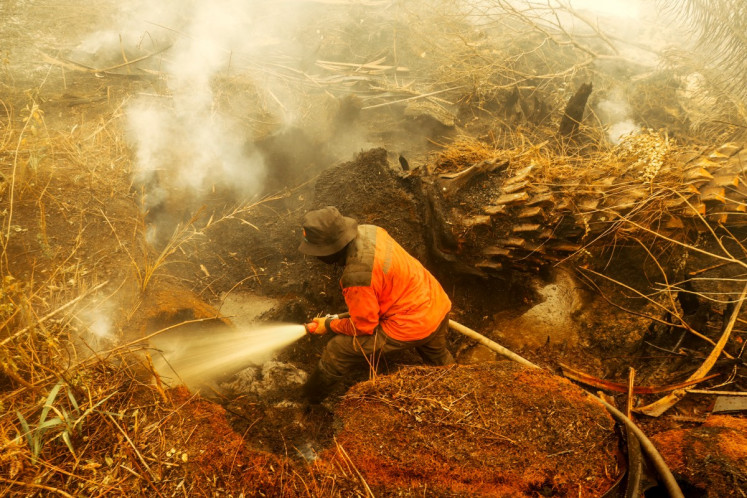
 This handout picture taken on Aug. 22, 2026 and released on Aug. 24 by the press service of Ukraine's 93rd Kholodnyi Yar Separate Mechanized Brigade shows a serviceman of the brigade walking in Druzhkivka, Donetsk region, amid the Russian invasion of Ukraine. (AFP/Ukraine's 93rd Kholodnyi Yar Separate Mechanized Brigade/Iryna Rybakova)
A
cross Indonesia, a transnational trafficking pipeline has been turning economically desperate job seekers into front-line infantry for Moscow's war in Ukraine. What began as scattered alerts from families who lost contact with relatives traveling on tourist visas has become a multi-agency police crackdown, parliamentary scrutiny and a delicate diplomatic test for Jakarta.
In late October, the Foreign Ministry sent Moscow a diplomatic note asking Russia to halt the enlistment of Indonesian citizens in its armed forces and affiliated mercenary formations. Jakarta also asked that Indonesia be added to Russia's military "exclusion list," a stop-list instructing recruitment centers to reject applicants from designated countries, and urged Moscow to review contracts signed by deceived Indonesians so they can be discharged and repatriated. So far, the Russian Embassy in Jakarta and the Russian Foreign Ministry have not responded.
Police have uncovered a syndicate operating under the guise of overseas job placement. Police investigators have named 13 suspects, 12 detained and one wanted, under the human trafficking law (No. 21/2007) and the migrant worker protection law (No. 18/2017). The suspects include 10 Indonesian brokers, two Russians and a Ukrainian based in Central Java, where investigators found a house in Pemalang used as a makeshift semi-military training site. Authorities have also intercepted at least 11 would-be recruits at airports before they could board flights to Russia.
Most targets were working-class Indonesians with no military background: casual laborers, private-sector employees and former online gambling workers returning from Cambodia. Syndicates advertised construction, logistics and border security jobs on TikTok, Facebook, Instagram and job apps, promising signing bonuses of up to US$35,000 and monthly salaries near US$3,000.
On arrival in Russia via hubs such as Dubai, recruits had their phones and documents restricted. They were coerced into Russian-language contracts binding them to front-line combat until the war ends or they die, with bounties offered for shooting Ukrainian soldiers.
Police investigations have documented 58 targeted victims, including several former military and police personnel; 15 to 23 had already left for Russia. Police have confirmed at least one or two deaths from family testimony, and severe injuries, including a recruit who lost a leg to a landmine and was ordered back to the front. Ukraine has also announced the capture of the first Indonesian prisoner of war, identified only as “AS” from East Java, on the Zaporizhzhia front.

Yet a dossier given to the Indonesian embassy in Kyiv by Ukraine's "I Want to Live" surrender project identifies 292 Indonesians in Russian units, 283 of them reportedly recruited between January and September 2026. The gap suggests police’s count captures only networks reported by families or intercepted at borders; many more may have slipped through.