The Jakarta Post
Please Update your browser
Your browser is out of date, and may not be compatible with our website. A list of the most popular web browsers can be found below.
Just click on the icons to get to the download page.


Popular Reads
Top Results
No results found. Please check your search term and try again
Can't find what you're looking for?
View all search results
Popular Reads
Top Results
No results found. Please check your search term and try again
Can't find what you're looking for?
View all search resultsThe Papua paradox: Between COP31’s green stage and ecological tragedy
While Indonesia’s delegation pledges forest protection and peddles carbon credits on the global stage at COP31, state-backed agricultural megaprojects and slashed disaster budgets are fueling devastating wildfires across Papua’s indigenous lands.
Change text size
Gift Premium Articles
to Anyone
Share the best of The Jakarta Post with friends, family, or colleagues. As a subscriber, you can gift 3 to 5 articles each month that anyone can read—no subscription needed!
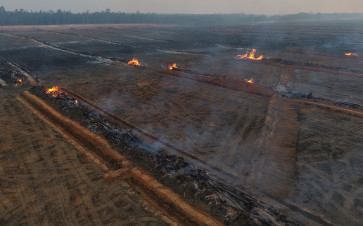
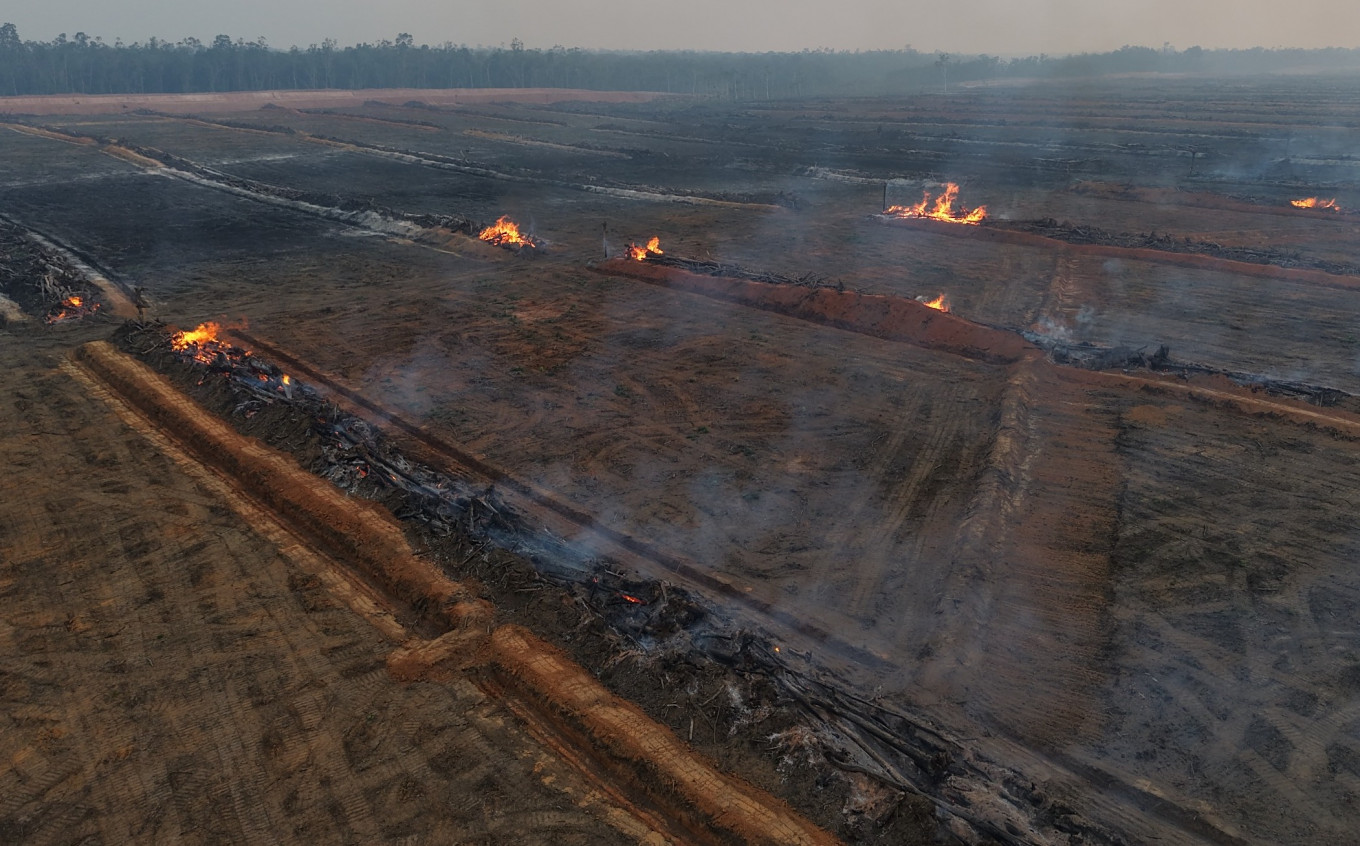 Flames engulf parts of a 58-kilometer stretch of the Merauke food estate corridor in South Papua on Aug. 12, extending from near Wanam village in Ilwayab district to Muting district. Despite suffering one of Indonesia’s largest burn scars, Papua remains excluded from areas prioritized for firefighting operations amid the regional haze crisis. (Pusaka Bentala Rakyat/Ambrosius Mulait)
O
n the green stage of the United Nations Climate Change Conference (COP31) in Antalya, Turkey, the Indonesian delegation pledged to halt the clearing of forests, particularly primary forests, for agricultural expansion and food self-sufficiency. This commitment anchored Indonesia’s campaign to convince the world of its resolve to safeguard its tropical forests.
Leading the delegation, Presidential Special Envoy for Climate and Energy Hasjim Djojohadikusumo attributed the massive 2026 forest and land fires and resulting transboundary haze to El Niño-induced extreme drought. To bolster this green narrative, the delegation highlighted structural measures: expanding forest rangers and firefighting personnel from 8,000 to 70,000, strengthening satellite-based early warning systems, placing the National Peat and Mangrove Management Agency (BPGMN) directly under the President and marketing 30 carbon mitigation projects via the CarbonNEX platform to attract global conservation investment.
Yet almost simultaneously with this green diplomacy, satellite data from NASA and global fire emissions databases recorded thick smoke blanketing South Papua, releasing over 35 megatonnes of carbon emissions, the third-highest spike after the catastrophic haze disasters of 2015 and 1997.
While environmental advocates amplified these satellite images under the banner "All Eyes on Papua", Jakarta appeared to sidestep the crisis by announcing a US$100 million climate funding commitment from Norway at COP31, obscuring the fact that this results-based payment rewarded past emission reductions from 2020 to 2023 rather than today's ecological reality.
Papua is currently the epicenter of Indonesia’s wildfires. Data from the National Disaster Management Agency (BNPB) as of Nov. 5 revealed a 66 percent surge in hot spots across South Papua, the heartland of National Strategic Projects (PSN) for food estates and sugarcane plantations centered in Merauke and expanding into Mappi and Boven Digoel. This crisis is not merely a natural disaster, but the direct consequence of state policies driving an integrated food and energy estate alongside sugarcane-based bioethanol and palm oil-based B50 biodiesel programs.
The government has even reclassified 489,940 hectares of forest in South Papua into Other Use Areas (APL), allocating 426,000 ha for oil palm expansion to feed B50 production. Data from the Indonesian Forum for the Environment (WALHI) found that out of 8,324 hot spots detected across Papua between January and October of this year, 2,747 burned directly inside food and sugarcane PSN concessions.

Thus, Indonesia’s green investment narrative faces a fundamental consistency test: Is the government willing to halt, or at least comprehensively re-evaluate, all PSN expansion in Papua?