The Jakarta Post
Please Update your browser
Your browser is out of date, and may not be compatible with our website. A list of the most popular web browsers can be found below.
Just click on the icons to get to the download page.


Popular Reads
Top Results
No results found. Please check your search term and try again
Can't find what you're looking for?
View all search results
Popular Reads
Top Results
No results found. Please check your search term and try again
Can't find what you're looking for?
View all search resultsFunding sustained AI use in ASEAN education
To close ASEAN’s AI readiness gap, funders must stop merely buying tools and start financing the institutional capacity, local intermediaries and long-term operating budgets that empower educators to sustain them.
Change text size
Gift Premium Articles
to Anyone
Share the best of The Jakarta Post with friends, family, or colleagues. As a subscriber, you can gift 3 to 5 articles each month that anyone can read—no subscription needed!
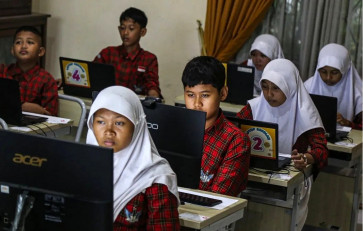
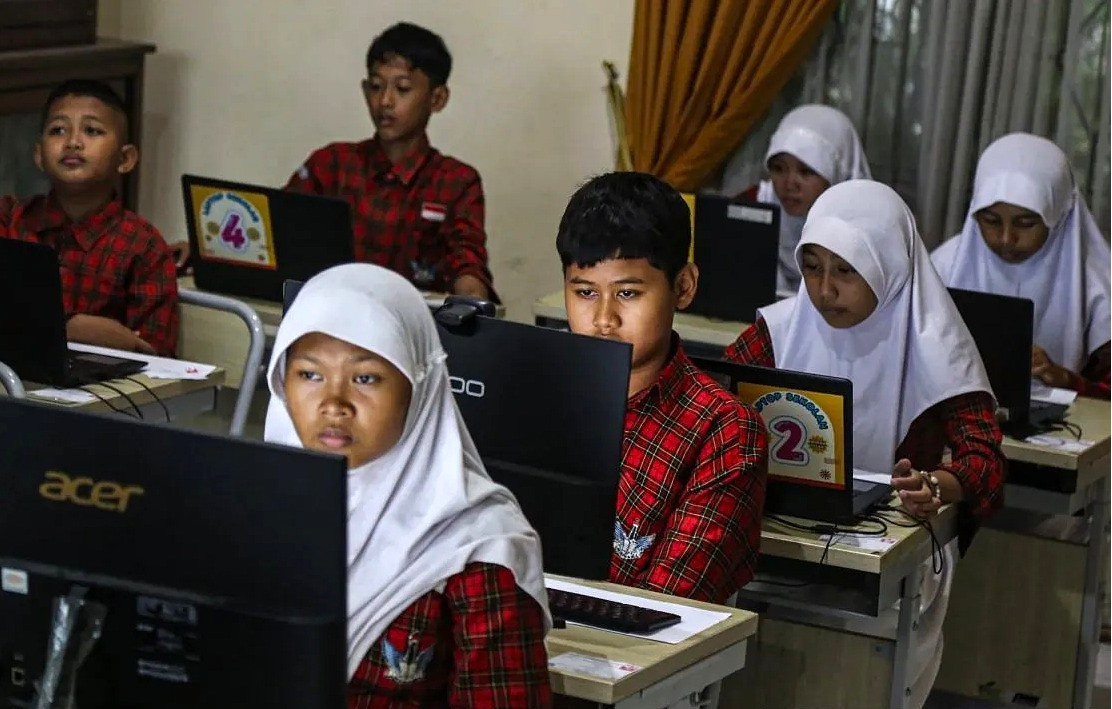 Tech-based test: Students stay focused on their mathematics exams on April 22 during the inaugural National Academic Competency Test (TKA) at Kalicari 3 state elementary school in Semarang, Central Java. The computer-based assessment is part of a standardized national program conducted simultaneously across the country. (Antara/Makna Zaezar)
A
cross ASEAN, educators, students and parents report greater confidence in developing their own AI readiness than in the support their institutions provide. This gap carries practical consequences.
In an ASEAN Digital Outlook survey of 710 educators across the 10 member states, only 44 percent reported adequate institutional resources for AI, and 41 percent reported sufficient technical expertise to support implementation. Meanwhile, educators interviewed in Brunei Darussalam for the ASEAN Foundation’s AI Ready ASEAN Research reported personally funding AI subscriptions and internet access, while some government-issued devices sat unusable due to expired software licenses or limited maintenance.
When educators must self-fund their capacity development, participation becomes dependent on personal means. Training alone cannot resolve these constraints; educators require reliable tool access and sustained institutional backing.
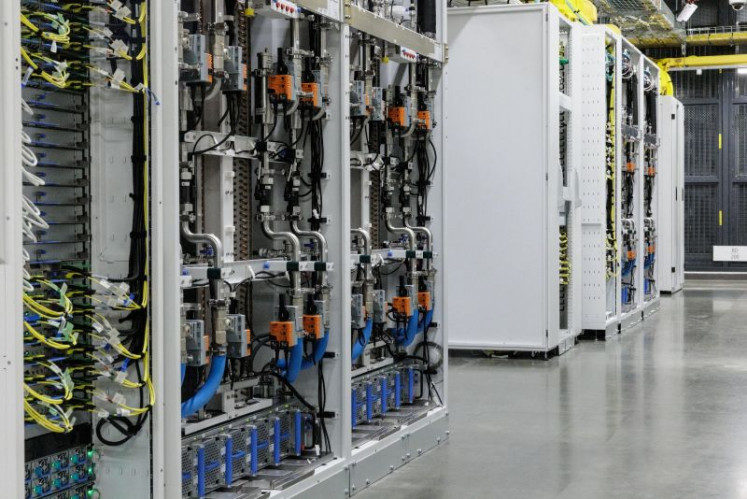
Research by the Centre for Asian Philanthropy and Society (CAPS) across the Asia-Pacific reveals the same imbalance from the funders’ perspective. Interviewees for Cars Without Roads: Investing in AI for Good Across Asia described a sector that continually buys cars without building roads: investment concentrates on visible tools and applications, while the human capability, shared infrastructure and delivery channels required to turn pilots into lasting services remain underfunded.
ASEAN findings corroborate this from the classroom. Institutional readiness is the weakest dimension of AI readiness across most member states, and infrastructure access alone does not generate capability. Both bodies of evidence describe the same disconnect from opposite ends: funders pay for tools, while educators are left to build the roads themselves.
ASEAN research establishes the case for mentorship, stronger governance, and institutional support. The central funding question is how to operationalize these commitments: whose time will be compensated, which organizations will provide ongoing assistance, and who will absorb costs once a grant concludes? Evidence from CAPS’ broader social sector study helps guide these decisions.

Infoxchange, a nonprofit conducting regional AI-readiness assessments, noted that staff enthusiasm must be matched by leadership decisions regarding daily integration, user permissions, dedicated training time and deployment boundaries.