The Jakarta Post
Please Update your browser
Your browser is out of date, and may not be compatible with our website. A list of the most popular web browsers can be found below.
Just click on the icons to get to the download page.


Popular Reads
Top Results
No results found. Please check your search term and try again
Can't find what you're looking for?
View all search results
Popular Reads
Top Results
No results found. Please check your search term and try again
Can't find what you're looking for?
View all search resultsAlliance for forest roadmap keeps the 2030 goal alive
While the COP30 deforestation roadmap keeps the 2030 target alive, turning its broad diplomatic ambitions into real forest protection requires a united Global South coalition to close its glaring gaps on palm oil, biofuels, community land rights and overdue climate finance.
Change text size
Gift Premium Articles
to Anyone
Share the best of The Jakarta Post with friends, family, or colleagues. As a subscriber, you can gift 3 to 5 articles each month that anyone can read—no subscription needed!
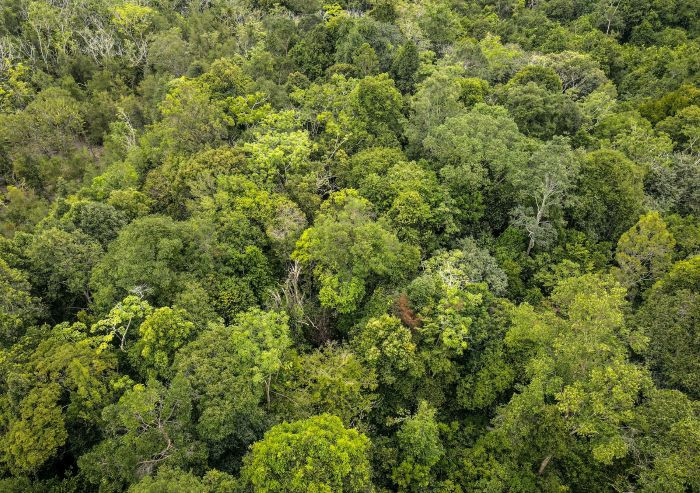
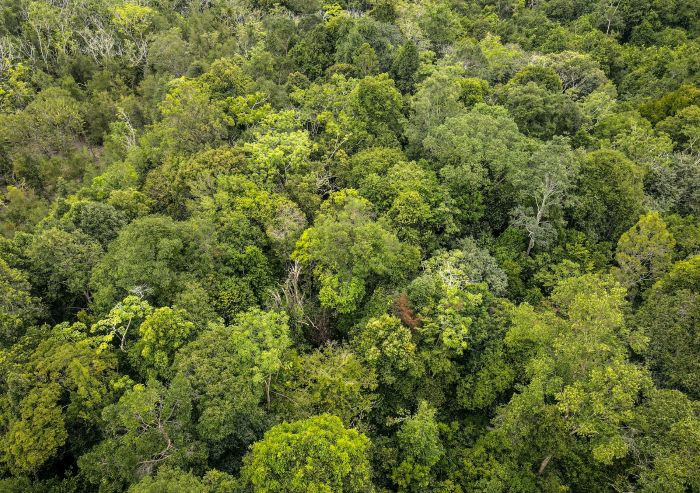 Endangered landscape: Indigenous trees form a thick canopy on Feb. 11, 2026 over a section of native forest in Kapuas regency, Central Kalimantan.
(AFP/Bay Ismoyo)
T
he COP30 presidency has just released its roadmap for halting and reversing deforestation by 2030. Intended as a global framework—including for key forest nations such as Indonesia—it consolidates Brazil's ambitions, the work of numerous networks and proposals from multiple governments into a single agenda.
This breadth is both its strength and its weakness. Even if governments implemented the document to the letter, the world would still fall short of the 2030 target. The framework does not go far enough, and it leaves the most difficult questions unresolved.
Credit is due where it is earned. The roadmap keeps the 2030 target on the international political agenda at a time when many governments would rather prioritize other issues. It also integrates policy areas that have remained siloed for too long, most notably trade and environmental crime.
Forest crime frequently crosses national borders, and international trade can either incentivize forest conservation or quietly finance forest loss. Addressing these dynamics within a unified framework is a constructive step.
However, the data underscores why the roadmap requires greater precision. The document notes that global deforestation declined from 17.6 million hectares per year between 1990 and 2000 to 10.9 million ha per year between 2015 and 2025. While this represents progress, millions of ha of forest continue to disappear annually.
Furthermore, the roadmap interprets the first Global Stocktake as implying that global forest area should stabilize by 2030. Stabilizing net forest area is not equivalent to halting and reversing deforestation, and the text fails to specify differentiated national responsibilities.

Several cited commitments are also outdated. The finance section references the Finance Sector Deforestation Action (FSDA)—a coalition of 34 financial institutions managing over US$8 trillion—which pledged to eliminate agricultural commodity-driven deforestation from their lending and investment portfolios by 2025. That deadline has already passed. A roadmap extending to 2030 should evaluate the outcome of that pledge rather than merely restating it.